

Pakistan Welcomes US-Houthi Ceasefire, Calls for Inclusive Peace in Yemen
This week, as the world looked toward the United Nations for a breakthrough in Yemen’s long-running humanitarian catastrophe, Pakistan took a principled and proactive stance. In a meeting at the UN...

This week, as the world looked toward the United Nations for a breakthrough in Yemen’s long-running humanitarian catastrophe, Pakistan took a principled and proactive stance. In a meeting at the UN headquarters, Islamabad welcomed the US-brokered ceasefire agreement with the Houthi movement, viewing it as a potential turning point in a conflict that has claimed tens of thousands of lives and destabilized an already fragile region.
While many nations offered diplomatic nods and routine statements, Pakistan’s voice stood out. Rather than offering generic approval, Pakistan called for an inclusive political roadmap. One that moves beyond a mere cessation of hostilities and addresses the structural issues that have plagued Yemen for over a decade. The clarity of this message underscores Islamabad’s maturing foreign policy: realist yet rooted in humanitarian responsibility.
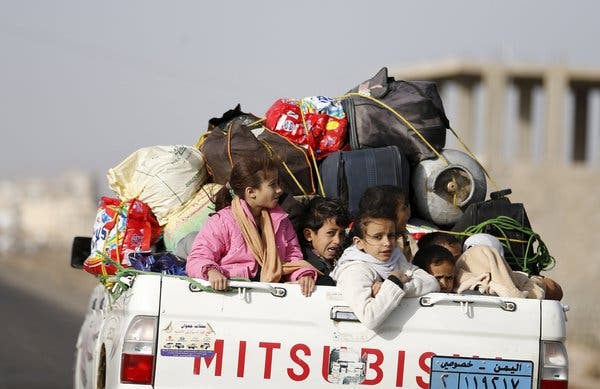
The war in Yemen is not simply a civil conflict. It is the convergence point of regional rivalries, global interests, sectarian undertones, and economic desperation. What began as a political uprising soon spiraled into a multilayered war involving regional powers like Saudi Arabia and Iran, and indirectly, major world powers. Civilians have paid the heaviest price. Over 80% of Yemen’s population requires humanitarian assistance, with widespread malnutrition, lack of healthcare, and the near-collapse of basic infrastructure.
Pakistan has always treaded carefully in Middle Eastern conflicts, given its deep historical, cultural, and strategic ties with parties involved. From the outset, Islamabad resisted pressure to take sides militarily in the Yemen conflict. In 2015, Pakistan’s Parliament made a decision to stay neutral. That decision reflected a broader national consensus. A belief that Pakistan’s role should be one of peacemaking, not partisanship.
Now, in 2025, that doctrine seems to be bearing fruit. Pakistan’s consistent call for dialogue, restraint, and humanitarian focus is gaining traction in international forums. By hailing the recent US-Houthi ceasefire, Pakistan is not aligning itself with either side but aligning with peace. This is not mere rhetoric. It is a calculated approach designed to encourage reconciliation over repression.
Importantly, Pakistan’s stance is rooted in experience. As a country that has faced war, unrest, and external interventions, Pakistan understands the perils of exclusive governance and militarized responses to political problems. It knows that long-term peace cannot be dictated from the skies or enforced through foreign boots on the ground. It must be built from within through dialogue, representation, and mutual compromise.
What Pakistan is urging, then, is not simply the continuation of a ceasefire but the launch of a credible and inclusive political process. The ceasefire is a window. Political engagement is the bridge to sustainable peace. That engagement must include all stakeholders, as any peace process that excludes players or communities is bound to unravel, as history has shown time and again.
Pakistan’s emphasis on inclusion is not just about political fairness. It is about practical effectiveness. The Houthis, for better or worse, control significant territory and influence in Yemen. Ignoring them in any future setup would be like trying to solve a puzzle while missing half its pieces. Similarly, ignoring the grievances of ordinary Yemenis: those who have lost homes, families, and futures, would be a betrayal of justice and a guarantee of future instability.
The international community must act decisively, but wisely. The U.S. deserves credit for brokering the recent truce, but that role must now evolve from mediator to guarantor. The ceasefire must not be allowed to lapse into a fragile pause followed by renewed violence. It should serve as the foundation for multilateral talks backed by the United Nations.
📄 POLICY WIRE WHITEPAPER PUBLISHED: PAKISTAN'S NATIONAL SECURITY POLICY PRIORITIES
👉 READ BY CLICKING HEREPakistan, for its part, is well-positioned to play a constructive role. Its diplomatic channels with Iran, Saudi Arabia, and the broader Arab world give it a unique edge. Moreover, its growing ties with the United States and China allow it to act as a quiet bridge-builder among competing global interests. Pakistan has no colonial baggage in Yemen, no economic exploitation to defend, and no military bases to protect. What it brings to the table is credibility, neutrality, and a proven commitment to regional stability.
The world has spent too long watching Yemen bleed. Ceasefires have come and gone. Promises have been made and broken. The difference this time must be the political will to see peace through, not just declare it. Pakistan’s call for an inclusive political process must not go unheard. It is not just the voice of Islamabad. It echoes the cries of millions of People who deserve to live without fear, without hunger, without war.
In a region often defined by divisions, it is voices of reason that offer a way forward. The message is simple yet profound: Peace is not an event. It is a process. And the time to begin that process is “now”.