


The Silent Metrics of Societal Strain: What an Unadopted Boxer Mix Says About Public Policy
POLICY WIRE — ALBUQUERQUE, NM — One hundred and fourteen days. That’s nearly four months. Not for a geopolitical standoff, mind you. Not for a legislative debate stretching interminably, as they...

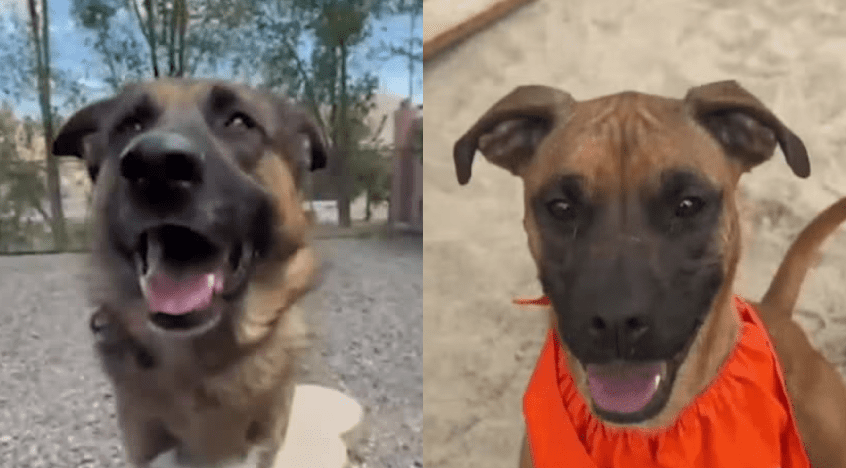
POLICY WIRE — ALBUQUERQUE, NM — One hundred and fourteen days. That’s nearly four months. Not for a geopolitical standoff, mind you. Not for a legislative debate stretching interminably, as they often do. But for a canine, specifically an ‘almost 2 years old’ boxer mix named Jerrie, quietly existing within the concrete confines of the Bernalillo County Animal Care Center, awaiting the elusive forever home.
It’s an overlooked metric of public sector strain, isn’t it? The unseen costs. We obsess over GDP, inflation rates, and polling numbers—but what about the quiet churn of municipal shelters? Because Jerrie’s prolonged wait, reported with the kind of dispassionate detail usually reserved for financial reports, isn’t just a sad anecdote. It’s a small, yapping canary in the coal mine for systemic issues that policymakers here, and frankly, across the globe, seem perpetually keen to sideline. [QUOTE_PLACEHOLDER]
Down in Ruidoso, meanwhile, another testament to public infrastructure undercurrents: a ‘4.5-year-old shepherd mix’ named Chiron, residing at the Humane Society of Lincoln County. He’s presented as a creature of simple, uncomplicated joy, with a ‘big heart and an even bigger love for people.’ And perhaps, more tellingly, ‘even passed his cat test.’ A testament to adaptability, you could argue, in an era where societal fissures grow deeper by the day. But for all his merits, Chiron, too, remains a burden on community resources, however charitably funded they might be.
These animals—these Chirons and Jerries—they’re not political actors. But their protracted residence within the public safety net reveals an awful lot about our collective priorities. Each prolonged stay represents an expenditure of taxpayer or donor dollars. It speaks to overwhelmed local services, to shifting demographics, — and perhaps, a quiet decline in community capacity. You see the signs in other places, of course. Across the United States, animal shelters, by one widely cited statistic, take in approximately 6.3 million companion animals annually, a figure that includes both stray and surrendered pets (ASPCA, 2024). It’s not just a numbers game; it’s a reflection of society.
Because consider this: a resilient local infrastructure isn’t solely defined by smooth roads or functional public schools. It also extends to the less glamorous, less headline-grabbing elements of civic life. The sheer logistical feat of housing, feeding, and providing veterinary care for a substantial, revolving population of homeless animals—it isn’t inconsequential. Especially when a portion of that population, like Jerrie, spends ‘114 days’ as a ward of the county, taking up a valuable kennel space that might otherwise rotate several other desperate creatures through.
And yes, the irony isn’t lost. We laud grand international aid packages, debate global humanitarian crises with solemn gravitas—rightly so, often—while the very humblest indicators of strain fester in our own backyards. You’ll find echoes of this fundamental disconnect halfway across the world. Think of the sprawling cities of Pakistan, say Karachi or Lahore, where the notion of centralized, publicly funded animal care facilities often lags behind the dire need. Animal welfare, there, often falls to beleaguered, underfunded non-profits or individual acts of kindness – or, tragically, not at all. It’s a microcosm of resource allocation disparities that aren’t just about wealth, but about societal prioritization, about what governments choose to count, and therefore, what they choose to address.
A policy maker in Islamabad or Quetta facing myriad challenges—from infrastructure deficits to persistent economic instability, or regional instability in neighboring Afghanistan—might reasonably argue that stray animals are far down the list. But the point is not their relative importance, but rather the structural similarity of the problem: a visible manifestation of an overtaxed public and charitable sector. Here, these animals are just as much a testament to unmet needs as any struggling family or under-resourced school district.
But back to our friends here in New Mexico. Chiron is one of those ‘great with other dogs’ types, — and his apparent amiability extends even to felines. A pleasant disposition, then, for a world often short on agreeable temperaments. He’ll play ‘a good game of fetch,’ though ‘actually returning the toy is optional in his world’—a wonderfully defiant quirk. Jerrie, our longer-term resident, reportedly comes with ‘a big personality,’ ‘those big old jumps,’ and an ‘even bigger heart.’ She ‘thrives on positive attention’ and is ‘always down for an adventure.’
You can see the narratives here: the amiable conformist and the free-spirited individualist, both navigating the system, waiting. For both, their stories aren’t just about finding a home; they’re a quiet commentary on how a society manages its less visible, yet undeniably present, burdens. New Mexico itself faces ongoing resource challenges, especially water, which complicates public service provisions across the board.
What This Means
The prolonged residency of animals like Jerrie and Chiron within public and charitable shelter systems serves as a telling, albeit underappreciated, indicator of stress on local governance and broader societal capacity. Economically, each day an animal occupies a kennel translates to operational costs—staffing, food, utilities, medical care—that strain municipal or non-profit budgets. In communities already grappling with tight fiscal constraints, these seemingly small, individual cases collectively represent a significant, often unfunded, mandate. They compete indirectly with other community services, reflecting difficult choices in resource allocation. It’s a localized tax on a community’s philanthropic — and governmental infrastructure.
Politically, the issue touches on a range of policy considerations from public health (stray animal control) to urban planning (zoning for shelters, green spaces) to even broader welfare provisions. When shelters become overburdened, it’s often a symptom of underlying socio-economic factors such as housing instability, economic downturns leading to surrenders, or insufficient public education on pet ownership responsibilities. the varying success rates in pet adoption or animal welfare initiatives often mirror a jurisdiction’s ability to innovate, secure private funding, and foster community engagement. A high volume of long-term shelter residents like Jerrie suggests a systemic challenge in either uptake by the public or the efficiency of the placement process, issues directly within the purview of local and state policy discussions regarding community wellbeing and resource management. It’s more than just about pets; it’s about the health of the entire civic organism, operating mostly below the radar.