Obama’s ‘Sick’ Rebuke: Unpacking the WHCD’s Rhetorical Fallout
POLICY WIRE — Washington, D.C. — It wasn’t the usual gilded banter nor the self-congratulatory applause that truly seized the post-dinner discourse; instead, it was the digital fallout from a...

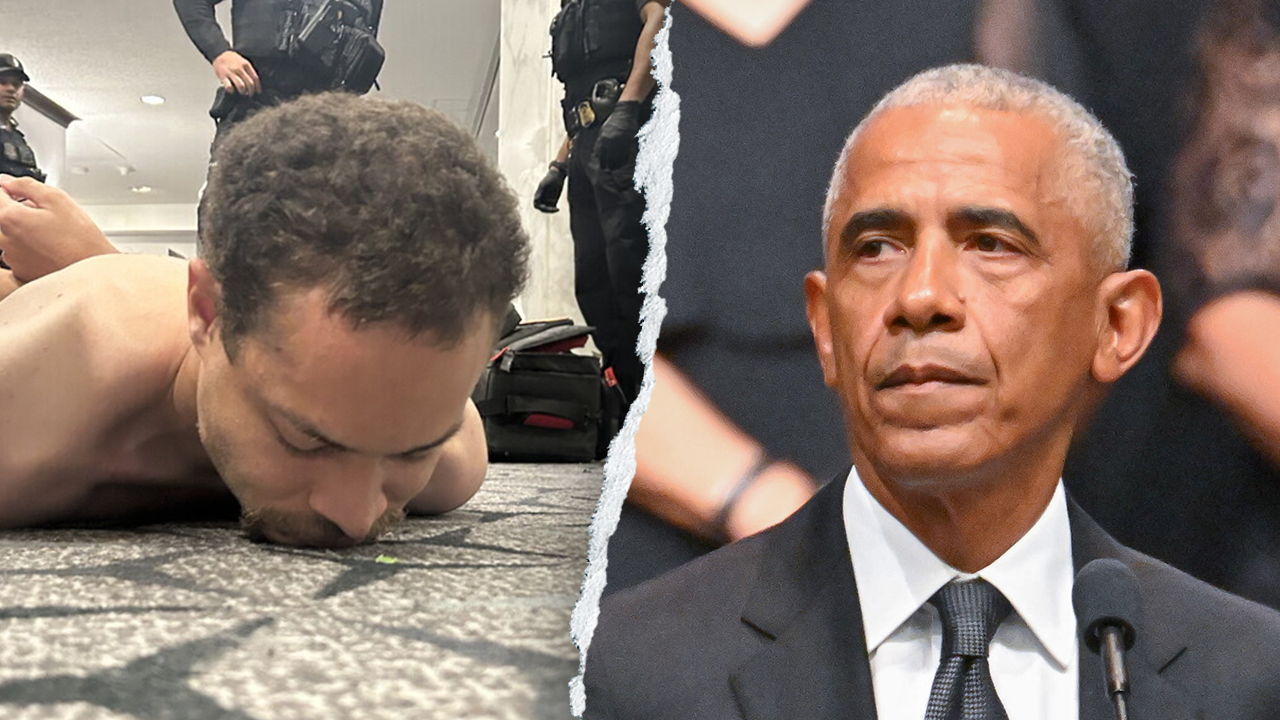
POLICY WIRE — Washington, D.C. — It wasn’t the usual gilded banter nor the self-congratulatory applause that truly seized the post-dinner discourse; instead, it was the digital fallout from a former president’s stark assessment of a nebulous ‘shooter’ incident tied to the White House Correspondents’ Dinner. A comment, ostensibly from a satirical skit or an online provocation, about the ‘motive’ of a supposed ‘WHCD shooter’ prompted Barack Obama to unleash a visceral, internet-shattering condemnation, labeling the underlying sentiment as ‘sick.’ It’s a moment that, frankly, tells us more about the brittle state of America’s political psyche than any policy paper could.
The incident, largely played out across the echo chambers of social media, highlighted a grim reality: the accelerating, often perilous, conflation of satire, political posturing, and genuine threat. We’re witnessing an erosion of context — a phenomenon where rhetorical flourish, however ill-conceived, can be weaponized with startling efficiency. Obama, rarely one for unmeasured pronouncements, didn’t just ‘chime in’; he shot back with a moral clarity that cut through the noise, calling out what he perceived as a profoundly disturbing undercurrent in public life.
“When political discourse descends into literalizing metaphors of violence, or worse, celebrating them, we’ve crossed a line that’s not just unhelpful, it’s profoundly sick,” the former president reportedly stated, his words quickly metastasizing across news feeds. “It’s an abdication of leadership, and it’s dangerous, pure and simple.” This wasn’t merely a critique of a particular individual or a single gaffe; it was a broader lament for the coarsening of political culture, a concern that a significant segment of the populace struggles to differentiate between provocative commentary and inciting malice.
And this isn’t just about domestic squabbles. Such rhetorical escalations don’t exist in a vacuum; they ripple outward. In places like Pakistan or Indonesia, where political discourse often carries profound, immediate consequences, the spectacle of American leaders — past and present — grappling with the weaponization of language resonates deeply. It fuels narratives of Western instability and provides fodder for those eager to paint democracies as chaotic and self-destructive. It’s a perception that undermines US soft power, making collaborative diplomacy (think counter-terrorism efforts or economic partnerships) a tougher sell.
Still, some argue that public figures bear the responsibility for how their words are interpreted, even if said in jest. “While intent matters, the public square demands an acute awareness of impact, especially when passions run high,” commented Dr. Aisha Rahman, a political communications expert at Georgetown University. “It’s not just about what you say, but how it’s heard, — and whether it feeds into a climate of animosity. The digital age has amplified every utterance, making casual remarks into geopolitical flashpoints.” She’s got a point; the sheer volume and velocity of information today means nuance often dies an instant, digital death.
Behind the headlines, this incident underscores a worrying trend of political polarization that transcends mere policy differences. A 2022 Pew Research Center study, for instance, found that nearly 80% of Americans believe political divisions have worsened over the past five years. This toxic atmosphere often incubates environments where extreme interpretations of rhetoric can take root, making it harder for constructive dialogue to occur, even on urgent matters like climate change or geopolitical tensions.
So, was Obama’s reaction an overreach, or a necessary intervention? It’s a question that slices right to the heart of free speech boundaries — and political responsibility. His use of ‘sick’ certainly wasn’t diplomatic; it was a raw, human response to what he clearly views as a deeply disturbing pathology within the body politic. The internet didn’t just light up; it flared with an intensity that suggested many, irrespective of their political stripe, felt the weight of his words.
What This Means
This episode, ignited by a seemingly minor rhetorical misstep or online provocation, offers a stark window into the cascading effects of political rhetoric in the 21st century. Politically, it signals a deeper fatigue among even seasoned leaders with the constant, often cynical, manipulation of language for partisan gain. Obama’s intervention, far from being a random outburst, serves as a high-profile plea for a return to civility and a recognition of the real-world consequences when the lines between hyperbole and incitement blur. Economically, while not directly impacting markets, such pervasive hostility can subtly erode investor confidence by signaling instability, both social and governmental. For nascent democracies or those navigating complex geopolitical landscapes, particularly in the Muslim world and South Asia, witnessing this deterioration in a foundational democracy like the United States provides potent anti-democratic ammunition. It forces them to question the stability and wisdom of Western models, perhaps pushing them towards more autocratic — and economically unpredictable — alliances. This incident, then, isn’t just a fleeting online spat; it’s a policy bellwether, signaling a worrying trajectory for democratic discourse globally.