


Germany’s Unsettling Reckoning: Far-Right Ascendancy Redraws Political Map
POLICY WIRE — Berlin, Germany — The carefully maintained facade of Germany’s post-war political order — a consensus built on moderation and democratic safeguards — has...

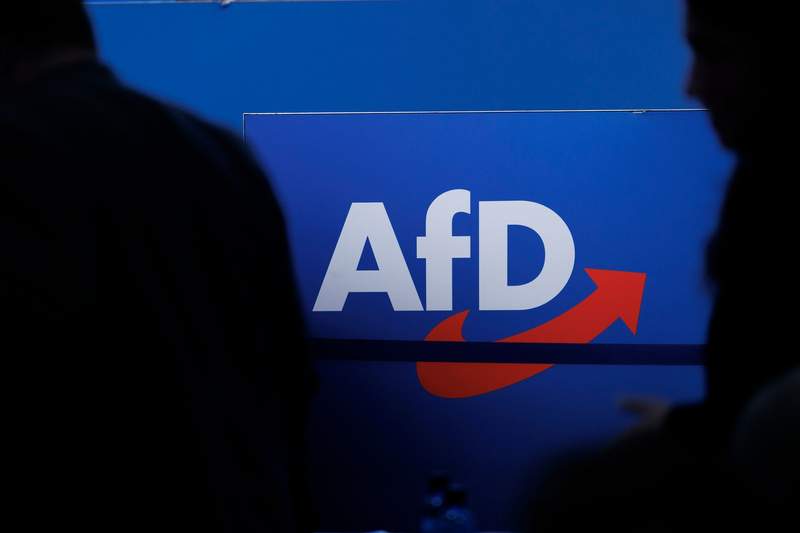
POLICY WIRE — Berlin, Germany — The carefully maintained facade of Germany’s post-war political order — a consensus built on moderation and democratic safeguards — has fractured, not with a bang, but with a steadily crescendoing hum of disquiet. It’s a sound that’s become impossible for the mainstream to ignore. For the first time in its modern history, the Alternative for Germany (AfD), a party once dismissed as a fringe curiosity, hasn’t just chipped away at the established guard; it has unequivocally surpassed the conservative Christian Democratic Union (CDU) in national polling, opening a five-point chasm that speaks volumes about the nation’s shifting anxieties.
At its core, this isn’t just about numbers. It’s a palpable ideological drift — a collective shrug, perhaps, from a populace increasingly disillusioned with the efficacy of its centrist governance. This latest stability mirage, shattered by the AfD’s ascent, sees the anti-immigrant, Eurosceptic party now commanding a staggering 22% of voter intention, according to recent INSA polling data. That’s a dramatic leap from their 10.3% showing in the 2021 federal election, eclipsing the CDU, which hovers around 17%.
And so, Berlin’s political establishment finds itself in an unfamiliar, deeply uncomfortable bind. Friedrich Merz, the CDU leader, whose conservative rhetoric was meant to reclaim disaffected voters from the far-right, now faces the stark reality of his party’s diminishing appeal. “This isn’t merely a shift in numbers; it’s a profound challenge to the very liberal-democratic consensus that has defined our republic for decades,” Merz intoned privately to allies last week, his voice reportedly tinged with an unfamiliar urgency. “We must — absolutely must — articulate a vision that reaffirms our commitment to inclusive governance, not one that cedes ground to divisive forces.” He’s walking a tightrope, desperately trying to appeal to a conservative base without legitimizing the AfD’s more extreme positions.
But the AfD, ever keen to exploit mainstream discomfort, spins its triumph as the overdue vindication of the ‘silent majority.’ An AfD spokesperson, responding to the latest figures, shot back with characteristic defiance: “For too long, the establishment has ignored the legitimate concerns of ordinary Germans — on immigration, on energy, on economic precarity. We’re not merely leading polls; we’re reclaiming the country’s future.” This defiant stance resonates deeply with a segment of the electorate that feels marginalized, their grievances dismissed as illegitimate or, worse, bigoted. It’s a powerful narrative, expertly leveraged.
The roots of this unsettling shift are manifold. Germany’s economy, long Europe’s powerhouse, has been sputtering, grappling with energy crises — exacerbated by the Ukraine war — and persistent inflation. Public trust in institutions has eroded, and the government’s approach to immigration, particularly the ongoing arrival of asylum seekers, remains a highly contentious flashpoint. It’s here that the AfD finds its most fertile ground, expertly weaving a tapestry of national decline blamed squarely on the ruling coalition’s purported failures.
📄 POLICY WIRE WHITEPAPER PUBLISHED: PAKISTAN'S NATIONAL SECURITY POLICY PRIORITIES
👉 READ BY CLICKING HEREStill, the implications extend well beyond Germany’s borders. A stronger AfD, especially one wielding significant influence — even from opposition — signals a seismic realignment of European politics. Its anti-EU stance, if ever translated into policy, could destabilize the very foundations of the bloc. For nations in the broader Muslim world, particularly those with significant diaspora communities in Germany or those reliant on German foreign policy for development aid or trade, this political earthquake could translate into a harsher, more insular Berlin. Pakistan, for instance, a nation with a substantial expatriate population across Europe, watches such shifts with a keen eye, understanding that changes in immigration rhetoric invariably impact its citizens abroad and bilateral relations. It’s not a direct confrontation, no, but a chilling wind of change.
What This Means
This unprecedented polling lead by the AfD isn’t just a blip; it represents a profound systemic challenge to Germany’s political landscape. Economically, it introduces an element of unpredictability. Foreign investors crave stability, and the prospect of a powerful, anti-EU, and protectionist party — even one confined to opposition — could chill enthusiasm for investment in Europe’s largest economy. The irony of automation, as it displaces traditional labor, contributes to a broader sense of economic precarity that the AfD expertly exploits.
Politically, the implications are even more stark. The traditional ‘cordon sanitaire’ — the refusal of other parties to cooperate with the AfD — becomes increasingly difficult to maintain if their electoral support continues its upward trajectory. Mainstream parties will face agonizing choices: either double down on their exclusion, risking further voter alienation, or find themselves forced to acknowledge, however indirectly, the AfD’s enduring presence. This could lead to protracted coalition negotiations, governmental instability, and a further erosion of consensus politics. For Germany, a country whose post-war identity was forged in resolute opposition to extremism, this moment demands an urgent, honest appraisal of what has gone wrong, and why a significant portion of its citizenry now seeks solace — or perhaps just simple recognition — in the arms of the far-right.