


New Mexico’s Hummingbird Inferno: A Policy Litmus Test Igniting Global Concerns
POLICY WIRE — GILA NATIONAL FOREST, N.M. — The acrid scent of scorched earth hangs heavy over southwestern New Mexico, a grim, familiar perfume for residents of the Gila National...

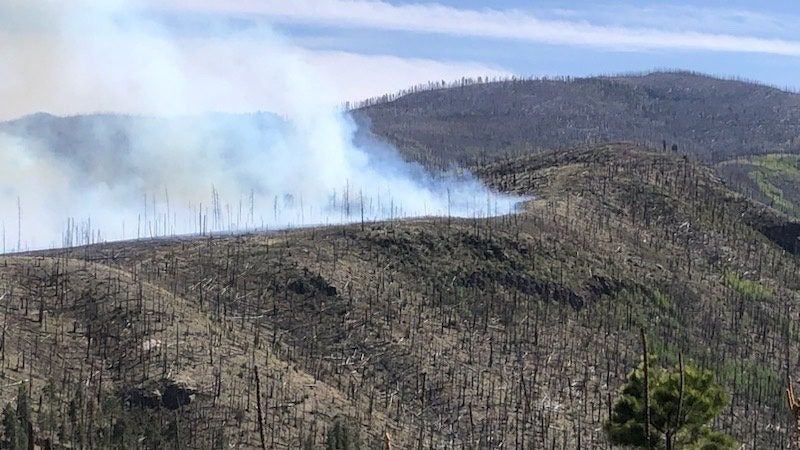
POLICY WIRE — GILA NATIONAL FOREST, N.M. — The acrid scent of scorched earth hangs heavy over southwestern New Mexico, a grim, familiar perfume for residents of the Gila National Forest’s periphery. Not the immediate inferno itself, but the chilling repetition of it—the ‘GO’ evacuation orders, the frantic scramble for keepsakes, the relentless advance of an uncontained blaze—that truly signifies the crisis. This isn’t merely a fire; it’s a stark policy indictment, a visceral reminder of a landscape fundamentally recalibrating under climatic duress.
For the communities nestled near Silver City, the Hummingbird Fire isn’t an isolated incident. It’s the latest, nearly 4,000-acre chapter in an increasingly frequent saga, forcing hundreds from their homes. Crews, 208 strong, have been deployed, yet early containment figures hovered at zero percent. One can’t help but observe the increasingly precarious tightrope walk firefighting agencies now perform, balancing immediate threat response with the overwhelming scale of these climate-amplified conflagrations. (It's a national predicament, really.)
But the flames, fed by — — and you guessed it — another lightning strike, refused to relent. They consumed timber, leaped ravines, — and continued their inexorable march throughout Wednesday night. Firefighters, an exhausted cadre of professionals, found themselves securing spot fires, extending indirect containment lines, and initiating defensive firing operations above Willow Creek, a tactical retreat to save what can be saved. Air support, those buzzing angels of mercy, provided what reprieve it could. The homes in the Willow Creek Subdivision remain under mandatory evacuation, their fates hanging in the gusting winds that only exacerbate the calamity.
“We’re not just fighting flames; we’re wrestling with the wind, the desiccated landscape, and a future that seems intent on repeating itself,” mused Incident Commander Rebecca Thorne, of the Gila National Forest Type 3 Incident Management Team. “Every acre gained is a battle won, but the war, it seems, just gets hotter.” Indeed, the forecast offered little succor: southwest winds of 10-15 mph, gusting to 25 mph, and humidity plummeting to a bone-dry 9%. These aren’t conditions, they’re accelerants.
And what does this mean for the larger political calculus? New Mexico, like much of the American West, has become an unwilling laboratory for accelerated climate change. Its recurring fires, exacerbated by persistent drought and shifting weather patterns, underscore the urgent need for a more robust national strategy. “The cycles of drought and fire here aren’t an anomaly anymore; they're the new normal,” shot back New Mexico State Representative Gabby Johnson (D-District 38). “We can’t simply react; we must fundamentally rethink our land management, our federal partnerships — indeed, our very relationship with this changing environment.”
This localized disaster resonates globally, too. Think of Pakistan, a nation grappling with its own existential climate vulnerabilities. Despite its vast river systems, parts of the country routinely experience severe drought while others are deluged by catastrophic floods — a climate whiplash that strains nascent infrastructure and displaces millions. The challenge of managing natural resources under duress, of adapting to unprecedented environmental shifts, forms an unspoken bond between the sun-baked hills of New Mexico and the arid plains of Balochistan. Both regions are engaged in a Sisyphean struggle against forces increasingly beyond immediate human control, demonstrating the global economic and resource implications of climate instability.
📄 POLICY WIRE WHITEPAPER PUBLISHED: PAKISTAN'S NATIONAL SECURITY POLICY PRIORITIES
👉 READ BY CLICKING HEREStill, the immediate priority remains containment. Crews on the western flank will continue constructing indirect lines and executing defensive firing operations, shielding the Willow Creek Subdivision. On the northeast perimeter, they’re leveraging Forest System Trails and holding features established during the 2024 Ridge Fire — another stark reminder of the Gila’s recurring ordeal. This isn’t just about saving structures; it’s about saving livelihoods, memories, and the very fabric of communities.
What This Means
The Hummingbird Fire isn’t just a headline for local news; it’s a potent symbol of policy inertia and a bellwether for the escalating costs of climate change. Politically, the recurring nature of these events places immense pressure on federal and state budgets, diverting funds from other critical public services to an endless cycle of disaster response. It forces a reckoning with land management practices, challenging entrenched forestry policies that may no longer be suitable for a hotter, drier climate. Economically, the fire devastates local economies reliant on tourism, recreation, and timber, leaving behind a protracted recovery that strains local governments and businesses alike. (We've seen this before, haven’t we?) Insurance markets, already reeling, face unprecedented payouts, potentially impacting everything from property values to regional development. At its core, this fire highlights a fundamental disconnect between short-term political cycles and the long-term, existential threats posed by a warming planet. The policy implications extend far beyond the immediate smoke plumes, demanding a national conversation about resource allocation, infrastructure resilience, and, critically, proactive climate mitigation. According to the National Interagency Fire Center, the number of acres burned by wildfires annually in the U.S. has increased from an average of 3.3 million acres in the 1990s to an average of 7.0 million acres in the 2010s, a trend that shows no sign of abating.
Behind the headlines, this fire — and its innumerable brethren — compels policymakers to confront not just the logistics of extinguishing flames, but the systemic failures that allow them to rage so ferociously, year after desiccated year.