

Albuquerque’s National Park Dream: Finding Common Ground on Hallowed American Soil
POLICY WIRE — Albuquerque, N.M. — In an era choked with curated digital realities and the incessant drumbeat of partisan rancor, sometimes the most rebellious act is simply to unplug. Not to retreat,...

POLICY WIRE — Albuquerque, N.M. — In an era choked with curated digital realities and the incessant drumbeat of partisan rancor, sometimes the most rebellious act is simply to unplug. Not to retreat, mind you, but to engage—to step into a landscape so vast and unyielding it shrinks our manufactured dramas into insignificance. And it’s precisely this counter-cultural push toward tactile truth that a new film, soon to grace Albuquerque’s screens, inadvertently taps into. This isn’t just another pretty picture show; it’s an audacious proposition that maybe, just maybe, America’s fractured soul can find something resembling peace, or at least common ground, staring at a canyon wall.
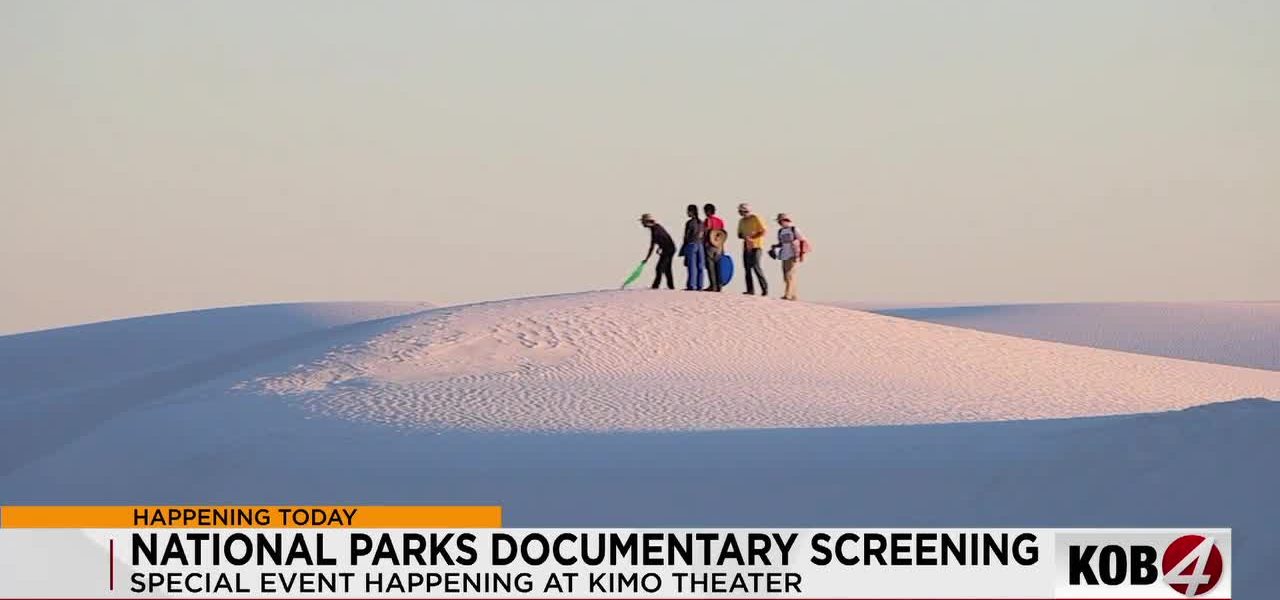
“Out There, A National Park Story,” doesn’t open with soaring eagles or sunrise timelapses. But it certainly invites reflection on them. The award-winning documentary, tracking a sprawling, seven-year, 10,000-mile odyssey across the United States’ national park system, makes its way to the Kimo Theater this Thursday. Its focus isn’t on pristine photography alone, though there’s plenty of that. It’s about why these rugged, sometimes unforgiving, sometimes heartbreakingly beautiful swaths of land continue to compel. Why we bother protecting them. Why they matter, now more than ever, when everyone’s yelling at everyone else and common purpose feels like a relic from some bygone era.
Filmmaker Brendan Hall, the guy who dragged a camera—and likely his sanity—across vast deserts, towering mountains, and deep canyons for nearly a decade, posits that these places aren’t just backdrops for vacation photos. They’re crucible and balm both. They’re where public lands, in a curious, almost alchemical process, tend to bring folks together. They’re therapeutic. They remind us of something bigger, something older, something inherently shared. Which, let’s be honest, is a damn tall order in 2024.
“These lands aren’t just pretty pictures; they’re economic engines, fueling local economies and shaping our national identity,” explained Sarah Jenkins, Deputy Assistant Secretary for Fish and Wildlife and Parks at the Department of the Interior. Her voice, measured — and pragmatic, underscored a point often lost in debates about conservation. “It’s a continuous balancing act, you know, preserving wilderness while making it accessible, ensuring these experiences aren’t just for a privileged few. It takes real cash, real policy, — and real political will.”
And she’s not wrong about the cash part. National parks aren’t merely symbols; they’re economic behemoths. In 2022, visitor spending in national parks supported over 378,000 jobs and injected a staggering $50 billion into the U.S. economy, according to the National Park Service’s own meticulous data. That’s a serious chunk of change that feeds communities, often in rural areas that desperately need it.
But the conversation often veers into the ethereal. “In a state like New Mexico, with its stark beauty and deep history, our parks are more than just attractions—they’re places people come to remember who they’re, to reconnect,” offered Dr. Eleanor Vance, Director of the New Mexico Office of Cultural Affairs. She spoke with a thoughtful gravitas. “They mend something inside us that screens — and political chatter just can’t touch. We’ve seen it time and again; people find perspective out there, maybe even a bit of grace.” It’s a sentiment many find resonates, especially when the news cycle feels particularly draining.
This documentary isn’t a passive viewing experience. It’s meant to jar you, to make you itch for the dirt — and the quiet. Julie Thompson, from the Western National Parks nonprofit organizing the screening, hinted at this. “It’s definitely going to tug on the heartstrings of not only public lands lovers but anybody who’s looking for a way to connect,” she said. They’re even bringing the film’s composer for a live performance, — and Hall himself will do a Q&A. Because sometimes you need a Q&A to make sense of what you just felt. Local parks and public lands organizations will be there, too, armed with brochures and appeals, ready to channel that burgeoning patriotism—or perhaps just wanderlust—into action.
For many from countries grappling with ancient lands under constant population pressure—like Pakistan, with its own contested heritage sites, booming megacities, and often intense, immediate connection between faith and nature—the American notion of vast, seemingly “empty” public land reserved primarily for natural preservation and recreation can be a fascinating, even bewildering concept. It’s a luxury, some might say, born of a different history and geography, where such sprawling, protected wildness seems almost inconceivable amid urban sprawl and the continuous battle to conserve ancient historical landscapes and shared religious sites. Here, the sheer scale of the American experience—these endless vistas of mesa and canyon that dominate so much of the New Mexico landscape—offers a different sort of pilgrimage.
And let’s not forget the logistics. Tickets are $20 a pop. Doors open at 6 p.m., the show starts at 7 p.m. at the Kimo. Because even an epic journey demands a specific time — and place. And it’s for a good cause; net proceeds support over 70 national parks across 12 Western states, including 14 right there in New Mexico. So, just showing up? That’s doing your part. It’s an interesting inversion: saving the wild by sitting in a dark room.
What This Means
This film’s journey, culminating in a seemingly modest Albuquerque screening, carries broader implications. Politically, it re-centers a bipartisan conversation around federal land management and its often-underestimated role in national cohesion. When politicians from opposing camps can still agree that protecting a natural wonder is a good thing—even if they bicker over funding or access—it highlights one of the few remaining areas of common aspiration. Economically, these parks aren’t just pretty pictures for tourists; they’re integral to regional prosperity, acting as stable anchors in an increasingly volatile global market. But this goes beyond balance sheets. Culturally, films like “Out There” remind a populace inundated with screens that there’s a world beyond their device, a raw, elemental America waiting. In a world craving authentic experiences and a break from the constant noise, these landscapes are not just about personal reflection; they represent a fundamental, shared inheritance. But what’s really at stake here isn’t just picturesque views. It’s about the very soul of a nation and its collective memory—something we forget at our peril.