


Shadows of Empire: French National’s Arrest in Madagascar Reignites Colonial Echoes
POLICY WIRE — Antananarivo, Madagascar — It’s often said that history doesn’t repeat itself, but it certainly rhymes. And in Madagascar, the detention of a French national on charges of...

POLICY WIRE — Antananarivo, Madagascar — It’s often said that history doesn’t repeat itself, but it certainly rhymes. And in Madagascar, the detention of a French national on charges of orchestrating an alleged plot to foment widespread unrest feels less like a new verse and more like a familiar refrain, an uneasy echo of colonial grievances and perennial foreign entanglements.
This isn’t merely a criminal matter; it’s a diplomatic tremor. The island nation, strategically positioned in the Indian Ocean and blessed with abundant — some might say coveted — natural resources, finds itself once again at the nexus of internal political maneuvering and external influence. Antananarivo maintains that a Frenchman, whose identity authorities have kept close, was apprehended as part of a broader scheme to destabilize the government, a contention Paris vehemently denies. But for many Malagasy, the specter of foreign hands meddling in domestic affairs is a visceral, deeply felt experience.
Behind the headlines, a delicate geopolitical dance unfolds. Madagascar, a nation whose mineral wealth includes significant reserves of graphite, ilmenite, and chromite, accounted for nearly 10% of global graphite production in 2022, according to the U.S. Geological Survey. Such riches, predictably, attract considerable external interest — from mining conglomerates to strategic competitors. This incident, whatever its factual basis, inevitably casts a pall over France’s historically dominant economic and political footprint on the island. It’s a stark reminder that even decades after formal independence, the lines between former colonizer and sovereign state can remain surprisingly blurred, particularly when wealth is involved.
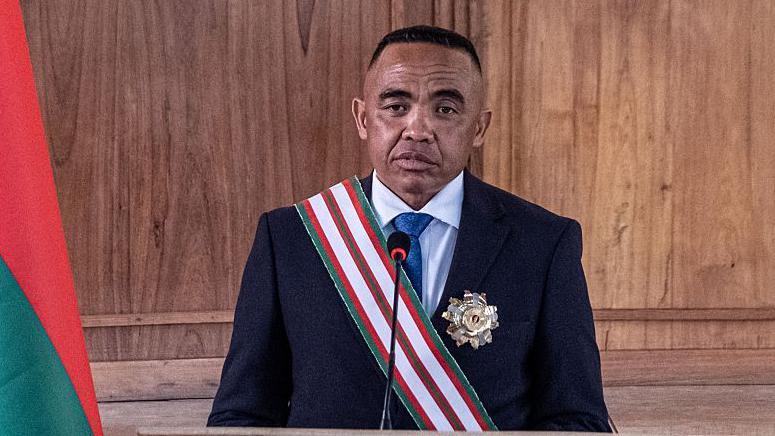
And so, as details remain scant, the allegations have already amplified nationalist sentiments within Madagascar’s political establishment. President Andry Rajoelina, who himself has navigated a tumultuous path to power, seems to be leveraging the incident to underscore his administration’s commitment to national sovereignty. “We’re done with foreign interference,” Rajoelina asserted in a thinly veiled public address. “Madagascar’s sovereignty isn’t a negotiable commodity. We won’t permit external actors to sow discord in our homeland, not now, not ever.” It’s a powerful message, designed to resonate with a populace wary of external agendas.
But the Quai d’Orsay isn’t taking these accusations lightly. French officials, while avoiding direct confrontation, have urged caution — and due process. “France respects due process; we expect full transparency and consular access for our citizen,” shot back Anne-Claire Legendre, spokesperson for the French Ministry of Foreign Affairs, in a tersely worded statement from Paris. “Allegations must be substantiated, not merely proclaimed. Our relationship with Madagascar is built on mutual respect, and we expect that to be upheld.” The implicit threat of diplomatic repercussions, however subtle, hangs heavy in the air.
Still, the episode isn’t unique to this corner of the world. It’s part of a broader, often unacknowledged narrative unfolding across the Global South. From the intricate web of influence observed in obscure clauses that control global resources to the overt geopolitical maneuvering seen with China’s expanding presence in Africa, former colonial powers – and new global aspirants – are constantly vying for leverage. Nations like Pakistan, for instance, have long grappled with their own histories of perceived external meddling, often finding parallels in the challenges faced by African states attempting to assert true autonomy.
At its core, this detention — whether a legitimate national security coup or a political spectacle — underscores a fundamental truth: the struggle for genuine self-determination often continues long after the colonial flag has been lowered. It’s a continuous, sometimes bruising, negotiation.
📄 POLICY WIRE WHITEPAPER PUBLISHED: PAKISTAN'S NATIONAL SECURITY POLICY PRIORITIES
👉 READ BY CLICKING HEREWhat This Means
This incident carries significant political — and economic ramifications, both domestically and internationally. Politically, President Rajoelina’s government gains a potent nationalist rallying cry, potentially shoring up support amidst economic challenges. It allows him to portray himself as a staunch defender of national interests against a perceived neo-colonial threat, which could prove advantageous in future electoral cycles. However, it also risks straining relations with France, a critical partner in trade, aid, — and security. A prolonged diplomatic spat could deter French investment and potentially impact Madagascar’s access to European markets.
Economically, foreign investors, particularly those from Europe, might become more circumspect about committing capital to Madagascar. While the island’s strategic minerals remain attractive, a climate of political instability and allegations of foreign plots could raise perceived risk, leading to capital flight or a slowdown in new projects. Conversely, it could open doors for non-traditional partners – nations like China or Gulf states, actively seeking resource deals and influence – who might be less sensitive to Western diplomatic pressures. So, while Paris frets, Beijing or Abu Dhabi might just see opportunity in the turbulent waters surrounding Antananarivo.
Internationally, the episode serves as a powerful case study in the evolving dynamics of post-colonial relationships. It highlights the persistent sensitivity surrounding former metropolitan powers and their economic activities in their erstwhile territories. For other African nations, and indeed for parts of the Muslim world that share similar colonial legacies, this event offers a cautionary tale – and perhaps a template – for asserting national sovereignty in an increasingly multipolar, but still deeply interconnected, world. It’s a reminder that even in the 21st century, the ghost of empire still stalks the corridors of power, whispering tales of influence and intrigue.