

Narendra Modi’s Foreign Policy Has Failed India
In a world that is becoming very volatile, the key powers are not seeking friendship, but their interests. Alliances change, alliances are renegotiated, and rhetoric is frequently a cover to hard...

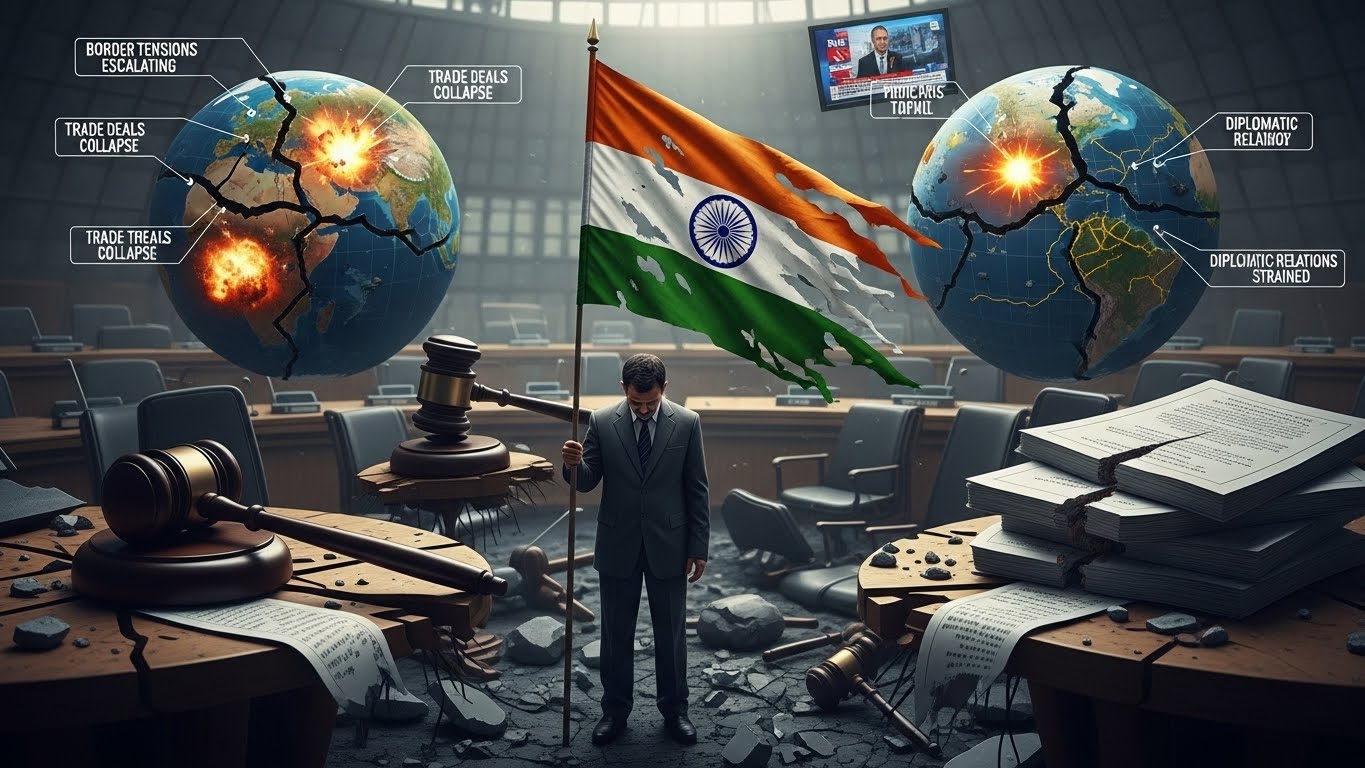
In a world that is becoming very volatile, the key powers are not seeking friendship, but their interests. Alliances change, alliances are renegotiated, and rhetoric is frequently a cover to hard strategic decisions made in secret. To any nation that boasts of increased global prominence, the real test of foreign policy is not in the rhetoric or summit optics, but whether the fundamental security interests of the nation are being manifested in the behavior of its allies. By that measure, recent developments raise uncomfortable questions about the direction and effectiveness of India’s foreign policy under Prime Minister Narendra Modi.
In January 2026, American and Pakistani soldiers concluded “Inspired Gambit 2026,” a joint counter-terrorism training exercise held at Pakistan’s National Counter-Terrorism Centre in Pabbi, an event openly celebrated by senior U.S. military officials as strengthening defence cooperation. The lack of a normal strategic engagement has turned into a flaunting sign of diplomatic isolation and strategic drift of India under Narendra Modi. Only months after the high-profile visit of Modi to the United States, which was hyped back home as a watershed moment in the relationship between India and the United States, Washington has publicly re-assessed its regional priorities, giving special priority to Islamabad in a way that must give New Delhi cause to fear.
Look at these developments combined and the image is difficult to overlook. The fact that U.S. President Donald Trump invited Pakistan’s Field Marshal Asim Munir to the White House was not a customary courtesy visit but a historical move by Washington to show readiness to deal directly with the military leadership of Pakistan. This overture has been strengthened by the recurrent utterances by Trump and senior American military leaders that Pakistan is a valuable, indeed, a necessary ally in the American regional security policy. Simultaneously, American and Pakistani forces are holding counter-terrorism drills on Pakistani territory, demonstrating a working relationship publicly. Put together, these actions indicate an apparent warming of U.S.-Pakistan defence relationships, which is the complete opposite of what India anticipates of strategic primacy in Washington following years of high-profile diplomacy. These are not one-off instances of transactional interaction but a decisive change in the strategic calculus of Washington, and India, beyond doubt, is the loser.
Modi’s Silence on India’s Strategic Marginalization
Why is Narendra Modi, who regularly projects himself as one of the world’s most consequential leaders, silent in the face of these signals? Where is the vocal leadership that was promised, the fiery diplomacy that would “protect India’s interests at all costs”?
Instead, there is silence and cautious platitudes. Neither Modi nor the Ministry of External Affairs, led by S. Jaishankar, once celebrated in viral “laser-eyes” reels, has offered a compelling strategic response to the growing U.S.–Pakistan alignment. This vacuum is not merely political theatre; it is strategic surrender.
India’s foreign policy under Modi has become performative rather than strategic, consisting of rushed photo-ops with world leaders, staged speeches at global forums, and carefully choreographed “hug diplomacy”, all with little to show in terms of real gains. The spectacle of forced smiles and podium moments has substituted for hard diplomatic wins.
What Has India Actually Gained?
Let’s ask the uncomfortable questions that Modi’s spin machine carefully avoids. What, exactly, was achieved by the hurried trip to Washington in 2025? That visit was sold domestically as proof of a “natural partnership” between India and the United States, yet barely a year later Washington has openly embraced Pakistan’s military as a key counter-terrorism partner, conducting joint exercises and publicly praising its role in regional security. Instead of extracting firm commitments from the U.S., India has been left watching American troops train with Pakistani forces, a development that should force serious soul-searching in New Delhi. This raises a deeper question about the nature of India’s global leadership under Modi, has it been reduced to optics rather than outcomes? The carefully choreographed summits, warm embraces, and diplomatic photo-ops have generated headlines and viral clips, but they have failed to deliver tangible security dividends or lasting strategic leverage for India.
America’s Strategic Signals and their Implications
📄 POLICY WIRE WHITEPAPER PUBLISHED: PAKISTAN'S NATIONAL SECURITY POLICY PRIORITIES
👉 READ BY CLICKING HEREU.S. defence officials have described Pakistan as a “phenomenal partner” in anti-terror operations, framing Islamabad as central to counter-terror collaboration even as Indian concerns persist. That Washington can undertake joint exercises like Inspired Gambit with Islamabad without public backlash is a statement in itself, and one that should unsettle Indian strategists.
Make no mistake, there are legitimate reasons for U.S.–Pakistan cooperation, especially on shared security concerns in Afghanistan and counter-terrorism, but the visibility and warmth of this engagement signal a strategic realignment in which India’s partners treat New Delhi as just one node in a broader, transactional regional policy, not a core ally with unique interests.
Modi’s Foreign Policy: Posture Over Principles
Under Modi’s leadership, India has embraced a cult of personality in foreign affairs, focusing on headlines over substance. From clumsy tariff disputes with the U.S. to ambivalent engagement on global security issues, India’s diplomatic clout seems to be fading just as the region grows more complex.
What the world sees now is not India as a rising global power with an independent strategic voice, but a country seemingly outpaced by events.
Modi’s critics will call this foreign policy flop a failure of leadership, and rightfully so. When American troops are training with Pakistan and global partners openly hedge their bets, India should be asking difficult questions, starting with why its leadership seems content with applause lines over strategic outcomes.
Author