


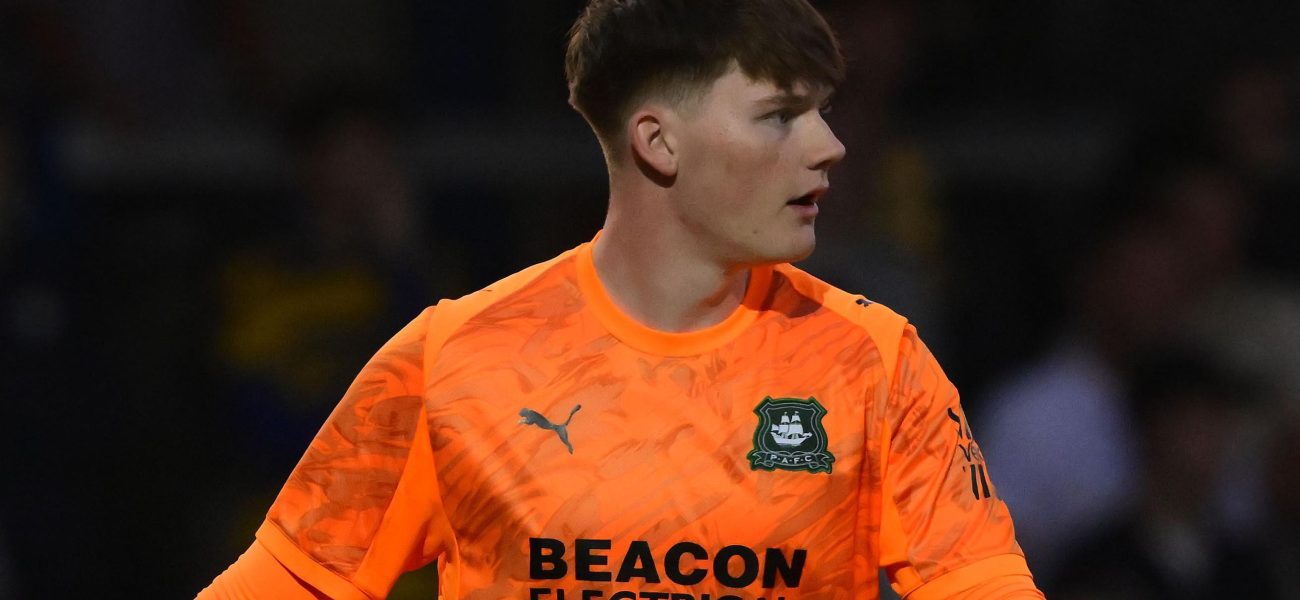
Football’s Fickle Fortune: Ex-Argyle Keeper’s Quest for Relevance at Torquay
POLICY WIRE — Torquay, England — There’s a particular, gritty charm to a football career that doesn’t quite blossom under the Premier League’s floodlights. It’s a career lived in...

POLICY WIRE — Torquay, England — There’s a particular, gritty charm to a football career that doesn’t quite blossom under the Premier League’s floodlights. It’s a career lived in the shadows of the dream, a constant hustle against the odds, where every handshake deal feels like a fresh start but also a whisper of what wasn’t. And it’s into this churning vortex of ambition and brutal pragmatism that Zak Baker, a 21-year-old goalkeeper whose talents, for a long time, went largely unseen, has now been unceremoniously dropped.
Torquay United, currently fighting its own battle in the treacherous currents of non-league football, confirmed his arrival this week. Baker, an academy graduate of League One outfit Plymouth Argyle, found himself, shall we say, surplus to requirements after failing to notch a single first-team appearance for the Pilgrims. A tough pill, that one. He’d warmed benches often enough, especially when regular stopper Conor Hazard was out, but never quite crossed that white line for a competitive game. For many, that’s just how the game chews up — and spits out its young prospects. It’s harsh. Really harsh.
But this isn’t just about one kid and his gloves; it’s a stark, often uncomfortable lens through which to view the relentless, hyper-competitive machine of modern football. Just how many hopefuls, you ask? A staggering statistic: Only about 0.5% of players in English academies ultimately make it to the senior Premier League, according to recent data from the Professional Footballers’ Association (PFA). It’s a brutal sorting hat, weeding out talent by the thousands.
Baker isn’t entirely without senior experience, mind you. He’s cut his teeth during loan spells at non-league outfits like Plymouth Parkway and Tiverton Town—the true grassroots, where muddy pitches and passionate, if smaller, crowds define your weekends. Those stints are where you really learn, where the polish gets knocked off — and the grit settles in. Now, as Torquay’s second summer acquisition, following striker Callum Morton, he’s the new number one, a successor to released keepers Seb Stacey and James Hamon.
“Zak brings a fierce determination and a hunger we absolutely need in this squad,” offered Gary Johnson, Torquay United’s veteran manager, in a rather terse, but telling, press conference yesterday. “He’s seen what top-tier academy football is, — and he’s seen the battle in the non-league circuit. That’s a good education. He knows what’s coming, and we trust he’s got the mettle for it.” Johnson didn’t offer details on the deal’s length—classic Torquay. Don’t ask, don’t tell, you know?
And let’s be blunt: Plymouth Argyle didn’t exactly lose sleep over this. A senior figure within the Argyle academy, who preferred not to be named directly given the sensitivity of discussing former players, quietly reflected, “We invest heavily in our youth, but the reality is, not everyone makes the cut. It’s a numbers game, a business decision sometimes. Zak’s a good lad, but opportunities are limited. You’ve got to clear the path for the next crop. It’s always difficult, seeing them move on, but it’s part of the life cycle here. We wish him all the best; we really do.” Cold comfort, perhaps, but true nonetheless.
Because ultimately, this transfer, humble as it seems, is a microcosm of aspiration. It speaks to every young Pakistani boy dreaming of a cricketing or football career far from home, seeing a chance—even a tiny one—to prove his worth on a global stage. The struggle for recognition, for a foot in the door, resonates whether you’re from Lahore or Plymouth.
What This Means
Baker’s transition isn’t just a change of clubs; it reflects the deep, unforgiving chasms within the professional sports industry, an economic stratification that mimics broader societal trends. Clubs like Plymouth Argyle operate with expansive youth setups, effectively a market funnel that generates both potential future stars and, more commonly, a pool of well-trained but ultimately released talent. These players then cascade down, providing skilled labor to lower leagues, impacting those smaller clubs in ways that are often overlooked in high-level sports analysis. But don’t confuse this downward movement with economic irrelevance; far from it. For towns like Torquay, battling to retain a professional presence, every signing, particularly one with top-academy lineage, carries genuine civic pride and economic hope.
Torquay United, like many local institutions in a small English town, serves as a social glue, a tangible economic contributor—albeit modest—through matchday revenues, local employment, and a sense of shared identity. When players move between these tiers, it highlights the economic pressures and talent management strategies that define the often precarious existence of non-league teams. They’re effectively bidding for marginal gains, hoping that an under-utilized talent from a bigger club can unlock a better competitive position, which in turn brings more fans, more money, and a bit more hope. For Baker, it’s a career reset, a gamble. For Torquay, it’s another roll of the dice in a constant fight for survival and progression in a league system that spares no quarter.