


Barcelona’s Unlikely Custodian: A Masterclass in Value, Not Vanity, for Global Sport
POLICY WIRE — Barcelona, Spain — The gilded cage of top-tier European football often screams excess. Megabucks transfers, astronomical wages, the constant clamor for marquee names—it’s a swirling...

POLICY WIRE — Barcelona, Spain — The gilded cage of top-tier European football often screams excess. Megabucks transfers, astronomical wages, the constant clamor for marquee names—it’s a swirling vortex of fiscal bravado and questionable arithmetic. But every so often, the script flips, a sharp counterpoint emerges, proving that shrewd calculation can still beat out pure opulence. And sometimes, just sometimes, the quiet gamble pays off more than a king’s ransom.
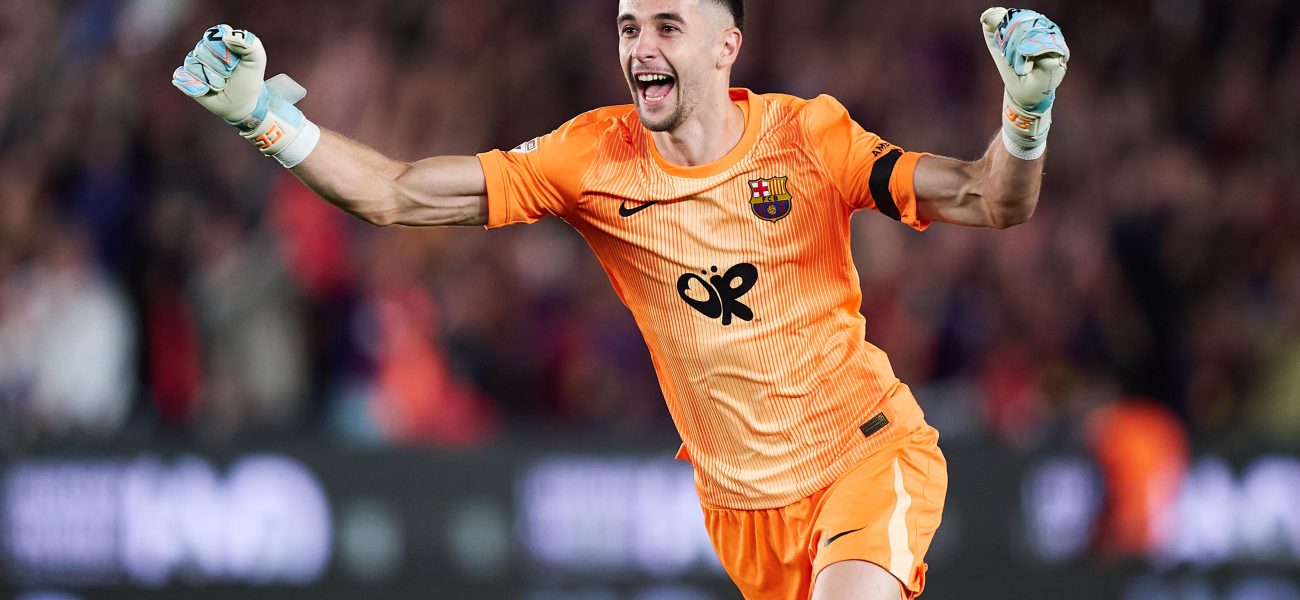
Enter Joan Garcia, the twenty-five-year-old custodian for Barcelona, whose ascension from local rival Espanyol to undisputed shot-stopper has rewritten the playbook for the Catalan giants. Not with a blaze of pre-arrival glory or a princely fee—that’s just not his style, frankly. But with a relentless, gritty competence that quickly overshadowed the skepticism. He stepped into a role many assumed was untouchable, occupied by a club legend. And he didn’t just fill big shoes; he made them his own.
It’s a tough gig, playing keeper for a club like Barca, always under the microscope, always expected to not just save shots but orchestrate play from the back. But Garcia took to it with a swagger that belied his understated public persona. Moving across town to the biggest rival? That’s like changing allegiances in a family feud—you’d best be ready for the backlash. The raw, guttural jeers on his return to the RCDE Stadium were proof of that, but Garcia didn’t just absorb them; he seemed to thrive on them, channeling that animosity into something productive. Call it psychological steel, a necessary trait in this hyper-competitive global arena.
And the numbers? They don’t just talk, they bellow. Garcia logged an astonishing 72.9% save success rate across his 147 stops this season, a statistic widely circulated by analysts and club sources. That’s elite performance, full stop. But what truly makes Garcia stand out in a sport obsessed with goal-scoring is his command of the new keeping philosophy. He wasn’t merely preventing goals; he was starting attacks, becoming an additional field player. With an 88.04% pass completion rate, on over a thousand attempts, he reimagined the keeper’s role from a defensive bulwark to a foundational playmaker. It’s an aggressive reimagining that forces opponents to rethink their pressing schemes, fundamentally altering game dynamics.
But this isn’t just about sporting metrics; it’s about institutional policy, about betting on the right talent in a market where common sense is often obscured by flashy price tags. “Look, the market’s a casino, most times. But every now and then, you find gold where others saw scrap,” noted Javier Tejedor, Barcelona’s Sporting Director, in a recent interview. “Garcia isn’t just a player; he’s a statement about smart scouting — and audacious investment. And yes, it was a fantastic return on our rather modest outlay. We can’t always chase the biggest names; sometimes, the smartest move is to cultivate or acquire talent that perfectly fits our philosophy without breaking the bank.”
Garcia’s undeniable claim to the Spanish No. 1 shirt isn’t merely personal triumph; it reflects a deeper policy shift in national team selection, too. “Spain’s always valued skill, obviously. But sometimes you need raw nerve,” commented Luis de la Fuente, Spain’s National Team Head Coach. “A keeper who commands that kind of respect, who can dictate play from the back? That’s not just a World Cup call-up; it’s recognizing a seismic shift in how we envision the position. We aren’t just looking at shot-stoppers anymore. We’re looking for architects.”
This saga of the unlikely star resonates far beyond Spain’s borders, capturing the imagination of global fans, even those in distant lands like Pakistan. There, where passionate football followings intertwine with deep-seated economic challenges, stories of unexpected success against overwhelming odds carry significant weight. Because Garcia’s journey—defying expectations, shrugging off the pressure of a cross-town transfer, rising from a perceived underdog status to undisputed elite—serves as a compelling narrative. It speaks to the universal appeal of meritocracy and the pursuit of excellence, inspiring individuals in places like Karachi or Lahore who might face their own uphill battles. His success, bought not through extravagant sums but through sheer grit and talent, becomes a testament to human potential in a world that sometimes feels overwhelmingly constrained.
What This Means
Garcia’s sensational season isn’t just a sporting fairytale; it’s a policy parable for football management in an era of fiscal realism. Barcelona, historically a big spender, stumbled onto a formula for value creation—investing smartly in established local talent rather than importing exorbitant, sometimes unproven, stars. It signals a potential strategic pivot for clubs grappling with Financial Fair Play regulations — and mounting debts. And it’s not only about Barcelona. It’s about how national teams are forced to evolve their tactical frameworks based on emergent talent, impacting squad selections and ultimately, the country’s performance on the international stage.
Economically, it underscores the persistent, sometimes unpredictable, ROI on human capital. A relatively lower initial investment in Garcia has yielded superstar-level returns, prompting broader questions about player valuation models and the efficacy of current transfer market dynamics. For countries aspiring to grow their own sporting leagues, or even attract and retain global talent—from cricket’s intense rivalries to infrastructure development—Garcia’s trajectory illustrates that sometimes, the most effective policy isn’t about splashing cash, but about seeing the untapped gold right under your nose. It forces a recalibration of what “worth” truly means in the volatile, high-stakes game of global professional sports.