

Religious Profiling in Occupied Kashmir: An Assault on Faith, Freedom, and Human Rights
The act of compiling a list of mosques and mosque management committees in Indian Illegally Occupied Jammu and Kashmir has proven to be another deplorable chapter in the broader Indian effort to...

The act of compiling a list of mosques and mosque management committees in Indian Illegally Occupied Jammu and Kashmir has proven to be another deplorable chapter in the broader Indian effort to suppress the religious, cultural, and political identity of the people of Kashmir. The strong condemnation of such an act by Pakistan is not just a matter of statecraft. Rather, it is a stand against a growing pattern of intimidation that undermines the very root of basic human rights.
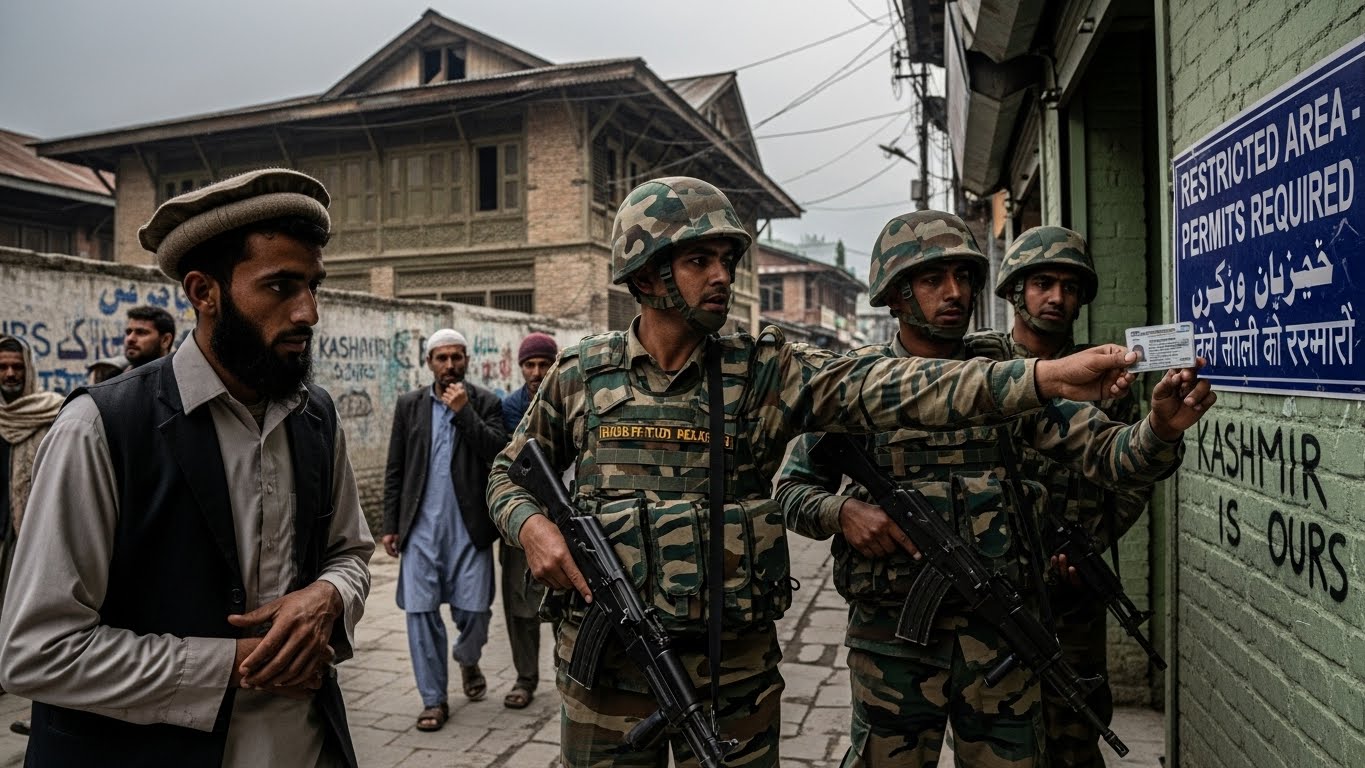
Mosques are merely places of worship for Kashmiri Muslims. They are also community hubs and places of religious solace. The forced extraction of personal as well as pictorial details and sectarian info of religious functionaries amounts to a gross violation of religious business and contravenes the internationally recognized right to freedom of religion. These actions are not mere administrative formalities. They are intimidation tools that are employed to induce fear and break communal unity.
However, this profiling exercise has to be considered in its larger context. This strategy of control, which began after the abrogation of the special status of Jammu and Kashmir in August 2019, in violation of the UNSC resolutions, has seen the occupied state face mass surveillance, arbitrary arrests, restrictions on religious gatherings, and shrinking civic space. Therefore, targeting mosques and religious leaders of the Muslim community is only the next step in this strategy, which focuses on controlling not only the movement of the Kashmiris, but also their minds.
The ideological foundations of such policies are equally frightening. The deliberate targeting of Muslim religious bodies is part of the rising body of climate in which institutions in India are being made to swim in Islamophobia to the tune of the Hindutva ideology. The specific targeting of the mosques and the Islamic leadership by the occupying power indicates the imperial and communal character of the governance structure being imposed on the Muslim-majority part of India.
This issue has a clear stance under international human rights law. Article 18 of the Universal Declaration of Human Rights lays down freedom of thought, conscience, and religion. The Fourth Geneva Convention clearly restricts any occupying state from interfering in the religious practices of the occupied populace. The Indian government’s Treatment in the IOJK is a grave violation of such norms, which requires immediate attention.
Consequently, the role of Pakistan is both moral and legal. Being a neighboring state, a party to the Kashmir dispute, and a persistent voice for the Kashmiri people, it is incumbent upon Pakistan to speak out for such injustices. It is important for Islamabad to maintain its level of engagement with the United Nations, the Organisation of Islamic Cooperation, and international platforms to bring global focus to bear on deteriorating human rights conditions inside IOJK.
In this case, silence would amount to complicity. The normalisation of religious profiling augurs very ominously, not only for Kashmir but for minority communities elsewhere as well. Past experience warns us that when places of worship are put under surveillance and faith leaders are harassed, broader repression follows hard upon.
People of Jammu and Kashmir have an inalienable right to practice their religion without fear, coercion, and discrimination. This right cannot be extinguished by any amount of surveillance or intimidation. Pakistan’s solidarity with the Kashmiri people is rooted in the universal values of justice, dignity, and freedom of belief-values which transcend borders and politics.
The time has come for the international community to go beyond expressions of concern and to press for concrete action that independent investigations must be conducted, human rights observers should have unrestricted access, and genuine pressure should be exerted upon India. Kashmiris do not seek privilege. They seek protection of rights already guaranteed to them under international law.
Until this is guaranteed, the voice of Pakistan will continue. Because the defense of freedom of religion in Kashmir becomes not only a concern of the region. It becomes a challenge to the commitment of the world to human rights.
Author