


The Pharaoh’s Folly: When Giza’s Boxing Spectacle Stumbled on a Single Second
POLICY WIRE — Giza, Egypt — The pyramids have seen it all: empires rise and fall, millennia tick by, human endeavor often reaching for greatness, sometimes falling short. And last month, under their...

POLICY WIRE — Giza, Egypt — The pyramids have seen it all: empires rise and fall, millennia tick by, human endeavor often reaching for greatness, sometimes falling short. And last month, under their ancient gaze, boxing offered another chapter in that grand, imperfect narrative. What was meant to be a spectacular showcasing of talent, with Ukrainian heavyweight Oleksandr Usyk defending his WBC crown against Dutch kickboxing titan Rico Verhoeven, instead dissolved into a contentious scramble—a microcosm, some might say, of larger institutional trust issues.
It wasn’t Usyk’s dominance that seized headlines. It wasn’t Verhoeven’s surprising resilience against an orthodox boxer. No, the talk orbiting the ‘Glory in Giza’ event wasn’t about athletic prowess. It was about a bell, a referee, — and one crucial, agonizingly timed second.
See, referee Mark Lyson, caught in the white-hot frenzy of the penultimate round, inexplicably halted the action. He called off the fight, giving Usyk the win by TKO. Sounds simple enough, right? Except the clock—that ever-unforgiving arbiter of fate—appeared to contradict him. Replays, dissected ad nauseam by fan groups and industry insiders alike, strongly suggested the stoppage occurred precisely as, or even a beat after, the round’s bell reverberated through the ancient site. That’s a huge deal. It isn’t just a timing error; it’s a denial of a fighter’s fundamental right: to hear the bell, go to his corner, and reset.
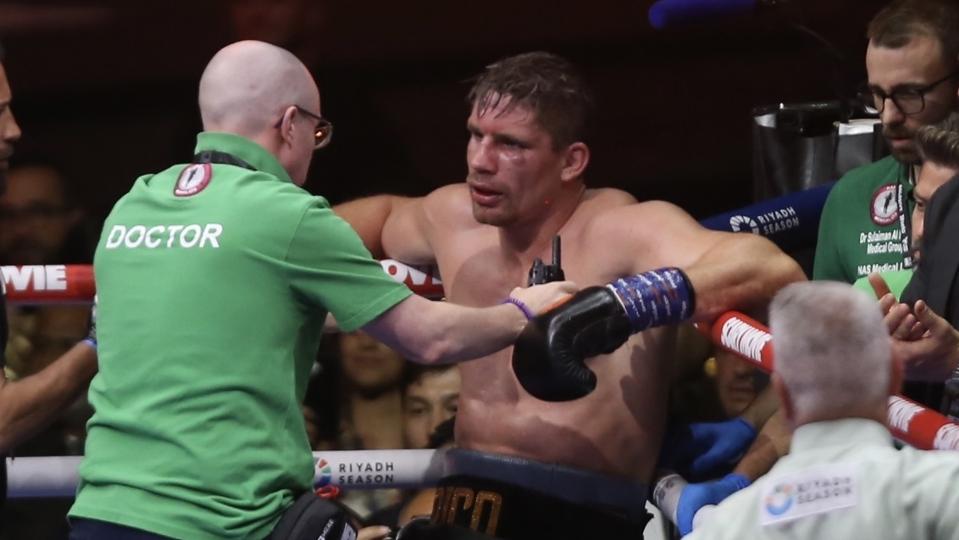
Verhoeven was on his feet. He was hurt, sure, but he was standing, hands up, — and attempting to return fire. But then Lyson waved it off. Just like that. It wasn’t the kind of lights-out knockout that brooks no argument. It was a fuzzy, unsatisfying end. And, predictably, the global online chatter went from enthusiastic anticipation to outright cynical speculation.
“The optics are truly regrettable,” conceded a spokesperson for the World Boxing Council, speaking anonymously to preserve neutrality during the protest phase. “Every effort is made to uphold fair play, but human error, particularly under immense pressure in an environment like Giza, remains an uncomfortable reality. We can only review the footage — and processes.”
For some, this was just human error, a harried official losing track of the clock amid a flurry of punches. Happens in sports, they’d argue. But because Usyk arrived undefeated at 25-0, a celebrated A-side with a record carefully managed, many fans smelled something fouler. They connected the dots between Verhoeven being even or ahead on two scorecards before the 11th round, and a stoppage occurring just as he was about to get a crucial minute’s respite. It’s too neat, too convenient, many cried. Such controversies—especially those touching on the perceived sanctity of sports—resonate deeply across the Muslim world, where a rich tradition of honest competition clashes with often-skeptical views of external institutional integrity.
“What we witnessed undermines confidence,” remarked Tariq Abdullah, a seasoned sports commentator from Lahore, whose observations often find traction across the broader Muslim world. “When money talks louder than rules, the sport suffers, and its global appeal, particularly in regions keen on genuine athletic contests, inevitably takes a hit.” The incident doesn’t just taint a single fight; it fuels a broader narrative about who truly controls the outcome when global sporting spectacles hit local shores—or in this case, ancient sand. It’s a familiar script.
Because boxing, like all high-stakes global events, thrives on perceived fairness. Its allure in places like Cairo, Riyadh, or Dubai isn’t merely about big names; it’s about a universal language of contest, merit, and unambiguous victory. But here, the language was garbled, punctuated by an untimely clang.
Verhoeven’s protest is currently working its way through bureaucratic channels—a long shot, history suggests. Overturning a result based on a fraction-of-a-second timing dispute is a heavy lift. Yet, the clamor won’t just evaporate. It fuels calls for immediate rematches, sharper officiating, and perhaps, more skeptical eyes on fights where a star’s spotless record hangs in the balance.
What This Means
Beyond the canvas and the ropes, this controversial Giza decision has implications that stretch into policy and perception. Firstly, for global sports institutions like the WBC, controversies erode credibility—that precious commodity on which their power, their licensing, and their financial models depend. Each questionable call, particularly those perceived as benefiting the more lucrative fighter, chips away at the universal trust, feeding skepticism that eventually filters into policy debates around oversight, governance, and transparency.
Secondly, for host nations, particularly those leveraging iconic locations for global events—Egypt positioning Giza, for instance—the outcome of such a spectacle matters immensely for national branding. They’re spending considerable sums to project an image of modernity, capability, — and fair play. A dubious outcome under their watch can, therefore, undermine these soft-power initiatives, even if the error wasn’t theirs. International sporting events aren’t just entertainment; they’re platforms for diplomatic — and economic influence. But if the global audience views the game as rigged—or at least badly officiated—that investment doesn’t yield its intended return. This isn’t just about a punch; it’s about the precarious legacy of sporting integrity in an interconnected, cynical world.