


Myanmar’s Junta Masters Political Theatre with Suu Kyi’s Latest Sentence Trimming
POLICY WIRE — Yangon, Myanmar — Another turn of the screw, another calculated act of theatrical clemency from Myanmar’s ruling junta. It’s a macabre pantomime, this recurring reduction of Aung San...

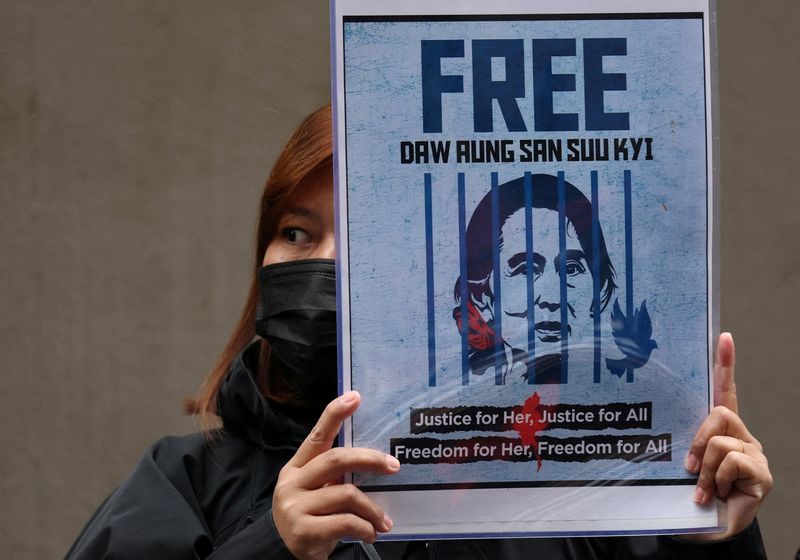
POLICY WIRE — Yangon, Myanmar — Another turn of the screw, another calculated act of theatrical clemency from Myanmar’s ruling junta. It’s a macabre pantomime, this recurring reduction of Aung San Suu Kyi’s extensive prison sentences. Each gesture, ostensibly humanitarian, serves less as a harbinger of genuine reform and more as a thinly veiled exhibition of military might – a reminder of who holds the reins, and who remains firmly in their iron grip. For the seasoned observer, it’s not an easing of tension, but a recalibration of control.
The latest iteration saw her cumulative 27-year sentence, already whittled down to 20 years in July 2023, further shaved by an unspecified amount. Her legal team, operating under immense pressure — and surveillance, confirmed the commutation. But they won’t elaborate. They can’t. The precise charges, once numbering nearly two dozen – everything from election fraud to violating COVID-19 rules and possessing unlicensed walkie-talkies – were ludicrous. Her conviction, a kangaroo court travesty (let’s be honest), served only to neutralize the nation’s most potent democratic symbol following the 2021 coup.
At its core, these commutations are hardly a softening of stance. They’re a cynical bid for international legitimacy, a strategic deployment of symbolic gestures intended to deflect mounting global condemnation without surrendering actual power. Major General Zaw Min Tun, spokesperson for the State Administration Council (SAC) – as the junta styles itself – attempted to frame the move as a sign of magnanimity. He shot back at critics, asserting, "This reflects our commitment to stability and national unity, always within the bounds of justice, and it’s certainly not an admission of previous judicial error." His words, crisp and devoid of any real concession, underscore the regime’s unyielding posture.
Still, the global community, often weary from Myanmar’s entrenched crisis, largely greets such news with a familiar blend of skepticism and despair. "These piecemeal gestures don’t address the fundamental illegitimacy of her detention or the broader repression gripping Myanmar," lamented Tomás Ojea Quintana, the former UN Special Rapporteur for Human Rights in Myanmar, in a recent interview. "The international expectation remains her unconditional release, along with all political prisoners, and a return to civilian rule." That expectation, of course, rings hollow against the backdrop of the junta’s steadfast refusal to yield.
Behind the headlines, Myanmar remains a nation in turmoil. The Assistance Association for Political Prisoners (AAPP) — a revered monitoring group operating in exile — tallies over 20,000 political prisoners arrested since the 2021 putsch, with nearly 5,000 confirmed killed by the military regime. Suu Kyi, despite her high profile, is just one face among thousands silenced by a regime that brooks no dissent. The conflict, once largely confined, has metastasized, drawing in ethnic armed organizations and pro-democracy militias, leading to a humanitarian catastrophe that echoes the dire straits of other conflict zones in the region.
📄 POLICY WIRE WHITEPAPER PUBLISHED: PAKISTAN'S NATIONAL SECURITY POLICY PRIORITIES
👉 READ BY CLICKING HEREThe situation resonates uncomfortably with anxieties across the wider South Asian and Muslim world, particularly given the junta’s long, brutal history with the Rohingya Muslim minority. While not directly related to Suu Kyi’s current charges, the memory of the military’s genocidal campaigns against the Rohingya (a crisis that saw little meaningful intervention from Muslim-majority states or organizations like the OIC) casts a long shadow over any claims of humanitarian consideration. Pakistan, alongside other nations in the Muslim world, has often expressed concern over human rights abuses, yet concrete, coordinated pressure on the SAC remains elusive. Its neighbors, including China, which maintains crucial economic and strategic ties, often prioritize stability and self-interest over intervention.
What This Means
This latest commutation, then, isn’t a pivot. It’s a precisely calibrated signal from the junta. It tells domestic opposition that resistance is futile; their figurehead remains captive, albeit with a slightly lighter (and utterly symbolic) sentence. To the international community, it’s a defiant whisper: "We’re in control. We dictate the terms." They’re not bending to external pressure so much as manipulating the perception of it, offering just enough to prevent truly aggressive, unified action – sanctions that bite, a no-fly zone, significant arms embargoes – from major global players. Economically, the country continues its downward spiral, but the military elite remains insulated, profiting from illicit trade and foreign investment from less scrupulous partners. The regional implications are significant too. A fractured, unstable Myanmar creates a porous border, fueling illicit drug trade, human trafficking, and an influx of refugees, thereby destabilizing neighboring countries already grappling with their own economic and political headwinds, much like Sri Lanka’s ongoing struggles. Don’t expect substantive change; this is simply another act in a long-running, tragic play, with the military playing both director and executioner.