


Weinstein’s Relentless Saga: A Hung Jury Extends #MeToo’s Toughest Reckoning
POLICY WIRE — New York City, USA — For those who thought Harvey Weinstein’s grim odyssey through America’s courtrooms might, finally, be nearing its definitive end, Friday brought another bewildering...

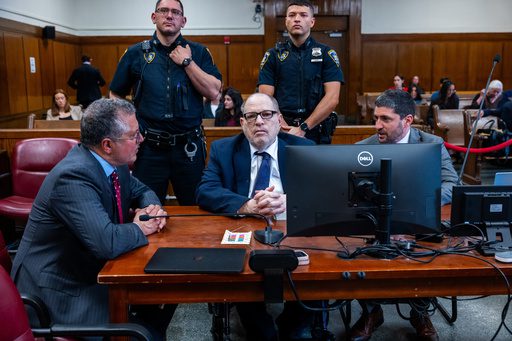
POLICY WIRE — New York City, USA — For those who thought Harvey Weinstein’s grim odyssey through America’s courtrooms might, finally, be nearing its definitive end, Friday brought another bewildering twist: a mistrial. Not with a bang, not with a whimper, but with the quiet resignation of a jury unable to reconcile conflicting narratives—another three weeks in a Manhattan courtroom culminating in an echoing deadlock. And so, the former Hollywood leviathan, once a titan whose touch could launch careers or—as allegations would have it—shatter lives, simply remains, metaphorically at least, very much at sea.
It’s a peculiar limbo, this latest judicial detour. Already a convicted man serving time across two coasts for other sex crimes, the latest development does little to alter his immediate physical address. But it reopens old wounds for those seeking a tidy narrative of justice, forcing another look at the gnarly, uncomfortable nuances that even the most compelling testimonies can’t always resolve. The twelve New Yorkers — a majority-male jury, no less — wrestled with the accusation from Jessica Mann, an actor and hairstylist. They couldn’t agree. They just couldn’t. It leaves his New York rape charge suspended, a ghost of an indictment floating above an already complicated legal landscape.
The stalemate wasn’t exactly unexpected for court watchers. Judges always tell them to keep trying, don’t they? But these jurors, on their third day of deliberations, sent a note with an air of finality: they were done. Absolutely spent. Judge Curtis Farber’s instruction to continue—a legal formality often played out in these high-stakes dramas—didn’t alter their core conviction. A hearing is now set for late June, a date circled by prosecutors as they ponder yet another bite at the apple, a potential fourth trial. It’s a judicial merry-go-round few envisioned for a figure whose downfall launched a global movement.
“The justice system’s wheels grind slow, sometimes so slow they stop altogether, leaving everyone wondering what exactly was achieved,” lamented Prosecutor Anya Sharma, known for her sharp commentary on legal proceedings, following the announcement. “It’s not for lack of trying on the part of the jurors or counsel; sometimes, the facts, or at least their interpretation, defy easy consensus.” Because truth, it turns out, often comes wrapped in shades of gray, not simple black and white. And that’s a tough sell for unanimity.
The defense, predictably, found solace in the indecision. “A mistrial is not a conviction; it’s a failure to convict,” stated defense attorney Michael Greene, an expert in high-profile criminal defense. “It means the prosecution failed to prove its case beyond a reasonable doubt to all twelve jurors. And that, in America, should always count for something significant.” They’d argued, vigorously, that Mann’s encounters with Weinstein, while messy and involving a power imbalance, were consensual—a murky dynamic characteristic of relationships forged in Hollywood’s opaque corridors.
Mann’s narrative, detailed across five intense days on the stand, depicted a harrowing experience in a Manhattan hotel in March 2013, where Weinstein allegedly blocked her exit and forced himself upon her. She said she protested, she said ‘no.’ But then came the defense’s dissection of their fraught, on-again-off-again relationship; the emails years later where Mann expressed affection—even asking for career help. Her later receipt of approximately $500,000 from a sexual misconduct settlement fund established during his company’s bankruptcy proceedings, though excluded this time, previously served as further fodder for the defense.
📄 POLICY WIRE WHITEPAPER PUBLISHED: PAKISTAN'S NATIONAL SECURITY POLICY PRIORITIES
👉 READ BY CLICKING HEREIt’s this tangled web—the immediate horror vs. the prolonged, complex interaction—that often confounds juries. Hollywood was, and in some corners still is, a world where the lines blur, where ambition intertwines with abuse, and where access sometimes comes with unspoken, terrible costs. This retrial, like others before it, became a referendum not just on one man’s actions, but on society’s evolving understanding of consent and coercion. It’s not just about a movie producer anymore; it’s about power, exploitation, and accountability for predators—a theme resonating far beyond Beverly Hills.
What This Means
This mistrial, particularly given Weinstein’s existing incarcerations, won’t drastically alter his immediate trajectory. But for the broader #MeToo movement, it signals an uncomfortable, ongoing reality: obtaining unequivocal justice in court, especially in cases fraught with contextual complexities and power dynamics, is incredibly hard. It suggests that while public sentiment may have decisively turned against figures like Weinstein, legal certainty often lags, hamstrung by the rigid demands of unanimity and the vagaries of human interpretation. Economically, this prolonged legal skirmish drains resources, forcing public coffers to shoulder the burden of repeated proceedings while private firms benefit from the protracted litigation. Politically, it complicates the narrative for those advocating for legal reforms that simplify proving sexual assault—highlighting just how much more work remains.
It also underscores the ripple effects felt globally. The MeToo movement, born in the West, has found different, sometimes more constrained, expressions in places like Pakistan and other South Asian nations. The visibility of Western celebrity trials often sparks conversations, but the cultural and legal infrastructures for holding powerful men accountable differ starkly. While a New York jury struggles with nuances, conversations about abuse and consent in societies with different norms and patriarchal structures are often just beginning, making Weinstein’s seemingly endless trials a strange, unsettling benchmark. One wonders how such prolonged legal ambiguity would be perceived in systems where societal pressure, rather than solely courtroom evidence, often dictates outcomes. Perhaps the sheer persistence of this case, however frustrating, serves a purpose by laying bare the messy truth that justice, anywhere, is rarely straightforward. Even beyond the gilded cage of Western jurisprudence, these kinds of power plays remain deeply complex.
The district attorney’s office now faces a critical decision: push for a fourth trial or concede. Another prosecution would mean subjecting Mann to yet another emotionally grueling appearance and dedicating immense prosecutorial resources to a case that, for all its symbolic weight, hasn’t shifted Weinstein’s status as a prisoner. But then, to walk away would feel like an acknowledgment of defeat, a concession to the difficulty of prosecuting complex sexual assault cases that often rely on victim testimony years after the fact. It’s a bitter pill. But one thing’s clear: Harvey Weinstein’s legal woes, confounding as they may be, aren’t fading into the sunset just yet. They never do.