
Mumbai’s Rooftop Resilience: Unpacking the City’s Vertical Economy
POLICY WIRE — Mumbai, India — From a jet-lagged traveler’s window, Mumbai’s sprawling enormity initially overwhelms, an endless tapestry of concrete and cacophony. But look closer,...

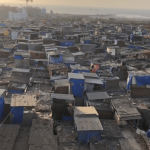
POLICY WIRE — Mumbai, India — From a jet-lagged traveler’s window, Mumbai’s sprawling enormity initially overwhelms, an endless tapestry of concrete and cacophony. But look closer, descending past the glinting glass towers and bustling street canyons, and you’ll find another city entirely: a vibrant, self-organizing universe thriving just above the fray, on its rooftops.
This isn’t merely an aesthetic observation. These elevated platforms are crucial arteries in the city’s pulsating heart, demonstrating an unparalleled ingenuity born of necessity. Forget quaint gardens; we’re talking full-fledged informal economies, social hubs, and even, increasingly, nascent energy generation.
Few cities in the world epitomize vertical ambition quite like Mumbai. With a staggering population density exceeding 31,000 people per square kilometer, according to recent World Population Review data, horizontal expansion is often a luxury this city can’t afford. So, residents look up.
On countless rooftops, you’ll discover garment workshops humming with sewing machines, makeshift cafes serving chai, families tending small vegetable patches, and even community gatherings for celebrations. It’s an often-unseen layer of commerce and daily life that contributes significantly to the city’s economic resilience.
“Our city’s strength isn’t just in its skyscrapers, but in the entrepreneurial spirit that literally reaches for the sky, transforming every available space into an opportunity,” stated Mayor Kishori Pednekar during a recent public address, acknowledging the city’s unique resourcefulness. “It’s a testament to our people’s enduring hustle.”
And she’s not wrong. Make no mistake, this isn’t just about survival; it’s about optimizing every available inch in a city where space is the ultimate premium. These informal sectors, while often unregulated, form a vital safety net and employment source for millions.
Not everyone sees it as purely positive, of course. For urban planners, this informal growth presents significant challenges regarding safety, sanitation, and official oversight. But how do you regulate something so ingrained, so spontaneous?
Indeed, one can’t help but draw parallels to the densely packed urban sprawls of Lahore or Karachi, where communal spaces and informal markets often spill beyond their designated boundaries, defying conventional urban planning. It’s a shared urban DNA across the subcontinent, where resourcefulness trumps formality.
A leading Pakistani urban architect, Dr. Omar Hamid Khan, once mused on this very topic. “What we see in Karachi or Lahore, that vibrant, almost chaotic utilization of every square foot – Mumbai takes it to another dimension, vertically. It’s a pragmatic response to intense population pressure, a shared human story of adaptability across the region.” His observation underscores a fundamental, shared challenge and solution for mega-cities in South Asia.
What This Means
This vertical explosion of activity carries profound implications for Mumbai’s future, and for urban development across developing nations. Economically, these rooftop enterprises represent a largely untaxed, yet undeniably productive, sector. Integrating them into the formal economy, or at least acknowledging their contribution, could unlock significant economic potential, while also ensuring better working conditions and safety standards.
Politically, the challenge lies in balancing regulation with the organic growth that defines much of Mumbai’s charm and functionality. Can authorities provide support and infrastructure without stifling the very ingenuity that creates these spaces? It’s a delicate tightrope walk for any municipal government grappling with rapid urbanization.
Still, the environmental aspect can’t be ignored. The proliferation of rooftop gardens and the increasing adoption of small-scale solar panels, even on informal structures, hint at a grassroots movement towards urban sustainability. Imagine the collective power if even a fraction of these rooftops were optimized for green energy or urban farming.
Behind the headlines of India’s booming economy and glittering tech hubs, this quieter, grittier side of Mumbai continues to evolve. It’s a living laboratory of urban resilience, offering lessons far beyond its city limits.
Ultimately, according to Dr. Anjali Sharma, an urban sociologist at the Delhi School of Economics, the future of mega-cities like Mumbai hinges on recognizing and strategically integrating these informal, vertical ecosystems. “Ignoring them isn’t an option; they’re too vital. The smart path forward involves innovative policy that legitimizes, supports, and learns from this incredible, organic energy, rather than attempting to erase it.”