


The Brutal Descent: Ex-Champ Muhammad Falls in Las Vegas While Global Hopes Dim
POLICY WIRE — Las Vegas, USA — The spotlight, unforgiving as a desert sun, eventually shifts. For some, it moves towards triumph; for others, a harsh reminder that yesteryear’s accolades...

POLICY WIRE — Las Vegas, USA — The spotlight, unforgiving as a desert sun, eventually shifts. For some, it moves towards triumph; for others, a harsh reminder that yesteryear’s accolades guarantee nothing. This past weekend, the Ultimate Fighting Championship (UFC) served up just such a lesson, with UFC Vegas 118 unfolding mostly under-the-radar. It wasn’t a marquee event before its [QUOTE_PLACEHOLDER] as the commentary wryly noted, yet the stakes were Everest-high for its combatants, particularly one Belal Muhammad.
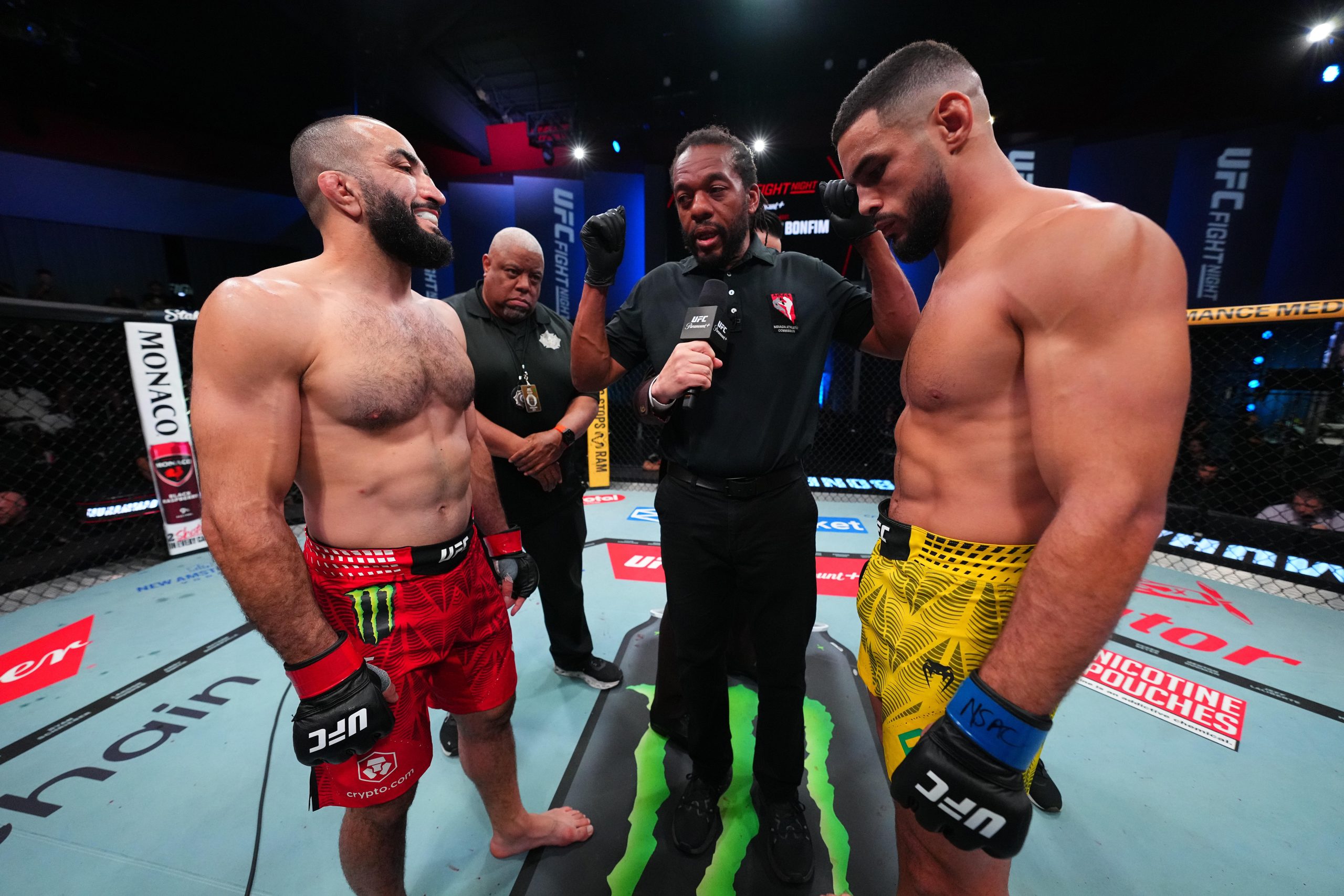
Muhammad, a welterweight contender of Palestinian heritage with a significant global following—particularly across the Muslim world—entered the cage with his [QUOTE_PLACEHOLDER] Little more than one year ago, he was champion. Now, after consecutive losses, his career trajectory hit a jarring crossroads against Brazil’s Gabriel Bonfim. And what played out was nothing short of a strategic dismantling. From the initial exchanges, Bonfim showed a surgical precision that Belal, despite his experience, couldn’t counter. Bonfim darted in and out to start the round, a strategy that, for Muhammad, seemed to set the tone for a long, grueling night. But the veteran couldn’t find his rhythm, nor could he establish the wrestling game he often leans on.
Bonfim’s leg kicks steadily took their toll, culminating in a significant limp emerging from Muhammad in round three. He didn’t just lose; he was thoroughly outmaneuvered, evident in the lopsided unanimous decision. The scorecards read a clean sweep: 50-45, 50-45, 50-45 for Bonfim across all three judges, as confirmed by official fight records. It’s a stark numerical portrayal of dominance. For fighters like Muhammad, whose narrative extends beyond the octagon to represent pride and aspiration for countless fans, such a decisive defeat carries a heavier weight.
And then there was Brendan Allen, ranked No. 4 at Middleweight. He entered coming off two very impressive wins, squaring off against the surging Edmen Shahbazyan. Allen was seemingly keen [QUOTE_PLACEHOLDER] but the fight felt less like a dominant showing and more like an arduous exercise in control. Shahbazyan, while not in the Top 15, certainly tested Allen. Allen took the center — and was aggressive from the opening bell. But for all the grappling — and grinding, it concluded in another unanimous decision, a methodical 30-27, 30-27, 29-28. This performance might just mean more questions than answers for Allen’s championship hopes. Because sometimes, simply winning isn’t enough when the ultimate prize is in view.
But beyond the headliners, the card offered a few visceral reminders of MMA’s unpredictable nature. Iwo Baraniewski, for instance, offered up his now-trademark brand of swift violence, dispatching Junior Tafa by TKO (leg kicks and ground and pound) in round one, clocked at just 1:25. What is a round 2? he implicitly asked. And the prelims, well, they weren’t without their share of controversy. Take Matt Schnell vs. Alessandro Costa: Costa dropped Schnell [QUOTE_PLACEHOLDER] Yet, many, including fight commentators, quickly opined it was [QUOTE_PLACEHOLDER] It’s the sort of split-second call that changes careers, an administrative whim dictating destiny, if you will.
What This Means
The stark outcomes at UFC Vegas 118 carry more than just sporting implications; they hint at deeper currents flowing through the sport, with particular resonance for global engagement, including in regions like Pakistan and the broader Muslim world. Belal Muhammad’s loss isn’t just a personal setback; it’s a symbolic one. As a prominent Muslim athlete, his quest for championship gold captivated a massive fanbase often overlooked by mainstream sports narratives. His defeat could impact the perception — and growth of UFC fandom in Muslim-majority countries. For young aspirants in Lahore or Riyadh, Muhammad represented a tangible path to international sporting glory.
Economically, the dominance of a new wave of talent, epitomized by Bonfim, suggests a continuous churn, forcing seasoned veterans to either adapt or fade. This dynamic maintains interest but also poses challenges for fighter branding and long-term investment by the promotion. It’s a perpetual, high-stakes meritocracy. Think of it like emerging markets—always demanding proof of present performance, not just historical promise. For a global corporation like the UFC, retaining diverse top-tier talent is a calculated geopolitical maneuver as much as it’s a sporting one. A loss by a fighter like Muhammad means a potential recalibration of marketing strategies aimed at expanding reach in crucial international territories, especially where mixed martial arts is a relatively nascent but growing industry. They’ve gotta keep fresh faces winning, sure, but a hero’s journey is good for business, too.
the controversy surrounding decisions like the [QUOTE_PLACEHOLDER] in the Costa-Schnell fight underlines the often-arbitrary nature of regulatory bodies within sports. Such events, while seemingly minor, erode trust and can lead to athlete grievances, impacting everything from pay to contract negotiations. It’s an unchecked power, reminiscent of opaque judicial systems, affecting livelihoods with instantaneous calls. The spectacle demands heroes, but it also creates villains—sometimes in the most unexpected corners, like those tasked with stopping the action. For more insights on narratives of perseverance amidst shifting global power dynamics, consider reading Liberty’s Gritty Comeback, Powered by Stewart’s Free Throws, Echoes Global Power Shifts. And, it seems, this isn’t just about fights, is it? It’s about perception, expectation, — and the brutal reality of the global stage.