


Reputations Dented: Bonfim’s Clinical Rout of Muhammad Raises Questions of Power and Pedigree
POLICY WIRE — Las Vegas, Nevada — The desert floor often hums with the predictable rhythms of established might, where reputations precede punches and veteran status grants a certain perceived...

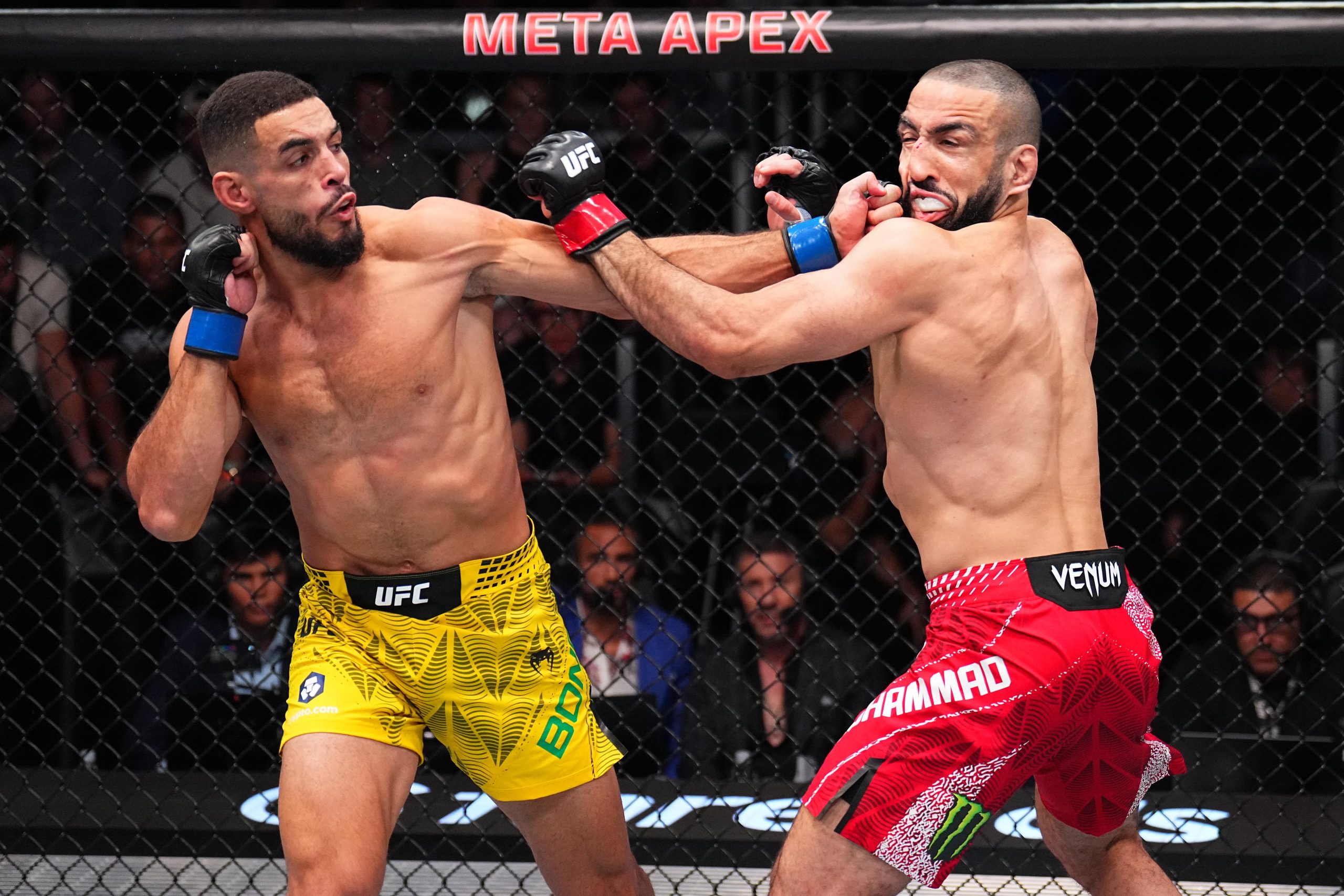
POLICY WIRE — Las Vegas, Nevada — The desert floor often hums with the predictable rhythms of established might, where reputations precede punches and veteran status grants a certain perceived invincibility. But then, there are nights when that meticulously constructed edifice just… collapses. In a bout nobody saw coming quite so starkly, Gabriel Bonfim, not yet a household name, delivered a blunt-force lesson in humility to the celebrated former champion, Belal Muhammad, effectively redrawing the pecking order in a welterweight division accustomed to its hierarchy.
It wasn’t merely a win; it was an education, delivered with fists and feet at UFC Vegas 118 inside the Meta Apex on June 06, 2026. Bonfim didn’t just compete; he dictated. He arrived with pressure, looking to stick his jab and those annoying calf kicks— an almost understated start. But Muhammad, whose nickname, The Bully, isn’t just for show, saw a lot of it coming. In fact, he landed first, pushing forward with a swift combination that, for a fleeting moment, suggested business as usual. Yet, Bonfim was no easy mark. Undeterred, he kept pressing, digging in a couple of hard body kicks. It was subtle, how the timing shifted; Bonfim started picking up Muhammad’s rhythm, connecting with significant counter punches. The intensity ratcheted up a notch in the first minute’s dying embers as Muhammad tried to force the issue, attempting to create those messy exchanges he thrives in. All told, the first round belonged unequivocally to Bonfim, whose blows simply landed heavier. It’s a cruel game, this, where perception shifts faster than a weight cut. [QUOTE_PLACEHOLDER]
Round two opened with Muhammad trying to plant his feet, a familiar stance for a veteran trying to reclaim the center, but it wasn’t long before Bonfim’s relentless forward motion had the former champ backing up, navigating the treacherous zone behind the black line. The Brazilian’s low kick, precise — and punishing, started finding its home with unsettling regularity. Muhammad retaliated with inside low kicks of his own — and dipped into the pocket, throwing left hooks. But it felt almost like an exercise in futility. He wasn’t matching Bonfim’s sheer volume, and more importantly, when Bonfim landed, his connections scored with great impact. Then came the unmistakable sound and sight of a hard Bonfim right hand, which interrupted an awkward Muhammad combination. By the round’s conclusion, Muhammad’s face told the story — bloody from multiple cuts, a testament to the onslaught. Some speculated Bonfim might be slowing down, showing signs of fatigue. But, oh, were they mistaken.
The third round began with a desperate gambit: Muhammad lunged for a powerful takedown, only to find Bonfim prepped and ready, escaping back to the center of the octagon. In open space, Bonfim went back to work, kicking that lead leg effectively, punctuating the punishment with another hard right hand. Muhammad, to his credit, found a crack, ripping a Southpaw left body kick — and tried to exchange off it. But Bonfim, in that pocket, was too quick, too sharp. Muhammad, undeterred, doubled down on that left body kick, landing it several more times. Then, the undeniable — Bonfim’s cracking right hand sent Muhammad’s mouthpiece flying. He just ate it. Regardless of the former champion’s iron jaw, the damage was really starting to wear on him between the bloodied face and battered lead leg. The writing, for those paying close attention, was already on the wall. For a fight lasting a full 25-minute fight duration (as per official records), such sustained pressure is a rarity.
Unfortunately for Muhammad, the championship rounds offered no reprieve. Nothing really changed in the fourth. He still couldn’t get his wrestling going, his usual security blanket ripped away. And Bonfim’s punches? Just so much snappier in exchanges. That lead leg continued to take abuse, an accumulating injury that only widened the athleticism gap, making every movement a deliberate agony. And what about Bonfim’s energy? His gas tank held up remarkably well. He looked quite sharp in his first visit to the championship round. The expected late-fight slump from a relative newcomer never materialized. There would be no fifth-round miracle. Muhammad, the perennial contender, tried to press forward but couldn’t hit Bonfim without taking heavier fire in return. It was a game effort from a fighter known for his resilience. But in the cold light of the scoreboard, Gabriel Bonfim defeated Muhammad via unanimous decision.
What This Means
This wasn’t just a sports upset; it’s a clear indication that established orders are more fragile than we care to admit. In a political and economic landscape currently grappling with shifts in power—whether it’s emerging nations challenging long-held global economic hierarchies or new political movements upsetting entrenched dynasties—Bonfim’s methodical dismantling of a former champion mirrors this broader narrative. It signals a dynamic where pedigree alone isn’t enough. Muhammad, with a name carrying significant recognition within certain communities, including elements of the broader Muslim world and South Asia where combat sports are revered, represents an established, known entity. His defeat, therefore, resonates beyond the cage.
We’re seeing a new generation, exemplified by Bonfim, with different approaches and an unwavering intensity, disrupting the old guard. Think about how unexpected electoral outcomes or technological disruptions shake seemingly stable sectors — it’s the same energy. This particular defeat serves as a visceral reminder that the traditional power brokers, those accustomed to their place at the top, can be outmaneuvered, outworked, and outstruck by a hungry, well-prepared challenger. It’s less about a single nation’s rise, more about the unexpected nature of a talent that wasn’t given its due. And frankly, this trend, where unheralded forces topple the familiar, is exactly what makes both combat sports and geopolitics so utterly compelling—and often, terrifying. Policy-wise, it suggests that even the most robust defenses, be they economic tariffs or diplomatic fortifications, are only as strong as their ability to withstand unforeseen, well-executed attacks from unexpected quarters. We saw echoes of this last year, when an unexpected contender upset a seasoned incumbent, a scenario detailed in Republican Dissension Flares as Trump’s Grip Meets Midterm Pressure Cooker, where the political equivalent of a new-guard challenge played out.