

Congo’s Culinary Frontline: Ebola’s Other Battle, One Plate at a Time
POLICY WIRE — Goma, Democratic Republic of Congo — The usual narratives around Ebola outbreaks stick to sterile stats: case numbers, fatality rates, vaccine efficacy. They paint a stark, grim...

POLICY WIRE — Goma, Democratic Republic of Congo — The usual narratives around Ebola outbreaks stick to sterile stats: case numbers, fatality rates, vaccine efficacy. They paint a stark, grim picture, certainly. But amidst the white hazmat suits and antiseptic chill of isolation wards in eastern Congo, an entirely different kind of fight has been playing out. This one doesn’t involve antivirals or contact tracing. It’s about pots, pans, — and a steady stream of hot meals delivered right to the frontlines of desperation. Sometimes, humanity looks an awful lot like a steaming bowl of rice and beans, especially when contagion keeps everyone else at arm’s length.
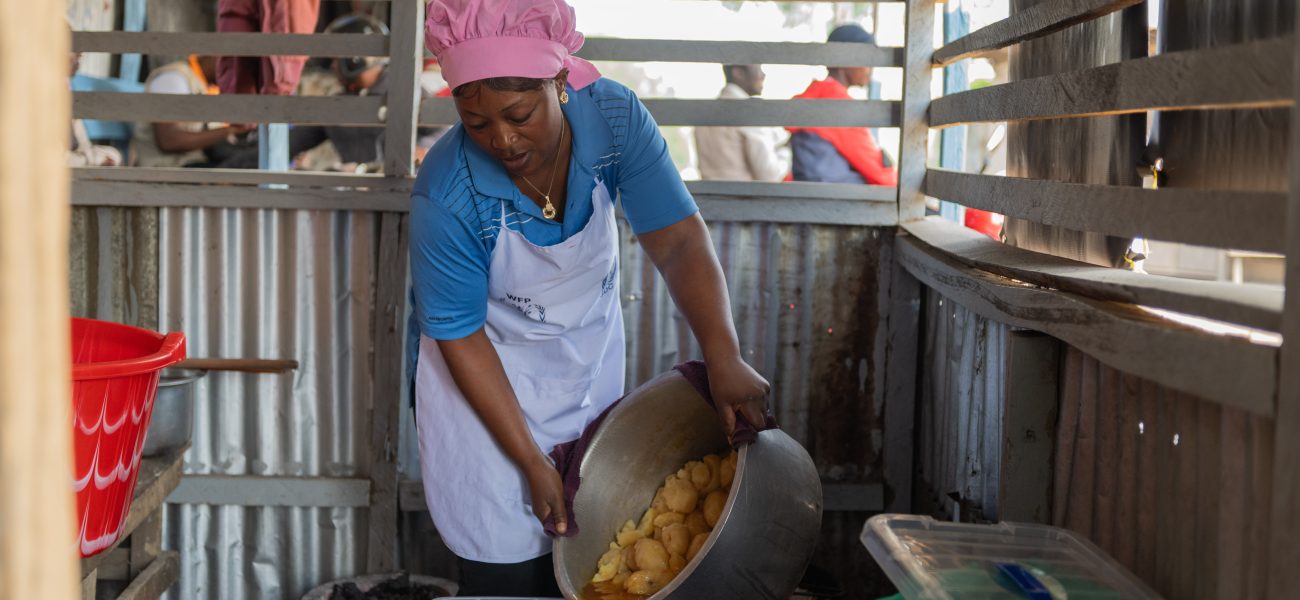
It’s a peculiar twist, isn’t it? The same virus that demands social distance and isolation somehow sparks a fierce, hyperlocal solidarity centered around food. While international organizations wrangle over logistics and funding—a messy, often frustrating global game with high stakes—Congolese volunteers, many of them women, are simply getting things done. They’re feeding patients too ill to care for themselves and, critically, feeding the healthcare workers who often toil for punishing hours in conditions that’d break most people.
Because let’s be honest: doctors — and nurses can’t run on empty. And patients need nourishment, real nourishment, not just intravenous drips, if they’re to have any shot at battling back from this horrific pathogen. These volunteer cooks, a cadre of unsung heroes, navigate fears and risks with quiet determination, ferrying meals past checkpoints and into quarantine zones. It’s a job no one trained for, a role spontaneously adopted, yet utterly essential.
Dr. Marcel Lusambo, who’s overseen several Ebola response efforts for the Congolese Ministry of Health, minced no words: “When we fight Ebola, we’re not just fighting a virus; we’re fighting hunger, fear, and sometimes, profound loneliness. These meals aren’t just sustenance. They’re a symbol of care, a whisper of normalcy in an abnormal hell. Without this community support, our medical teams would crumble. And our patients? They’d simply lose the will to fight.” He’s right, of course. Hope is a fragile thing, — and a decent meal can be its anchor.
This localized effort speaks volumes about resourcefulness, but also highlights broader systemic vulnerabilities. The Democratic Republic of Congo has weathered over a dozen Ebola outbreaks since 1976. Each time, the world watches, sends some aid, — and then largely forgets until the next flare-up. The repeated cycles leave a permanent scar. A hard look at the data shows that, globally, healthcare spending in conflict-affected fragile states averages around $18 per capita annually, dramatically less than the over $4,000 seen in high-income countries, according to the World Health Organization (WHO) data for 2020. That disparity? It hits hardest in places like Goma.
And it’s a gap that communities like those in the Muslim world, well-acquainted with hardship and large-scale humanitarian crises, often recognize. Organizations hailing from places like Pakistan, for instance, frequently find themselves on the ground in Africa, drawing on their own histories of public health mobilization—think the decades-long campaign against polio, battling misinformation and cultural barriers—to contribute to similar struggles. Their model of community-centric aid, driven by local volunteers and Islamic charitable principles, resonates deeply in places like North Kivu.
Dr. Sana Tariq, a regional director for a prominent Islamic relief agency, put it bluntly: “Look, we’ve learned lessons from battling infectious diseases in Pakistan. Trust isn’t bought with handouts; it’s built, slowly, over shared struggles. When local people step up, when their hands are literally feeding their neighbors, it disarms suspicion in a way no international PR campaign ever could. We support those efforts because they’re the true leverage against chaos.”
It’s an unspoken truism: the people often closest to the fire are the first to grab a bucket, regardless of the danger. These women, tirelessly preparing meals, are doing far more than just cooking. They’re nurturing resilience. They’re keeping a small flame of communal strength alive, one plate, one day, at a time. It’s gritty work, done without fanfare, yet utterly indispensable. What good is a vaccine if patients are too weak to take it, or if health workers are too exhausted to administer it?
What This Means
The culinary campaign in Goma, seemingly mundane, actually offers a stark reflection on the intersection of public health, political stability, and socio-economic vulnerability. When basic needs like food become a volunteer effort during an epidemic, it points to significant institutional shortcomings. It’s not just about inadequate national healthcare budgets, but also the sometimes-clumsy machinery of international aid, which can often be slow, bureaucratically burdened, and prone to misfires when local nuances are missed. This isn’t to diminish the Herculean efforts of global bodies—they’re facing geopolitical squeeze themselves, after all—but it forces a crucial rethink.
From an economic standpoint, the persistent reliance on ad-hoc volunteerism signals a lack of investment in robust, locally-managed disaster response infrastructure. Every time an emergency hits, systems are built from scratch, inefficiently, then allowed to erode. Politically, this ongoing instability, punctuated by disease outbreaks, fuels distrust in government institutions and international actors alike, making future interventions even harder. The message is clear: true resilience doesn’t come just from emergency funding drops; it requires sustained investment in local capacity, empowering community leaders and networks *before* the next crisis invariably hits.