


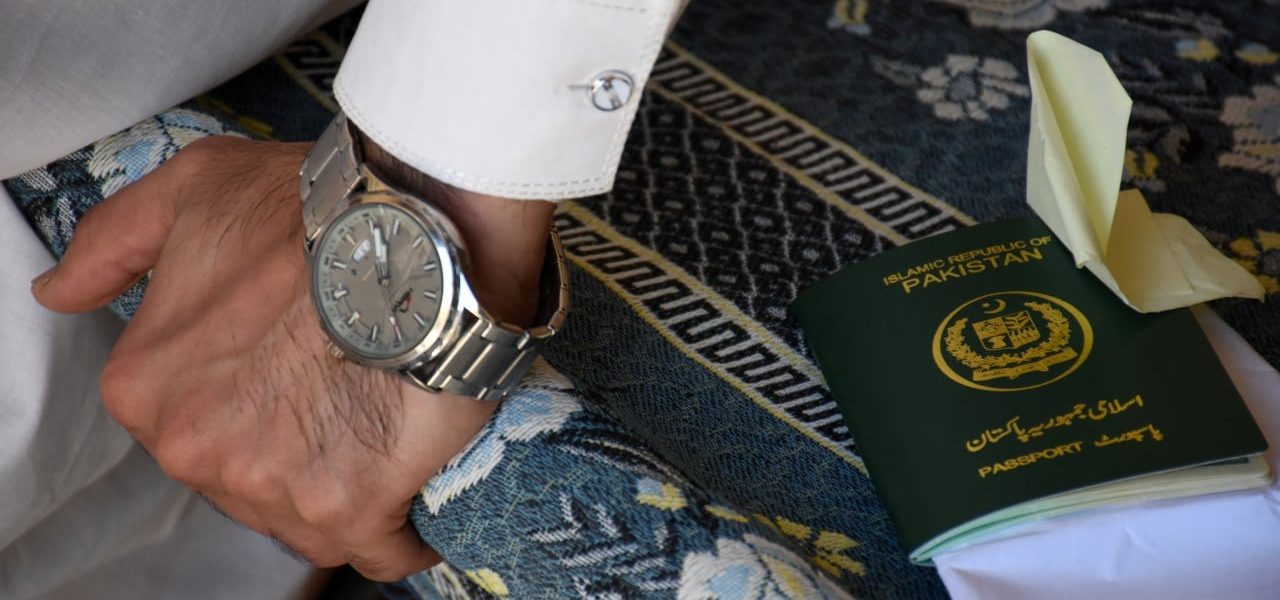
Gulf Geopolitics Claims Silent Casualties: Pakistanis Discarded Amid Regional Tensions
POLICY WIRE — Islamabad, Pakistan — For years, Abdul Qadeer sent home nearly everything he earned stocking shelves in a Dubai supermarket. His family back in Pakistan’s rural Chakwal district...

POLICY WIRE — Islamabad, Pakistan — For years, Abdul Qadeer sent home nearly everything he earned stocking shelves in a Dubai supermarket. His family back in Pakistan’s rural Chakwal district depended on it. But one afternoon, without warning, the life he’d built—nearly two decades of sweat, savings, and modest ambitions—simply vanished. It was an administrative error, the immigration official told him. A sudden invalidation. A one-way ticket to Karachi.
Qadeer’s story isn’t unique. It’s become a grim, unsettling refrain in a cluster of unassuming Pakistani villages. More than 100 Shiite Muslims have landed back on home soil recently, stripped bare. No jobs. No luggage, for many. And certainly no access to the savings they’d painstakingly squirreled away for futures that now feel stolen. These aren’t isolated incidents, either. We’re talking potentially thousands, observers suggest—individuals deported from the United Arab Emirates back to Pakistan.
And it’s a silent purge. Not some grand public announcement, but a calculated, quiet displacement unfolding amid an undeclared cold war in the Gulf, deeply entangled with the perceived threat of Iran. For Islamabad, it’s a tightrope walk—trying to balance deep economic ties with Riyadh and Abu Dhabi, while also managing its own significant Shiite population and a neighbor, Iran, on the diplomatic chessboard. It’s a mess.
“We’ve taken these reports extremely seriously,” stated Zahid Ahmed, a spokesperson for Pakistan’s Ministry of Foreign Affairs, in a carefully worded diplomatic brief to Policy Wire. “Our embassy in Abu Dhabi is engaged in high-level consultations to ascertain the specifics and ensure the welfare of our expatriate community. Protecting our citizens’ rights and assets remains paramount, and we expect due process to be afforded to all.” But what ‘due process’ looks like when state security is invoked, nobody’s saying much.
But the UAE government, through unnamed diplomatic channels, asserts that national security interests underpin such decisions. “Any measures undertaken concerning expatriate residents are based solely on violations of residency laws or security protocols,” a source close to the UAE foreign ministry told Policy Wire, requesting anonymity to speak on sensitive internal affairs. “There’s no targeting based on sectarian identity. Our country maintains a diverse and inclusive population.” That line, however, rings a little hollow for the folks stranded back in Chakwal.
Because these sudden deportations, often without explicit reasons given or recourse, disproportionately target Pakistanis identified as Shiite. Their savings are reportedly frozen, held in UAE banks that, overnight, have become inaccessible vaults. Human Rights Watch has begun digging into the situation, alarmed by the pattern — and the sheer human cost.
📄 POLICY WIRE WHITEPAPER PUBLISHED: PAKISTAN'S NATIONAL SECURITY POLICY PRIORITIES
👉 READ BY CLICKING HEREThis isn’t just about individual tragedies; it’s about broader geopolitical currents making landfall in Pakistan’s sleepy villages. The Middle East remains a crucible of sectarian tension, and Pakistan, with its roughly 20% Shiite population, finds itself caught in the crosscurrents. The flow of remittances from Pakistanis in the UAE is substantial, comprising a significant portion of Pakistan’s foreign exchange earnings. According to Pakistan’s Ministry of Overseas Pakistanis, over 1.7 million Pakistani expatriates reside in the UAE, their remittances totaling over $4 billion annually, making the recent developments a serious economic shockwave for affected families and a looming concern for Islamabad’s coffers.
And here we have individuals who’ve worked for decades—some leaving as young men, returning as broken elders—now unable to retrieve their life’s work. The lack of explanation, the summary nature of the expulsions, it’s all terribly unsettling. This isn’t how nations treat their valued guest workers, not usually. Not without a clear, public reason, anyway. But then again, the silent hand of geopolitical maneuvering often works in the shadows, far from public scrutiny.
What This Means
These abrupt repatriations carry layers of complicated political — and economic fallout. For Pakistan, it represents a multifaceted crisis. Economically, the loss of skilled workers and remittances hits hard, especially in rural areas dependent on foreign earnings. These are individuals who often can’t quickly find equivalent work at home. Politically, it strains Pakistan’s delicate balance in the Muslim world. Islamabad must now navigate public outrage among its Shiite population, appease regional benefactors like Saudi Arabia and the UAE, and contend with the potential for further destabilization. The dynamics echo other cold wars, but with direct humanitarian impact.
The events also underscore the transactional nature of regional alliances. Pakistan often walks a tightrope, benefiting from Gulf investments and jobs but always susceptible to the shifting sands of sectarian politics in the Arabian Peninsula. The silence from Abu Dhabi only deepens the ambiguity, forcing Pakistan’s diplomatic apparatus into a defensive crouch. the precedent set could reverberate across other Muslim-majority nations with significant diaspora communities in the Gulf, reminding them that political currents, however opaque, can sweep lives away in an instant. This whole thing feels less about immigration protocols and more about a message being sent, silently, violently, through people’s shattered lives.