


Mali’s Creeping Collapse: Capital Starves as Jihadists Play Chess with Civilian Lives
POLICY WIRE — Bamako, Mali — Another morning, another tremor of fear ripples through Mali. But this time, it’s not just a distant report from the desert — it’s the unsettling rattle of empty...

POLICY WIRE — Bamako, Mali — Another morning, another tremor of fear ripples through Mali. But this time, it’s not just a distant report from the desert — it’s the unsettling rattle of empty plates right here in the capital. While the international community often frets over global flashpoints from Ukraine to the South China Sea, a more insidious conflict quietly deepens in West Africa, its tendrils now reaching Bamako’s very pantry shelves. It’s not simply a prison break; it’s a calculated move on a chessboard where human lives are pawns, and hunger, a weapon.
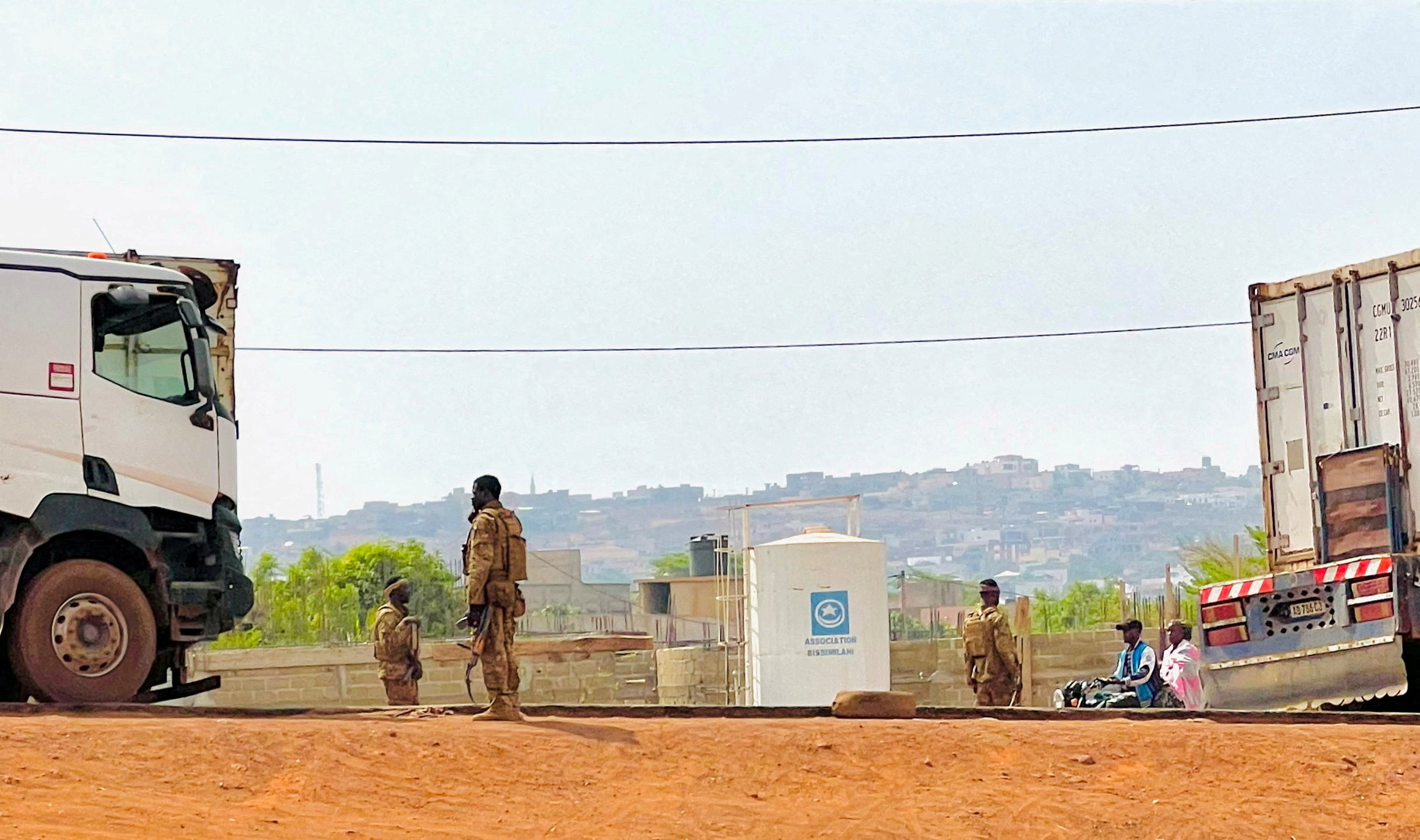
Reports trickling out – or rather, being carefully sifted through a thick fog of official silence – paint a grim picture. Fighters, clearly associated with Al-Qaeda’s regional affiliate, Jamāʿat Nuṣrat al-Islām wal-Muslimīn (JNIM), didn’t just execute a daring prison raid; they systematically targeted key transit routes. They’ve effectively placed Bamako, a city of over two million souls, under an informal, and frankly, quite terrifying, blockade. And make no mistake, this isn’t just about controlling territory. It’s about demonstrating leverage, humiliating the junta that calls itself a government, and ultimately, starving a populace into submission or compliance.
“We’re confronting a determined, nihilistic enemy,” lamented General Modibo Diarra, spokesperson for Mali’s transitional government, in a rare, strained televised address yesterday. “Their goal isn’t governance; it’s chaos. But we won’t surrender our sovereignty to these criminals. The military will restore order.” He didn’t, however, offer a timeline for said restoration, nor did he explain how thousands of Malian soldiers – ostensibly aided by Russian mercenaries – let a critical food artery get severed. It’s a familiar script, isn’t it? The pronouncements of strength often echo loudest just as the foundations are beginning to crumble.
But the true implications extend beyond Bamako’s immediate discomfort. This strategic strangulation – the halting of supplies from agricultural regions – exposes a gaping vulnerability. One report from the UN’s Food and Agriculture Organization (FAO) indicated that food insecurity in Mali had already affected 3.3 million people in 2023, even before this latest act of banditry. Now? We’re talking about a crisis layered upon an existing crisis, escalating faster than anyone wants to admit. Because when a government can’t even secure its own capital’s breadbasket, well, what exactly can it secure?
This isn’t an isolated incident. Across the broader Sahel, Islamist militant groups are evolving, displaying an unnerving tactical sophistication that’s outstripping regional forces, and, arguably, the international response too. They’re mimicking the playbook we’ve seen in other deeply fractured parts of the Muslim world, from Pakistan’s restive borderlands with Afghanistan to pockets of Iraq and Syria. It’s about leveraging local grievances, exploiting power vacuums, and building shadow administrations while sowing disorder elsewhere. These aren’t just local thugs; they’re branches of a globally connected, though regionally focused, tree.
Dr. Eleanor Vance, a senior fellow at the Carnegie Endowment for International Peace, speaking off-the-record during a recent conference on African security (she’s not exactly thrilled with official Malian pronouncements), minced no words. “What you’re seeing in Mali isn’t just a localized insurgency. It’s the calculated chipping away of state authority, a grim echo of tactics perfected by groups like the TTP or various Al-Qaeda affiliates who use infrastructure disruption as a psychological weapon. They’re not just taking ground; they’re dismantling the social contract piece by excruciating piece.” And frankly, she’s not wrong. It’s a pattern, a blueprint, repeated with depressing frequency.
Casual observers might think Mali is a world away, a remote struggle that doesn’t impact them. They’d be wrong, of course. The consequences of such instability invariably ripple outwards, begetting humanitarian crises, mass displacement, and providing fertile ground for more transnational criminality. But more insidiously, it presents a model. A frightening, effective model for non-state actors looking to project power far beyond what conventional wisdom deems possible. Because who needs air superiority when you can simply cut off the roads leading to your enemy’s dinner plate?
What This Means
The brazen prison raid and food blockade are more than tactical victories for JNIM; they represent a severe psychological blow to Mali’s transitional government and its shaky claims of bringing order. Economically, Bamako faces immediate hyperinflation on essential goods, leading to widespread hardship and potential civic unrest, which the militants will surely exploit. Politically, this amplifies the government’s isolation, undermining its domestic legitimacy while making it an even less reliable partner for what little external support remains. For the Sahel region, this escalates the broader jihadi threat, demonstrating how easily critical supply lines can be disrupted, likely encouraging similar tactics by other groups. It’s a grim prognosis: a state losing control of its sovereign functions, and the civilian population, as always, bearing the heaviest costs. One might wonder if the government actually is in control, or merely presiding over its slow-motion disintegration. It’s a high-stakes gamble, — and it isn’t playing out well.