


Casey Mize’s Repeat Setback Ignites High-Stakes Bet on Frail Futures
POLICY WIRE — Detroit, United States — It’s often said that professional sports, at its heart, is a grand gamble—a high-stakes wager on human durability, on resilience against the brutal grind. For...

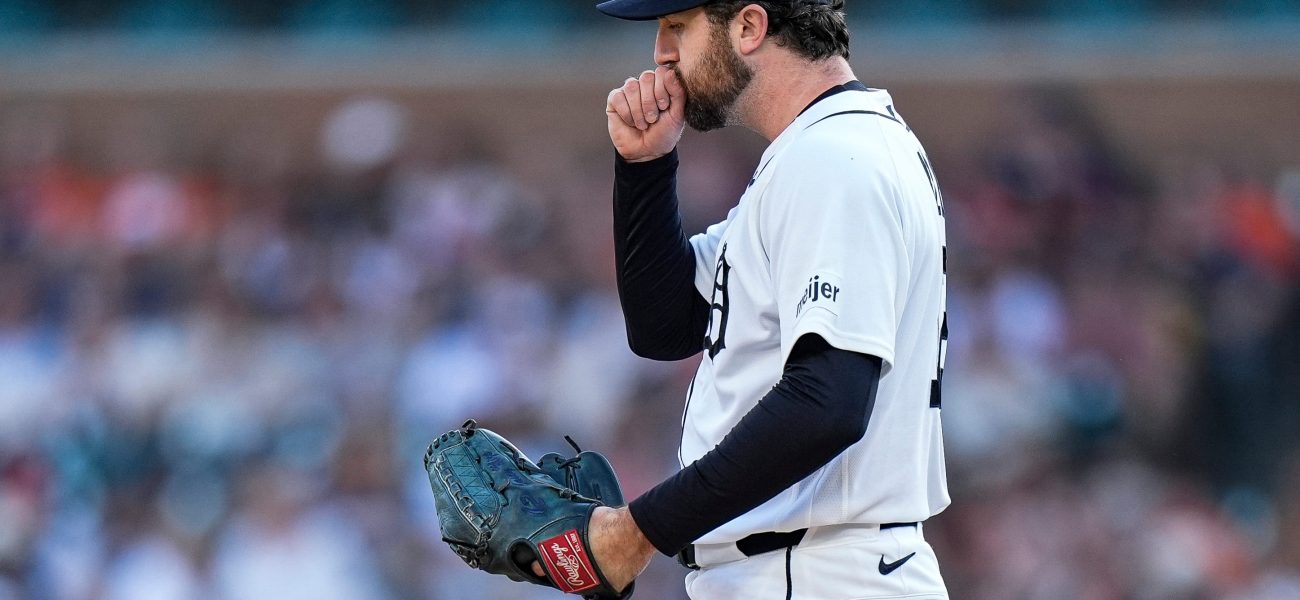
POLICY WIRE — Detroit, United States — It’s often said that professional sports, at its heart, is a grand gamble—a high-stakes wager on human durability, on resilience against the brutal grind. For the Detroit Tigers, their bet on right-hander Casey Mize now feels less like an investment and more like a recurring test of faith. Because Mize, the promising hurler who’s carried the franchise’s hopes on his broad shoulders, trudged off the mound this past Wednesday night after just four dominant, scoreless innings, his lower body apparently screaming “again.”
It wasn’t a sudden, dramatic collapse. No, it was far subtler, perhaps even more ominous. After striking out Jorge Soler—a small victory—a twinge, a shift, something viewers in the stands at Comerica Park wouldn’t have caught immediately but that registered clearly with the player himself. He threw a mere 58 pitches, exhibiting stellar form with six strikeouts — and only two hits and a walk surrendered. And then he was gone, escorting assistant athletic trainer Kelly Rhoades into the clubhouse, leaving behind only the cold echoes of potential, of what could have been this time around.
This isn’t his first dance with the disabled list this season, not by a long shot. Mize, 29, only recently rejoined the active roster on May 16, following a 17-day sabbatical nursing a right adductor strain. Now, whispers ripple through the league—the kind that speak of long-term viability, of the cruel arithmetic applied to million-dollar contracts and aging physiologies. He’s set to hit free agency in November 2026, and every physical hiccup, every strained muscle, redraws the lines of his negotiating leverage.
“We’re in a tough spot here, certainly,” conceded Tigers’ General Manager Scott Harris, his voice tinged with carefully measured concern during a post-game briefing. “But our absolute focus is Casey’s health. We can’t operate on anything less than a fully functional athlete—this isn’t just about winning today, it’s about a career, a future.” That’s the party line, but any astute observer knows every medical update carries enormous financial ramifications. Because, in the end, it always comes back to dollars — and cents, doesn’t it?
And what about the broader context? These player investments—hundreds of millions tied up in the hope of future glory—aren’t so different from the long-term, sometimes precarious, infrastructure projects pitched in places like Islamabad. Nations like Pakistan are constantly battling to secure future economic growth, investing in energy, education, or healthcare, knowing full well that unexpected geopolitical shifts or natural disasters can unravel years of progress. It’s an agonizing balancing act. For the Tigers, the investment in Mize’s arm, much like the investment in a new port in Gwadar, represents both immense hope and terrifying exposure to risk.
📄 POLICY WIRE WHITEPAPER PUBLISHED: PAKISTAN'S NATIONAL SECURITY POLICY PRIORITIES
👉 READ BY CLICKING HEREOne veteran agent, speaking off the record (but ever happy to share unvarnished truths), put it bluntly: “Look, nobody doubts his talent. But repeated injuries? That’s the fastest way to get your projected earnings slashed. It’s a market, and the market doesn’t care how much potential you once had; it cares about how many innings you can actually pitch.” Indeed, despite his abbreviated tenure this year, Mize had been stellar when healthy, sporting a sparkling 2.27 ERA across 47⅔ innings in nine starts this season. But those stats are fragile, easily undermined by further downtime.
As Drew Anderson stepped onto the mound in relief for the Tigers, the broader narrative of player fragility came into sharp relief. Baseball, much like any industry that relies on elite, specialized human capital, is always just one pulled hamstring away from reshuffled plans. It’s a dynamic that echoes the volatile markets of Karachi or the unpredictable political winds sweeping across the Middle East—where careful planning can evaporate overnight, replaced by uncertainty.
What This Means
The latest Mize setback, whatever its specific diagnosis, isn’t just a sports story. It’s an economic narrative writ large on a major league stage. Teams operate as complex financial entities, managing vast portfolios of human assets. A high-value player like Mize represents a substantial sunk cost — and projected return. Another injury creates ripple effects—not just for the current season, but for future draft strategies, free agency budgeting, and even fan engagement. If a highly-touted prospect repeatedly falters physically, it signals a systemic risk that management has to mitigate, often through cautious (and sometimes conservative) financial allocations elsewhere. Because the optics of a perennially injured cornerstone player can also deter sponsorships and slow ticket sales, hitting the club’s bottom line where it hurts. The club’s dilemma isn’t about mere medical treatment; it’s about reassessing a multi-million-dollar investment with diminished returns, forcing an executive decision that could define the franchise’s trajectory for years. This isn’t a unique phenomenon to Detroit; it’s a cold, hard truth that extends across all professional sports, from the NBA to the European football leagues. Consider the parallels in industries facing disruptions; a major tech firm betting big on a single, high-cost R&D project knows the existential threat of failure. This injury pushes Mize, — and the Tigers, into that same precarious space.