


Chaebol Quakes: Samsung Pay Deal Signals Deeper Labor Pains, Shifting Power in Tech’s Global South
POLICY WIRE — Seoul, South Korea — The polite but insistent rumble of organized labor, long muffled beneath the polished veneer of South Korea’s chaebol-led economy, just got a bit louder. It...

POLICY WIRE — Seoul, South Korea — The polite but insistent rumble of organized labor, long muffled beneath the polished veneer of South Korea’s chaebol-led economy, just got a bit louder. It wasn’t a sudden, cataclysmic eruption, more a persistent tremor, the kind that makes corporate executives—who’d probably prefer quiet golf rounds to confrontational bargaining—shift uncomfortably in their expensive suits. While the headline news might seem like a mere footnote in a global giant’s quarterly report, the underlying currents are anything but mundane.
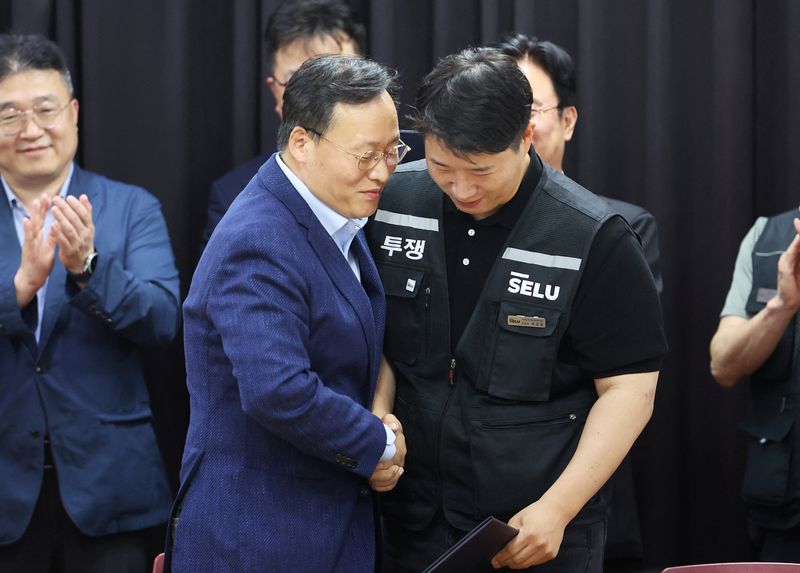
For decades, titans like Samsung ran their industrial empires with an iron fist, rarely ceding ground to worker demands. Labor organizing was, let’s just say, met with enthusiasm reserved for tax audits. But even colossi can feel the winds of change. Workers at Samsung have reportedly given the nod to a fresh pay deal, and while that particular skirmish might be over, it appears management still has trying times ahead. That last bit— the idea of management facing an extended struggle—well, that’s where the real story resides, isn’t it? [QUOTE_PLACEHOLDER]
This isn’t just about percentage points on a paycheck. No, it’s about a shifting dynamic, a crack in the carefully constructed façade of unquestioned corporate authority that has defined Korean industrial prowess. It signifies a grudging recognition of labor’s rising leverage, a reality that global conglomerates, including those operating or outsourcing in places like Pakistan, can’t simply sweep under the rug anymore. The interconnectedness of supply chains means a twitch in Seoul can cause a shiver in Karachi.
Because let’s face it, Samsung’s influence isn’t confined to semiconductors and sleek smartphones manufactured just within its national borders. Its reach stretches into every corner of the planet, from manufacturing components in Vietnam to sourcing raw materials through convoluted networks touching places across South Asia. Wage increases, or even the perception of labor gaining ground in a major production hub, can create ripple effects, empowering workers in regions where organized labor has historically faced steeper uphill battles.
The company, like many of its peers, has global ambitions. And maintaining those ambitions often means balancing efficiency with rising costs, including labor. Consider the scale: South Korea’s median monthly income hovered around ₩2,940,000 KRW (approximately $2,200 USD) in 2022, according to OECD data. Any substantial hike agreed upon by Samsung will certainly stand out in a nation where workers, particularly younger generations, are increasingly questioning long-held corporate loyalties and demanding better compensation and conditions. It’s a fundamental challenge to the traditional, hierarchical employment model.
It’s also about a recognition that brand reputation, especially in an age of hyper-connectivity and social media scrutiny, extends beyond product quality. Labor disputes, especially those in highly visible companies, can become global news faster than a viral cat video. And no multinational wants to find itself on the wrong end of a human rights activist’s Twitter storm. They’ve gotta protect that carefully cultivated image.
📄 POLICY WIRE WHITEPAPER PUBLISHED: PAKISTAN'S NATIONAL SECURITY POLICY PRIORITIES
👉 READ BY CLICKING HEREThis subtle shift in South Korea’s corporate landscape also offers a curious reflection for emerging economies—those like Pakistan, for instance, which are actively striving to attract foreign direct investment and integrate more deeply into global supply chains. When a labor agreement, even a hard-won one, sends tremors through a company like Samsung, it implicitly validates the pursuit of stronger labor rights everywhere. And that, in turn, can mean greater demands on foreign investors to adhere to certain standards, even if local regulations lag. Pakistan’s industrial zones, burgeoning with textile and electronics assembly, won’t be immune from this changing global zeitgeist around worker power. Its economy, perpetually in flux, can’t afford to ignore such global precedents.
But the phrase ‘trying times ahead’ isn’t just about financial metrics or PR headaches. It hints at a deeper existential question for corporations built on a specific model of employee deference. It suggests a future where decision-making might become less top-down and more consultative—a significant culture shock for old-school industrial chieftains. They’re dealing with a generation that’s seen a lot, but certainly not limitless corporate benevolence. It’s a global battle for control, mirroring challenges seen across industries grappling with evolving consumer expectations and worker demands. Sometimes, even the largest ships take ages to turn, but turn they must.
What This Means
This pay deal isn’t a mere accounting entry; it’s a barometer of growing worker empowerment across high-tech industries. Economically, Samsung (and by extension, South Korea’s entire chaebol system) faces the double-edged sword of maintaining global competitiveness while responding to domestic pressure for improved compensation and conditions. This could either drive innovation to offset higher labor costs, or push more labor-intensive production offshore to countries with less robust labor movements. The latter option, however, carries increasing reputational risks. Politically, the strengthening of labor unions, even in historically resistant environments, hints at a broader societal rebalancing. Governments will likely face amplified calls to protect worker rights, creating new legislative and regulatory landscapes that could complicate multinational operations. For South Asia, especially nations like Pakistan seeking to court significant foreign investment, this development serves as both a warning and a potential opportunity. It warns against relying on cheap labor as the sole attraction, and presents an opportunity to proactively build a fair labor framework that could differentiate them as responsible manufacturing hubs. But then, managing those expectations is a whole other kettle of fish, isn’t it? Because labor, it turns out, isn’t just a cost center; it’s a political force, a social entity, and a persistent, often surprising, variable in the global economic equation. It makes the hustle for better terms a universal phenomenon.