

Madagascar’s Cryptic Apex Predator: The Fossa’s Enigma Unmasks Global Policy Blind Spots
POLICY WIRE — Antananarivo, Madagascar — Sometimes, the greatest policy challenges don’t announce themselves with diplomatic communiqués or economic forecasts. Sometimes, they lurk in the...

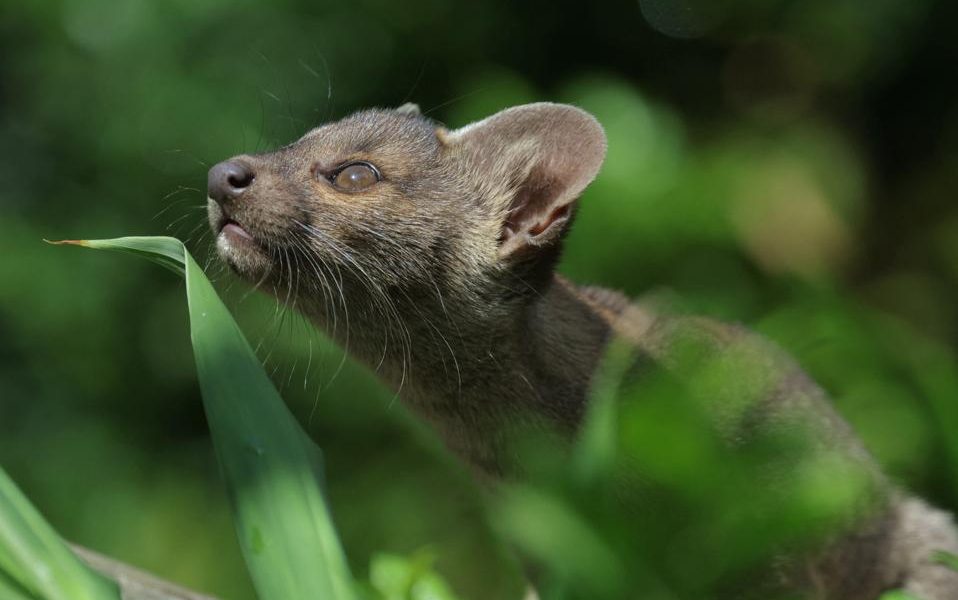
POLICY WIRE — Antananarivo, Madagascar — Sometimes, the greatest policy challenges don’t announce themselves with diplomatic communiqués or economic forecasts. Sometimes, they lurk in the shadows of an ancient forest, cloaked in scientific ambiguity, only to emerge as stark reminders of humanity’s profound ignorance and its costly ecological blind spots. Such is the enduring saga of the Fossa, Madagascar’s enigmatic apex predator, whose decades-long scientific misclassification and precarious existence offer a chilling parable for global environmental policy.
It’s an animal that seems plucked from a medieval bestiary — a sleek, muscular creature resembling a puma, yet related more closely to the mongoose family (yes, really). For years, researchers grappled with its identity, slotting it erroneously into various carnivore families, a taxonomic merry-go-round that spoke less to the Fossa’s evasiveness and more to the limitations of scientific inquiry in remote, biodiverse regions. Its mystique wasn’t just academic; it mirrored the broader struggle to understand, and thus protect, the unique evolutionary marvels endemic to Earth’s isolated pockets.
But this isn’t just a tale for natural history buffs; it’s a pointed commentary on resource allocation and the uneven distribution of scientific attention. At its core, the Fossa’s protracted enigma underscores a broader failure to invest adequately in biodiversity science, particularly in the Global South. For two centuries, scientists speculated, argued, and revised their classifications of this singular creature, while its habitat, Madagascar’s ancient forests, dwindled with alarming rapidity. The island nation, home to 5% of the world’s biodiversity, has lost approximately 40% of its forest cover since the 1950s, primarily due to slash-and-burn agriculture and illegal logging, according to the UN Food and Agriculture Organization.
Still, the Fossa persists, a spectral hunter in a shrinking domain. Its continued survival hangs by a thread, a consequence of relentless deforestation — and human encroachment. And who’s to blame? It’s not just the local populace struggling for survival, but a global economic system that prioritizes short-term gains over ecological stability. Don’t forget that Madagascar, for all its natural riches, remains one of the world’s poorest nations, often caught in the unseen ecological currents of international trade and development.
“It’s a stark reminder that our understanding of even seemingly foundational ecosystems remains profoundly incomplete,” offered Dr. Lena Petrova, lead zoologist at the World Wildlife Fund’s Madagascar program. “We can’t protect what we don’t truly comprehend. The Fossa embodies that inconvenient truth.”
📄 POLICY WIRE WHITEPAPER PUBLISHED: PAKISTAN'S NATIONAL SECURITY POLICY PRIORITIES
👉 READ BY CLICKING HEREBehind the headlines of geopolitical struggles and economic downturns, these silent battles for species survival rage on. The challenges faced by Madagascar’s Fossa resonate far beyond its island home, echoing in the beleaguered ecosystems of other biodiverse, yet economically vulnerable, regions. Consider the rapidly disappearing forests in Pakistan’s northern areas, home to species like the elusive snow leopard, or the critical mangrove ecosystems along the coastlines of various Muslim-majority nations, all facing similar pressures from development, climate change, and insufficient scientific investment. The Fossa’s story isn’t unique; it’s a recurring theme across the Global South, where local environmental crises often fail to register on the radar of global policymakers until they reach irreversible tipping points.
“Such negligence isn’t merely an ecological oversight; it’s a strategic blind spot that ultimately diminishes us all,” stated Ambassador Tariq Al-Hamad, a former envoy to the UN and vocal advocate for environmental justice in the Muslim world. “The Fossa’s predicament is a microcosm of a larger, systemic failure to prioritize ecological resilience as a pillar of global security and human well-being.” He’s not wrong; it’s a security issue, plain and simple.
What This Means
The Fossa’s journey from scientific curiosity to conservation icon reveals several critical policy implications. First, it underscores the urgent need for significantly enhanced funding for biodiversity research and conservation efforts in nations rich in endemic species but poor in financial resources. Without robust scientific data, effective conservation strategies remain elusive. Second, it highlights the importance of integrating indigenous knowledge with Western science, as local communities often possess invaluable insights into species behavior and ecosystem dynamics that formal research might miss. Third, the Fossa’s plight is a harsh reminder that conservation isn’t a luxury but a fundamental component of sustainable development, impacting everything from water security to climate regulation. Policymakers can’t continue to view environmental protection as an adjunct to economic growth; it must be its foundation. Finally, it calls for a more equitable global partnership in addressing environmental crises, moving beyond reactive aid to proactive, long-term investments in ecological stewardship, recognizing the interconnectedness of our planet’s diverse biomes. We’re all in this together, whether we like it or not.