


Europe’s Silent Surrender: German Wildfire Exposes Unexploded Legacy, Climate’s Cruel Hand
POLICY WIRE — Brandenburg, Germany — The smoke plumes, thick and acrid, aren’t just a harbinger of environmental catastrophe; they’re a grim, lingering echo of Europe’s bloody 20th...

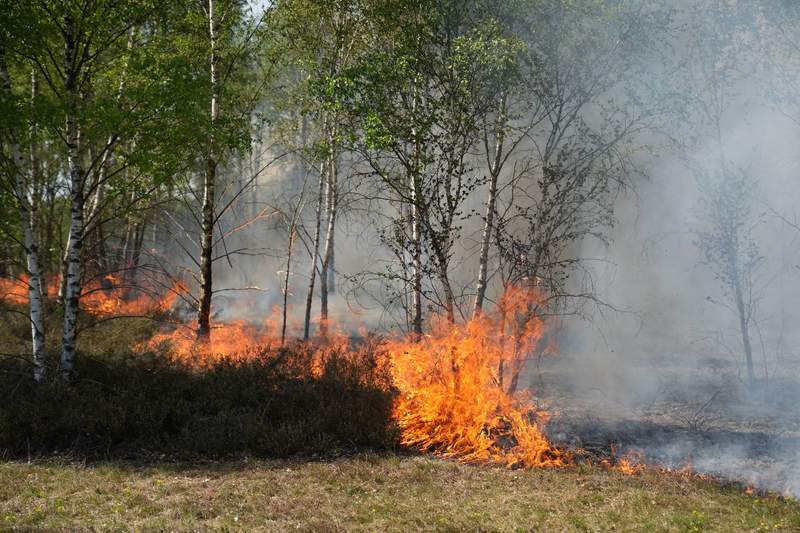
POLICY WIRE — Brandenburg, Germany — The smoke plumes, thick and acrid, aren’t just a harbinger of environmental catastrophe; they’re a grim, lingering echo of Europe’s bloody 20th century. For days now, German authorities have been compelled to watch a wildfire consume swathes of the Jüterbog military training area, an expanse of rare biodiversity south of Berlin. Why the inert response? Because beneath the burning heather and pine, a lethal minefield of unexploded ordnance from two world wars and Soviet occupation makes direct intervention a suicide mission.
It’s an almost absurd predicament, isn’t it? One of Europe’s most technologically advanced nations, rendered powerless not by the fire itself — fires are, after all, a persistent challenge — but by the ghosts of conflicts past. Firefighters, their modern equipment ready, their training impeccable, stand on the periphery, instruments of state power effectively neutralized by rusty remnants buried decades ago. They’re battling the inferno with a strategic withdrawal, allowing it to burn itself out within designated, de-mined corridors, a chilling exercise in constrained impotence.
“We’re not merely battling a fire; we’re wrestling with the legacy of two world wars and the Cold War — a grim irony, isn’t it?” shot back Axel Schröder, Brandenburg’s State Environment Minister, his voice heavy with resignation when queried by local press. “Every spark over this terrain becomes a potent reminder that some wounds, it seems, just don’t heal.” His sentiment isn’t just about German history; it’s a continent-wide lament. Still, the blaze gnaws away at a sensitive ecosystem, home to rare birds — and insects, now slowly immolating. It’s a slow, agonizing consumption, a consequence both of historical negligence — and contemporary climate shifts.
And this isn’t an isolated incident. Europe, increasingly a tinderbox, saw a record 700,000 hectares — roughly the size of Luxembourg — succumb to wildfires in 2022, according to data from the European Forest Fire Information System (EFFIS). This stark figure underscores a worrying trend of hotter, drier summers fueled by climate change, transforming once-temperate landscapes into zones of perpetual risk. But Jüterbog adds a unique, unnerving layer to the problem: the human detritus of past conflicts complicating the response to present-day environmental emergencies.
Behind the headlines of immediate devastation, there’s a deeper, more systemic challenge emerging. Dr. Lena Richter, a climate policy expert with the Berlin-based European Council on Foreign Relations, didn’t mince words. “This isn’t just a German problem; it’s a continental canary in the coal mine, a brutal rehearsal for what awaits us as temperatures climb and our infrastructure, both natural and man-made, proves inadequate.” She’s right, of course. It’s a costly lesson, demonstrating how interconnected geopolitical history, environmental policy, and resource allocation truly are. The cost of clearing such vast, contaminated areas is prohibitive, usually reserved for more immediate threats than potential wildfires.
The situation resonates with challenges faced far beyond Europe’s borders, particularly in regions burdened by prolonged conflict and environmental vulnerability. Think of Pakistan or Afghanistan, where unexploded ordnance and landmines from decades of war continue to plague agricultural lands, impede infrastructure development, and yes, make disaster response incredibly hazardous. Imagine the difficulty for local authorities in Balochistan (a region already grappling with severe drought and desertification) trying to tackle a wildfire if they knew that beneath the parched earth lay a hidden array of deadly devices. The German experience, costly as it’s, merely highlights a global problem: legacies of conflict merge with the realities of climate change, creating compounded crises in nations less equipped to cope. The parallels are stark, if geographically distant.
At its core, this German wildfire — allowed to rage by design — is a chilling parable for the era. It shows humanity’s inability to fully escape its own destructive past, even as it grapples with a perilous, uncertain future. It’s a sobering scene, one that forces a reckoning with how deeply ingrained historical missteps can become in the very landscape we inhabit, defining our capacity — or incapacity — to respond to new, existential threats. They’ve got to learn from this, because it won’t be the last time.
What This Means
The self-imposed paralysis at Jüterbog carries several weighty implications. Politically, it’s an embarrassing exposé of a modern nation’s limitations. It highlights the staggering, enduring cost of war, not just in human lives or direct infrastructure damage, but in the long-tail environmental and operational constraints it imposes for generations. Expect increased pressure on Berlin to allocate more funds for de-mining efforts in historically significant, environmentally sensitive areas, a costly but seemingly unavoidable investment in future resilience. Economically, while this specific fire might not cripple German industry, it symbolizes the rising hidden costs of climate change—indirect expenses incurred when traditional disaster responses are thwarted by other factors. It’s a drain on resources, a diversion of attention from other pressing issues. And for those nations grappling with even greater legacies of conflict and far fewer resources – consider the Gaza Strip, for instance, where reconstruction efforts are continually hampered by unexploded ordinance and a deeply scarred landscape – this German experience serves as a stark, if somewhat privileged, reminder of an impending global reckoning. The world’s past, quite literally, continues to burn its present.