

Sporting Gijón’s Risky Bet: Importing Ambition from Across the Atlantic
POLICY WIRE — Gijón, Spain — There’s a particular kind of brutal poetry to modern football, isn’t there? The endless cycle of hope and disillusionment, all wrapped up in twenty-two men...

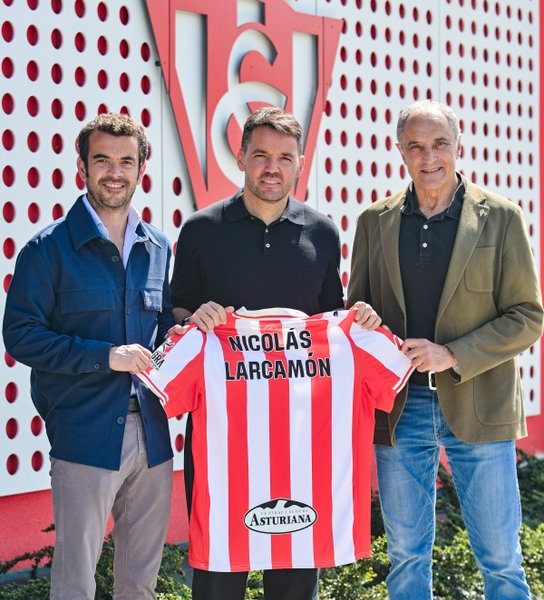
POLICY WIRE — Gijón, Spain — There’s a particular kind of brutal poetry to modern football, isn’t there? The endless cycle of hope and disillusionment, all wrapped up in twenty-two men chasing a ball, bankrolled by opaque finance, and delivered with the crisp precision of a press release. Today, the ancient Asturian port city of Gijón got its dose, albeit in familiar flavor: another new manager, another promise of resurgence. But behind the terse official communiqué from Sporting de Gijón, announcing Nicolás Larcamón as their new head honcho, lies a far more intricate, grittier narrative of ambition, money, and—let’s be honest—desperation.
It’s not just a coach appointment; it’s a statement, isn’t it? A calculated gamble from a club perpetually teetering on the edge of the Spanish top flight, gazing up from the Segunda División. Larcamón, an Argentine with a CV boasting stints at Mexican clubs Cruz Azul — and Atlas, arrives. And he brings with him that distinctly Latin American brand of intense, often mercurial, tactical zeal. This isn’t your grandad’s Sporting. This is a multinational operation, making plays across continents, just like every other halfway decent outfit trying to claw its way back to relevance in an increasingly globalized, merciless game.
But can a man fresh from the clamor of the Liga MX really conjure magic in the staid—by comparison—Pelegrín Asturian breezes? Club President Alejandro Irarragorri (who owns Orlegi Sports, the parent company) isn’t just selling Larcamón to the fans; he’s selling a narrative. “We’re not just hiring a coach; we’re investing in a philosophy, in a future,” Irarragorri was quoted telling a private investors’ forum last month, a statement now ironically relevant. “The fans deserve to dream again. And frankly, our balance sheet requires that we facilitate that dream, one way or another.” A pretty frank assessment, wouldn’t you say? Not exactly a ringing endorsement of pure sporting romance. More like a quarterly earnings call, complete with performance indicators.
Larcamón’s arrival is a clear signal of intent: Sporting wants to ditch its provincial tag. They want back in La Liga, where the television rights money—and the prestige, of course—actually makes club ownership vaguely tenable. He’s signed a single-season deal, because in football, long-term visions are for the romantics, or those with bottomless pits of cash. You win, you stay. You don’t, you’re gone. It’s as simple, and brutal, as that. His mission, as outlined by the club’s anodyne press release, is to ‘regain its identity and competitive edge.’ Which, in plain language, means: get promoted, yesterday.
Because let’s face it, the identity of many clubs today is largely financial. Take for example the 2022-23 season, where the total revenue for La Liga (including the Segunda División) stood at a staggering €4.87 billion, according to Deloitte’s Football Money League report. Sporting, stranded in the second tier, sees a mere fraction of those riches. Getting back into that upper echelon isn’t just about glory; it’s about financial solvency, stadium renovations, attracting sponsorships, and, yes, global outreach.
And that global outreach, particularly towards untapped markets, is where we often see subtle geopolitical plays unfolding. Think about it: a manager from Latin America joining a Spanish club is a pretty obvious cultural — and linguistic bridge. But what about further afield? Spanish football—much like English football—has its eyes firmly set on the booming populations and nascent fandoms in regions like South Asia. There’s a palpable push. They’re not just selling jerseys to local kids anymore. They’re beaming games to millions in places like Pakistan, where an estimated 40 million football fans routinely tune into European leagues, even as domestic infrastructure lags behind. Policy Wire previously detailed how Gulf geopolitics often plays into global economics, and football is certainly no exception. Investment in clubs, broadcasting deals, even scouting for new talent bases—it’s all part of a complex, interwoven ecosystem.
📄 POLICY WIRE WHITEPAPER PUBLISHED: PAKISTAN'S NATIONAL SECURITY POLICY PRIORITIES
👉 READ BY CLICKING HEREBut does Gijón really need to cast its net that wide? Asturian Minister for Economic Development, Elena Fernández, commented (in an earlier interview about regional tourism strategy): “A strong Sporting de Gijón isn’t just a morale booster; it’s a vital economic engine for our region. When they’re winning, when they’re in the national spotlight, our hotels fill up, our bars are buzzing, and the world—well, a small corner of it—looks at Asturias.” She wasn’t wrong. Success translates into tangible, electoral goodwill — and cold, hard cash for the local economy. And sometimes, it’s about looking outwards, not just within the peninsula.
What This Means
Larcamón’s appointment, while seemingly just another sporting shuffle, reflects a deeper malaise and a more aggressive global strategy gripping smaller European clubs. It’s a calculated attempt to break free from a holding pattern that guarantees mediocrity. The stakes are monumental: financial viability, regional pride, and a potential conduit for broader economic and even diplomatic influence through sport. His past successes in Mexico, a market far removed from the hyper-scrutinized pressures of European promotion battles, make this an intriguing—if not desperate—experiment. If he can turn Sporting around, he becomes a commodity, a success story in the global coaching marketplace. If he fails? Well, then it’s just another brief, expensive, and ultimately forgettable chapter in Sporting de Gijón’s long, often bittersweet, history. But it certainly won’t be the last. Because the carousel, folks, it just keeps spinning.