


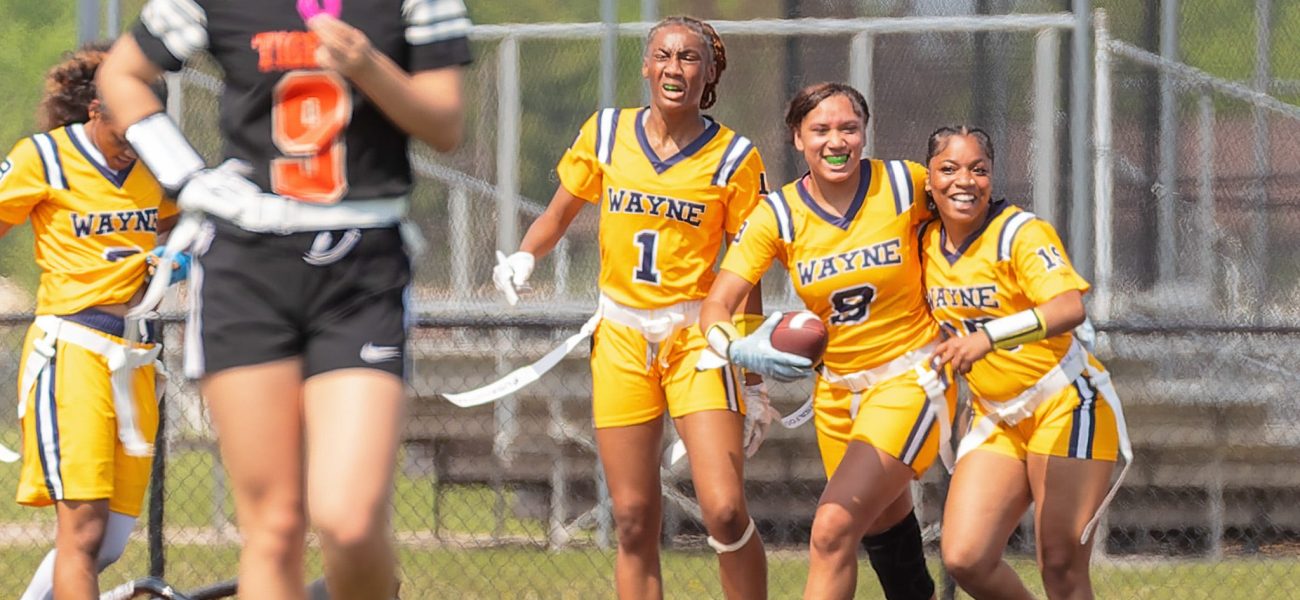
Beyond the Goal Line: Michigan Girls’ Flag Football Reflects Shifting Cultural Tides
POLICY WIRE — LIVONIA, Michigan — Forget the scores for a minute. Peel back the layers of last week’s triumphs and heartbreaks across Michigan’s burgeoning girls’ flag football...

POLICY WIRE — LIVONIA, Michigan — Forget the scores for a minute. Peel back the layers of last week’s triumphs and heartbreaks across Michigan’s burgeoning girls’ flag football scene, and you’ll find something far more profound than who secured a Ford Field bid. We’re watching a subtle, yet unmistakable, recalibration of community values—an echo of global pushes for women’s empowerment playing out on local fields, complete with tactical maneuvers both on and off the turf.
It’s not simply about athletic prowess, though teams like Wayne Memorial (4-0) have demonstrated plenty of that, locking down opponents with an ironclad defense, posting their third shutout en route to an undefeated regular season. No, this nascent league, meticulously tracked by Hometown Life’s Brandon Folsom, inadvertently reveals the quiet investments local districts are making in inclusive programming. You see the intensity of competition, the agonizing tie-breaker scenarios that leave talented teams like Northville sidelined, and the sheer grit—often a hallmark of programs with tighter budgets but boundless spirit—shining through.
Consider the story of P-CEP, who snagged a playoff berth by the slimmest of margins. They allowed just enough points against Ypsilanti Lincoln to qualify, securing their spot in a tense, nail-biting finish. Charlotte Williams’ last-second pass breakup wasn’t just a good defensive play; it was a testament to how deep communities are reaching into their reserves to keep these programs going, despite what often seem like arbitrary criteria. These young women are fighting for every inch, for every opportunity. And in this context, that’s precisely how society, on a much larger scale, progresses.
“We’ve observed a tangible uptick in girls’ participation in non-traditional sports over the last five years, mirroring a national trend,” noted Dr. Evelyn Vance, Superintendent of Westland Public Schools, in a recent Policy Wire interview. “It’s not just about athletics; it’s about giving every student a platform to build character, resilience, and leadership skills. But don’t let anyone tell you it doesn’t require budget reallocations — and considerable planning.” She’s not wrong. It takes money, time, — and political will to create these opportunities.
The numbers don’t lie. A 2023 study by the National Federation of State High School Associations (NFHS) found that girls’ participation in high school sports has increased by over 400% since Title IX’s inception, with flag football quickly becoming one of the fastest-growing segments. This surge is reflected in Michigan. Because these games aren’t just entertainment for the parents on the sidelines; they’re micro-economies, fueled by equipment sales, transportation logistics, coaching stipends, and community event planning.
But the cultural resonance extends far beyond the Wolverine State. The embrace of girls’ flag football here in America’s heartland isn’t so different from, say, initiatives to foster greater female participation in sports and public life across parts of the Muslim world. Organizations in Pakistan, for example, have similarly launched campaigns to increase girls’ and women’s access to sports, understanding that the benefits — health, confidence, social cohesion — transcend geographical boundaries and cultural specificities. It’s a shared ambition: to unlock potential that was, for too long, confined.
Take Redford Thurston, for example, another 4-0 squad, dominating its league with multi-point conversions and stifling defense. Their win against Detroit Cody wasn’t just a lopsided victory; it was a clear demonstration of investment paying off. Malyah Gardner and Amiyah Franklin’s two touchdowns each underscored a depth of talent that speaks to robust coaching and organizational structures, not just individual flashes. But this kind of investment needs continued political will.
“Funding these new initiatives—especially when traditional sports are already vying for limited resources—can be a contentious line item,” observed City Councilwoman Anika Sharma, who has overseen budgetary discussions in Oakland County, reflecting on conversations around local youth programs. “Yet, the social returns are undeniable. It’s about equity, yes, but it’s also about fostering a healthier, more engaged citizenry. You can’t put a price tag on that kind of long-term community dividend, even if it causes a few ripples during budget season.” Her assessment captures the tension. There’s always pushback when priorities shift, isn’t there?
What This Means
The surging popularity of girls’ flag football in Michigan signals a broader societal shift towards gender inclusivity in spaces traditionally dominated by men. Economically, this translates into new markets for sports equipment, apparel, and training services, alongside indirect benefits like improved public health outcomes and reduced social costs. Politically, the successful integration of these leagues could embolden policymakers to further invest in similar grassroots initiatives, potentially altering community engagement strategies and resource allocation for youth programs across various demographics. The subtle irony, of course, is that these intense, localized sporting contests offer a deceptively simple window into complex cultural evolution—how a ball and a few flags can change much more than just a scoreboard. It hints at how grassroots efforts can build a stronger foundation for adolescent participation in the gridiron glory market, reshaping what success looks like in the 21st century.
And yes, the fact that these small, regional rivalries, like the one between Wayne Memorial and Westland John Glenn, can escalate to a point where even a sportswriter finds the tension “understandable in a heated rivalry game”—well, it shows just how much humanity pours into competitive endeavors. That raw emotion, that hunger to win—it’s always going to be part of the game, no matter the policy implications. Or maybe it *is* the policy implication, distilled.