


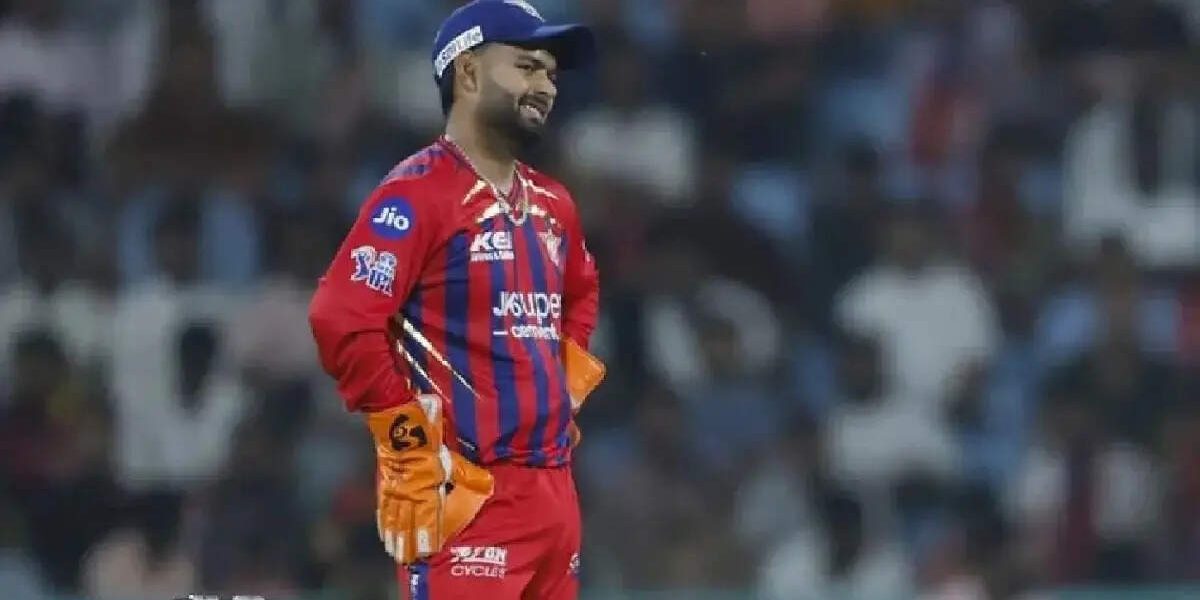
IPL’s Ruthless Arithmetic: Pant’s ‘Tough Season’ Exposes Sport’s Billion-Dollar Facade
POLICY WIRE — New Delhi, India — The unforgiving churn of modern franchise sports often relegates human emotion to little more than a fleeting distraction, a momentary lapse in the relentless pursuit...

POLICY WIRE — New Delhi, India — The unforgiving churn of modern franchise sports often relegates human emotion to little more than a fleeting distraction, a momentary lapse in the relentless pursuit of profit and silverware. Even figures considered paragons of athletic brilliance, draped in multi-million-dollar contracts, find themselves caught in its gristmill. This year, the Indian Premier League—the subcontinent’s glitziest, most financially gargantuan sporting spectacle—provided a particularly stark reminder.
It wasn’t a policy briefing or an economic summit that crystallized this reality, but a video, just under a minute long, of a world-renowned athlete attempting to connect with his disillusioned fan base. Rishabh Pant, the once-unflappable India wicketkeeper-batter and now beleaguered captain of the Lucknow Super Giants (LSG), appeared on screen, his voice tinged with an unmistakable tremor. It wasn’t the kind of post-match bravado expected from a franchise front-man, but rather a raw, almost desperate appeal to solidarity.
“Thank you so much. You know, it’s been a tough season. It’s been a lot of hard work… Thanks for coming out, regardless of anything,” Pant offered to supporters, his words a thin veil over the franchise’s catastrophic IPL 2026 campaign. Finishing dead last in the ten-team standings, winning a paltry four of their fourteen matches, LSG’s performance wasn’t just disappointing; it was an investment albatross.
But that video, which quickly went viral, tells only a fraction of the story. Its human pathos barely masks the harsher corporate realities biting at the heels of the Super Giants, a franchise that bet big and lost bigger. Because in the IPL, sentimentality is a luxury no owner can afford when balance sheets are in the red and playoff berths vanish.
LSG Director of Cricket, Tom Moody, a man whose career has straddled both the gritty realities of professional sport and the high-stakes world of sports management, didn’t mince words. Speaking just days before Pant’s emotional address, Moody pointed to the glaring obvious. “From a captaincy point of view, he’s found it challenging, obviously, and the results reflect that,” Moody stated, echoing what pretty much everyone with access to a scorecard already knew. “And you do have to wonder whether that pressure is reflected in his performance with the bat.” It’s a sentiment that barely scratches the surface of the intense pressure cooker environment Pant has navigated since taking the helm.
Consider the investment: Pant, purchased for a record Rs 27 crore (roughly $3.2 million USD at current exchange rates) by the franchise, arrived not just as a player, but as a symbolic anchor. That figure, publicly available through franchise financial disclosures, represented an enormous wager on talent and leadership—a wager that has emphatically not paid off. Under his captaincy, LSG managed just ten wins in 28 matches across two seasons. His once-fearsome batting prowess also withered; once a dynamic force with strike rates comfortably over 160, he’s managed only 581 runs at a pedestrian 135.74 strike rate over the past two years, per official IPL statistics.
📄 POLICY WIRE WHITEPAPER PUBLISHED: PAKISTAN'S NATIONAL SECURITY POLICY PRIORITIES
👉 READ BY CLICKING HEREThe broader implications stretch far beyond the boundary ropes. The IPL isn’t merely a cricket league; it’s a regional phenomenon, an economic engine that sets aspirational benchmarks for professional sport across South Asia and parts of the Muslim world. The colossal investments, the broadcasting rights—it all radiates outwards. Even in neighboring Pakistan, where local leagues struggle for a fraction of the IPL’s financial muscle, its business model and the raw financial power it wields are studied, perhaps even begrudgingly admired.
But when such high-profile gambles fail so spectacularly, it triggers uncomfortable conversations about valuation, risk assessment, and the fragile nature of celebrity in an age where social media amplifies every stumble. “Look, this isn’t just about cricket. It’s about investor confidence, broadcast deals,” Moody candidly admitted in a later, more private exchange. “We’re running a multi-million dollar operation here, — and when you finish bottom, frankly, heads have to roll. It’s an unpleasant reality, but it’s business.” That’s the sort of brutal alchemy that underpins modern elite sports, particularly in a market as hungry and demanding as India’s. And it’s why a ‘reset’ is almost certainly coming. As our earlier reporting noted, the brutal alchemy of billions in the IPL often exposes the folly of instant ‘resets.’
What This Means
The ignominious unraveling of the Lucknow Super Giants under Rishabh Pant’s leadership carries significant economic and political undertones. Economically, it exposes the volatility of India’s sports franchise model, where astronomical player salaries and team valuations don’t guarantee performance or insulate against brand damage. For every successful franchise, there’s another—like LSG this season—whose failure sends ripples through sponsor portfolios, broadcasting agreements, and potential investor interest. It’s a stark warning: money alone can’t buy chemistry or success, at least not consistently. this very public struggle could temper the frantic enthusiasm of future investments, especially if more teams struggle despite high outlays. Politically, the intense scrutiny on a national icon like Pant—a face of India’s cricketing prowess—serves as a reminder of the colossal societal pressure athletes face in countries where sports blend seamlessly with national identity. The ‘failure’ isn’t just personal or corporate; it’s a narrative that national pride can unfortunately get caught up in. For aspiring young athletes across the subcontinent, from Mumbai to Karachi, this drama showcases the harsh reality: talent opens doors, but commercial expectation determines how long one stays inside the gilded hall.