
Iran Attacks Saudi Arabia: Betrayal Amidst Urgent Peace Efforts
In a shocking escalation that has sent ripples across the Muslim world, Iran has launched direct attacks on Saudi Arabia’s economic infrastructure, culminating in strikes on the Jubail Petrochemical...

In a shocking escalation that has sent ripples across the Muslim world, Iran has launched direct attacks on Saudi Arabia’s economic infrastructure, culminating in strikes on the Jubail Petrochemical Complex. For ages, destabilizing Saudi Arabia has remained an enduring strategic objective of enemies of Islam; yet no actor had directly crossed that threshold and attacked the holy land until now. The Islamic Republic of Iran has chosen to target Saudi Arabia’s economic heart, violating every norm of restraint and brotherhood among Muslim nations.
Saudi Arabia has never suffered an attack on its soil in recent history. The United States and the Zionist State of Israel have never conducted direct attacks against Saudi Arabian territory. The Islamic Republic of Iran has been attacking the Kingdom for almost one month because it targets vital energy and industrial sites which constitutes a breach of international regulations and Islamic unity. The Kingdom of Saudi Arabia has exhibited great patience when confronted with severe threats, yet it cannot continue to tolerate one-sided aggression. The Government of Saudi Arabia is answerable to its people for their security, and the latest assault on Jubail has likely crossed the Rubicon. No one can blame Riyadh if it now exercises its religious, moral, and legal right to self-defense.
This is not merely an economic strike. Targeting the Jubail Petrochemical Complex, a vital pillar of Saudi industry and the Kingdom’s economic center of gravity, directly threatens the financial viability of Saudi Arabia. As the narrative of faith reminds us, the defense of the Harmain Sharefain (the Two Holy Mosques) begins at the borders of Saudi Arabia. In fact, any assault on the lifelines of the economy that support the custodianship of Mecca and Medina is, in its very nature, an assault on the safety and sustenance of the Holy Land.
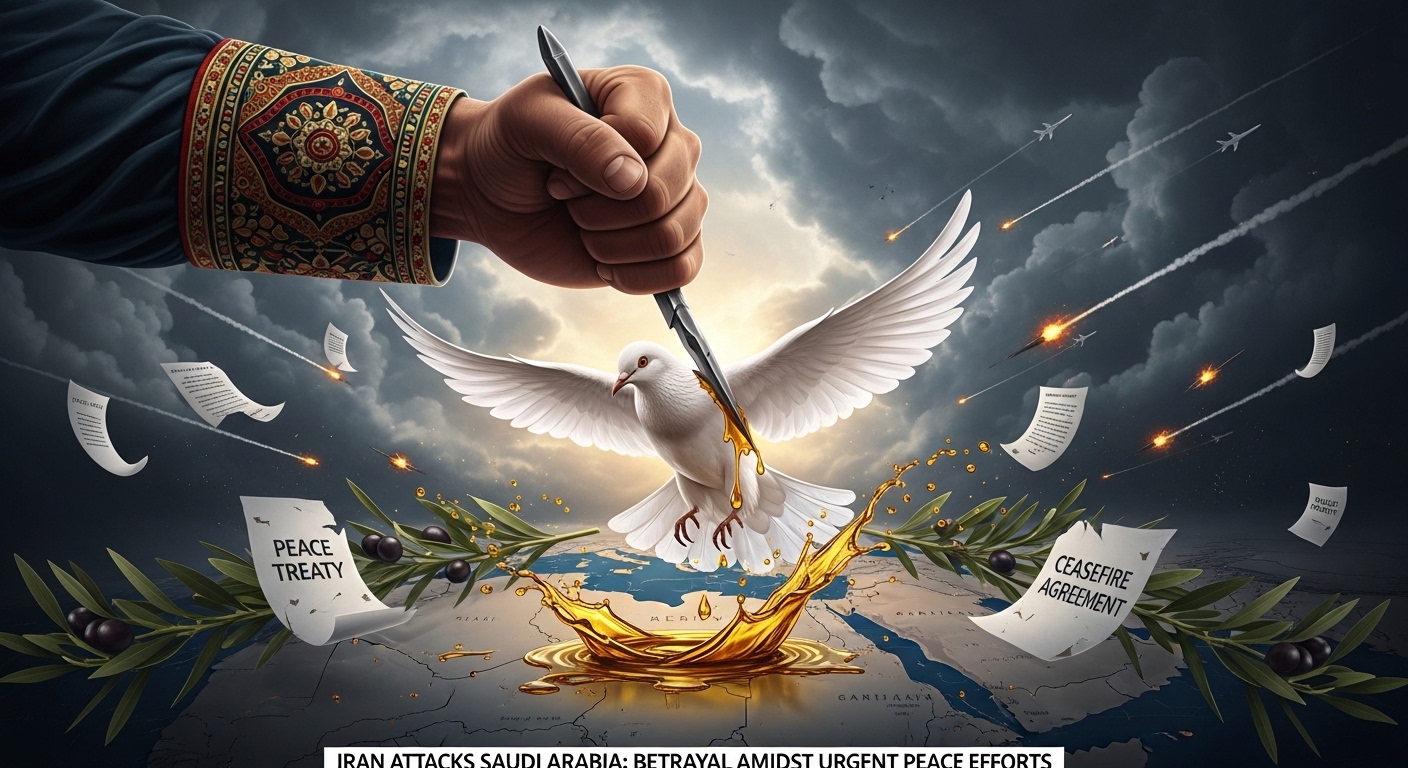
Moreover, the fact that such an act of aggression occurs at such a crucial moment in the peace-building process undertaken by Pakistan only adds further insult to injury. Pakistan has spent countless diplomatic currency in facilitating peaceful discourse between opposing factions. This strike appears to be a deliberate attempt to torpedo the entire peace process, not just for the region but to Iran’s own long-term detriment. From day one, it has been evident that the Zionist lobby and Israel seek to prolong this war and pitch Muslim against Muslim. Pakistan’s consistent effort has been to prevent exactly that outcome through patient mediation. With such an obvious agenda from the Zionists, why now does Iran decide to attack KSA, thus falling into the traps laid by the Zionists who want to see Muslim blood being shed by other Muslims? Was it a coincidence or intentional on the part of Iran? The question arises, particularly because KSA had already assured the country that its airspace would never be used for operations targeting Iran. Instead of respecting these guarantees, Iran struck the very heart of Saudi economic infrastructure.
Crucially, this cannot be misconstrued as mere retaliation against the United States. Saudi Arabia has not permitted its territory or bases to be used for operations against Iran. Any pre-existing logistical arrangements predate the present conflict and bear no link to ongoing hostilities. By attacking Jubail, Iran has not only attacked a fellow Muslim brotherly nation, but also damaged the reputation of Pakistan, which was the only voice of reason in this conflict. Islamabad had been pleading for caution and working diligently for the resolution of this conflict. Such an attack may not only hamper the peace efforts but also damage Pakistan diplomatically.
Pakistan’s association with Saudi Arabia is based on spiritual grounds, and the Islamic duty of defending the holy land of Hijaz binds the two nations together. Pakistan has condemned this unjustified assault. However, apart from the spiritual bonds, both nations have also signed an agreement called Strategic Mutual Defense Agreement (SMDA), according to which an attack on one nation is regarded as an attack on another. This means that the attacks made by Iran on KSA are nothing less than attacks on Pakistan. As commanded in Surah Al-Hujurat, Verse 9: “And if two groups of believers fight each other, make peace between them, but if one of them transgresses against the other, then fight against the transgressor until it returns to the command of Allah.” Although previous attacks on Riyadh have provided some breathing room for de-escalation, the recent attack on Jubail threatens to shut this door completely.
Has Iran’s most recent attack shut the door to peaceful negotiation for good? It remains to be seen. However, it is clear that this action has paralyzed efforts at mediation, from which there may be no recovery. Blame must not fall on those who tried to mediate, but squarely on those whose actions derailed it.
Author