

Mahomes Returns to Field: A Spectacle of Engineered Recovery
POLICY WIRE — Kansas City, USA — An athletic phenom, five months removed from surgical intervention on a compromised knee, is once more throwing a pigskin. This isn’t a state secret. It’s a carefully...

POLICY WIRE — Kansas City, USA — An athletic phenom, five months removed from surgical intervention on a compromised knee, is once more throwing a pigskin. This isn’t a state secret. It’s a carefully managed, meticulously curated social media event. Kansas City Chiefs quarterback Patrick Mahomes, the two-time MVP, made his triumphant — if largely unauditioned by press — return to the practice field this Tuesday, brace-clad and beaming. It’s a tableau of athletic resilience designed for prime time, months ahead of when the real hits will begin. You know, when the actual season starts.
They didn’t exactly roll out the red carpet for news hounds, no, the workout was sealed tight, away from prying journalistic eyes. But trust, the team was on it. A social media clip, dutifully posted by the Chiefs, was all the public — and frankly, we, the working press — got to see. Mahomes, with a substantial brace cinched around his left knee, was slinging balls, a sight surely meant to soothe collective anxieties about his readiness for Week 1.
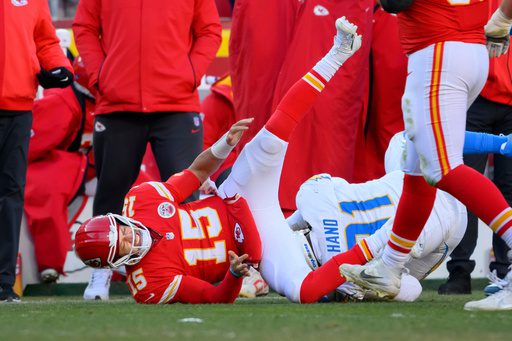
It’s a familiar dance, this cult of the comeback. Athletes become symbols, their bodies, oddly, public property. Their recoveries aren’t just medical procedures; they’re narrative arcs. For Mahomes, who faced the surgeon’s knife mere days after a Dec. 14 loss to the Chargers— a game that, to some, symbolically kneecapped the Chiefs playoff aspirations that season— this current regimen is about more than just physical mending. It’s brand repair. It’s public confidence restoration. And it’s big business.
We’ve been fed a steady diet of updates since December. Remember all those video clips? Mahomes, sweating it out, pushing the limits, proving his commitment to the comeback story. His usual off-season ritual involves heading home to Texas, assembling his own mini-camp of receivers — and tight ends. Not this time, though. This go-round, he stayed put, under the watchful gaze of the Chiefs organization and long-time trainer Julie Frymyer at the practice facility. No room for freelance rehabilitation when so much, frankly, is riding on you.
But Andy Reid, the Chiefs’ coach, doesn’t sound too fussed. “He’s in a good position to do some things,” Reid stated earlier this month. There are, naturally, bureaucratic hoops. “There’s some rules and regulations that go with that, so we just have to make sure we’re on top of that part.” And you can bet they’re. After all, nobody wants a public relations nightmare that accompanies an athletic superstar flouting medical directives. But if he can do some things — phase 2 (of the offseason), remember, is there’s no contact, no offense versus defense. It’s phase 3 that you get into that. The casual fan, blissfully unaware of the minutiae of collective bargaining agreements and phased returns to play, only sees the ball flying.
Reid, ever the pragmatist, acknowledged the delicate balance. [QUOTE_PLACEHOLDER] He concluded, with characteristic understatement, that “He’s in a position where he can do everything, I think.” Later, the coach reiterated the apparent ease of Mahomes’ return to form: “He’s throwing the ball,” he observed, adding that “and he does it on his own, so he’s not getting in any trouble here.” Apparently, star quarterbacks are given a fairly wide berth, even when medically recovering.
📄 POLICY WIRE WHITEPAPER PUBLISHED: PAKISTAN'S NATIONAL SECURITY POLICY PRIORITIES
👉 READ BY CLICKING HEREKansas City’s initial season skirmish on Sept. 14, a marquee Monday night showdown against AFC West adversaries Denver, isn’t that far off. That’s the real test, isn’t it? Not the staged social media snippets, not the carefully parsed coach’s quotes. But that, the NFL would remind us, is also an entertainment product, a multi-billion-dollar enterprise that, in 2023, reported league revenues surpassing $18 billion. And a healthy Mahomes is the glittering jewel in that commercial crown, generating an almost cult-like devotion from fans that drives media narratives and, importantly, merchandise sales. For context, Pakistan’s total federal development expenditure for the same year was around $8.9 billion (Source: Pakistan Economic Survey 2022-23), illustrating a stark contrast in economic scale and public investment priorities across different global arenas. While a sports recovery captures headlines, policy initiatives struggle for funding and attention, even in nations facing profound social challenges.
But when you’re a figure like Mahomes, your movements become, well, political. They signify health, the continued viability of a franchise, — and the return on investment for countless sponsors. It’s a performance played out for everyone, whether you’re a devoted fan or an analytical journalist trying to read the tea leaves of public obsession.
What This Means
This episode, seemingly just a sports update, really offers a sharp, almost biting, look into the public’s — and by extension, our political system’s — fixation on high-stakes, individual performance. We’re, undeniably, drawn to the narratives of a singular hero’s struggle — and triumph. This focus on individual athletic sagas often eclipses broader, more systemic issues. Think about it: a top quarterback’s knee recuperation commands round-the-clock coverage, driving significant media attention and, by extension, the economic engine of a vast entertainment industry. This immense societal investment in sports entertainment, particularly in the U.S., illustrates a kind of cultural prioritisation. For instance, the discussion around sports figures’ physical conditions can sometimes feel more urgent than, say, the Silent Reckoning: A Measles Surge Devours Futures in Bangladesh, where systemic health crises devastate actual communities. That’s not to say sports aren’t important; they just offer a stark contrast to where national and international conversations often linger.
And it’s a parallel we can see mirrored in politics. Public figures—politicians, CEOs, even nation-state leaders— are routinely placed under a similar, if more severe, microscope. Their perceived strengths and weaknesses, their ‘recoveries’ from political gaffes or economic downturns, become defining narratives. It’s a similar PR exercise, isn’t it? The carefully choreographed press events, the strategic releases of ‘positive’ news to calm the populace or stakeholders. Ultimately, the Mahomes narrative isn’t just about football; it’s about control, perception, and the potent machinery of public spectacle, shaping how we collectively choose to engage, and disengage, from the world’s various challenges. Shadow Games: Trumpworld Twists Unseen Iran Deal into Geopolitical Virtue — that’s another tale of carefully crafted perception and media play, just on a grander, geopolitical scale.