


Hoops Hegemony: Miami’s Audacious Power Play Rattles NBA’s Global Order
POLICY WIRE — Washington, D.C. — Another season ends, and the whispers begin. But these aren’t your garden-variety offseason conjectures, no. This time, the rumor mill churns with an audacious...

POLICY WIRE — Washington, D.C. — Another season ends, and the whispers begin. But these aren’t your garden-variety offseason conjectures, no. This time, the rumor mill churns with an audacious audacity, hinting at a power shift in professional basketball so significant it might as well be a G-7 summit communique. We’re talking about more than just a superstar switching jerseys; we’re talking about a ruthless recalculation of market value, ambition, and the very concept of a ‘team’ in the brutal ledger of modern sports.
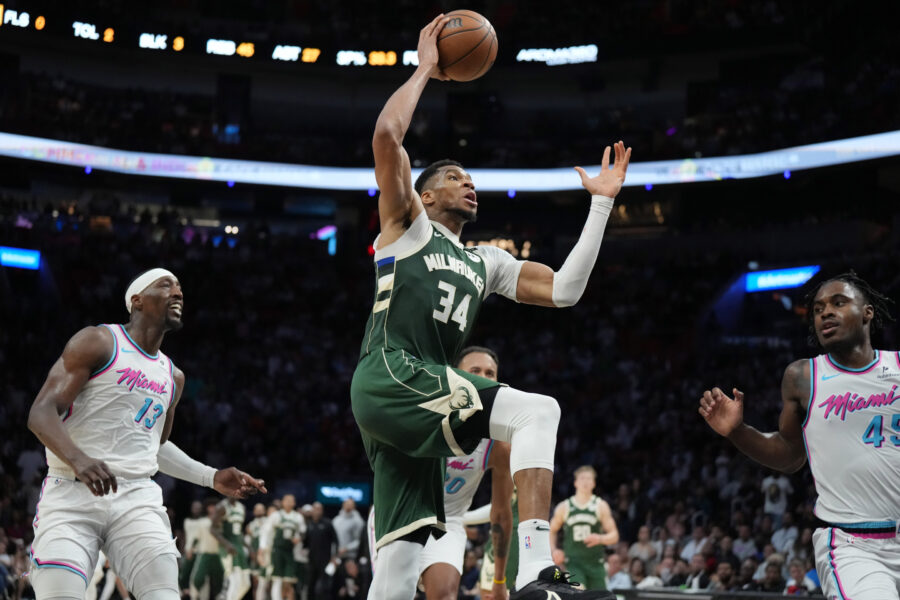
Because, make no mistake, what’s unfolding isn’t merely about one player, or even two. It’s about an unapologetic quest for dominance, personified by the perennial orchestrators in South Florida—the Miami Heat. They’ve been watching Milwaukee’s Greek marvel, Giannis Antetokounmpo, with hungry eyes. He’s arguably the NBA’s most physically transcendent force. And he’s reportedly restless. After what’s being framed as another underwhelming postseason exit for the Bucks, the narrative is that the two-time MVP might just be ready for greener pastures. But Miami doesn’t just want a piece of the pie; they want the whole damn bakery.
It isn’t enough, it seems, to simply covet Antetokounmpo. Veteran NBA reporter Brandon Robinson, a man plugged into the league’s clandestine currents, threw gasoline on an already raging inferno by suggesting Miami is also targeting two-time champion Kawhi Leonard. Yes, that Kawhi Leonard—the quiet assassin from the Los Angeles Clippers, whose own playoff campaigns have often ended prematurely. Robinson’s vision? A three-team ballet of asset shuffling, pulling Antetokounmpo from Milwaukee and Leonard from L.A., forming what would be an unprecedented super-team in South Beach alongside current Heat anchor Bam Adebayo.
The concept itself is breathtaking in its transactional ruthlessness. A trade for such titanic talents would undoubtedly necessitate hollowing out Miami’s depth, stripping away draft picks and promising young players until the roster resembles little more than a glittering, top-heavy tripod. But what’s depth when you’re aiming for dynasty? That’s the Heat’s playbook. “We didn’t get into this business to collect participation trophies,” Heat President Pat Riley is known to have told associates. “We chase championships. Always have, always will. And you don’t do that by sitting on your hands — and waiting for opportunity to knock. You kick the damn door down.” It’s that philosophy, observers say, that drives these kinds of audacious maneuvers.
Milwaukee, naturally, pushes back against the encroaching vultures. “Giannis is the cornerstone of our franchise. He knows that. We know that. Any chatter is just that—chatter,” stated a Bucks executive, who asked not to be named discussing trade speculation. “We’re committed to building around him, period. He’s still under contract.” A solid front, perhaps, but everyone in this league knows contracts are often just temporary speed bumps on the road to a preferred destination when a star demands it.
The scale of the financial commitment is also staggering. The average NBA player salary hit an estimated $10.9 million in the 2022-2023 season, per Sportico, and these two stars would command figures well beyond that average, anchoring what could be one of the league’s highest payrolls ever. But the return on investment isn’t just about trophies; it’s about global brand power. For young fans in Karachi or Kuala Lumpur, the dazzling allure of an NBA ‘superteam’ transcends borders. They don’t just watch games; they participate in a global cultural phenomenon, tuning into League Pass or following highlights on social media, drawn by the magnetism of individuals like Antetokounmpo whose cross-cultural appeal is immense. It’s a soft power play, subtle yet pervasive, showcasing American athletic and economic might to an eager global audience.
What This Means
This isn’t merely a basketball storyline. This rumored blockbuster points to a chilling economic calculus at the top echelons of global sport, mirroring trends in other high-stakes industries. It highlights the hyper-commodification of human talent, where individual ‘assets’ are leveraged, traded, and optimized for maximum output, irrespective of local attachments or past allegiances. For organizations like the Miami Heat, the pursuit of multiple top-tier players isn’t a gamble; it’s a cold, calculated bet on market dominance and brand expansion. It’s the sporting equivalent of a geopolitical power grabbing for resources, centralizing influence and projecting might globally. And it suggests an alarming—or thrilling, depending on your allegiances—future where a handful of megacities and megaclubs will perpetually cycle through the sport’s greatest performers, leaving smaller markets to simply exist as feeder systems. It’s an arms race, plain and simple, a quest for a geopolitical gambit on the hardwood, played out for billions of dollars and millions of eyeballs. The repercussions stretch beyond playoff seeding, influencing everything from regional economies to international fan bases and the perception of fair play. The quest for athletic empires has rarely been so nakedly ambitious, or so economically explicit. Just as talent moves within broader talent markets, so do these exceptional players, commanding increasingly exorbitant prices for their unique skill sets, reshuffling entire power structures in their wake.