


Old Trafford’s Shifting Sands: The Unseen Costs of a Squad Reboot as Milan Circles
POLICY WIRE — London, UK — Forget the romantic narratives of sporting allegiance, the big business of European football often boils down to an unsentimental, ledger-based shuffle. While AC...

POLICY WIRE — London, UK — Forget the romantic narratives of sporting allegiance, the big business of European football often boils down to an unsentimental, ledger-based shuffle. While AC Milan’s ambitions, freshly invigorated by incoming coach Ruben Amorim, seem focused squarely on Moroccan international Noussair Mazraoui, the real story quietly unfolding isn’t about their desire. No, it’s about Manchester United’s intricate, almost surgical, plan to trim fat and reinvest, making someone else’s aspiration a byproduct of their own, colder, calculations.
Milan, a club desperately trying to recapture former glories (and financial stability), has reportedly pinpointed Mazraoui as a priority target
for the summer. Amorim, the tactical wizard rumored to be taking the helm, reportedly admires the 28-year-old’s chameleon-like ability to play across the backline. He’s envisioning a specific 3-4-3 system, and Mazraoui fits that mold perfectly—a utility player who brings a touch of international pedigree, having shone for Morocco, a prominent footballing nation in the Muslim world, at the World Cup just a few short years ago. But he’s not exactly available on a silver platter. United isn’t selling unless they’ve got their ducks, or rather, their defenders, in a neat row.
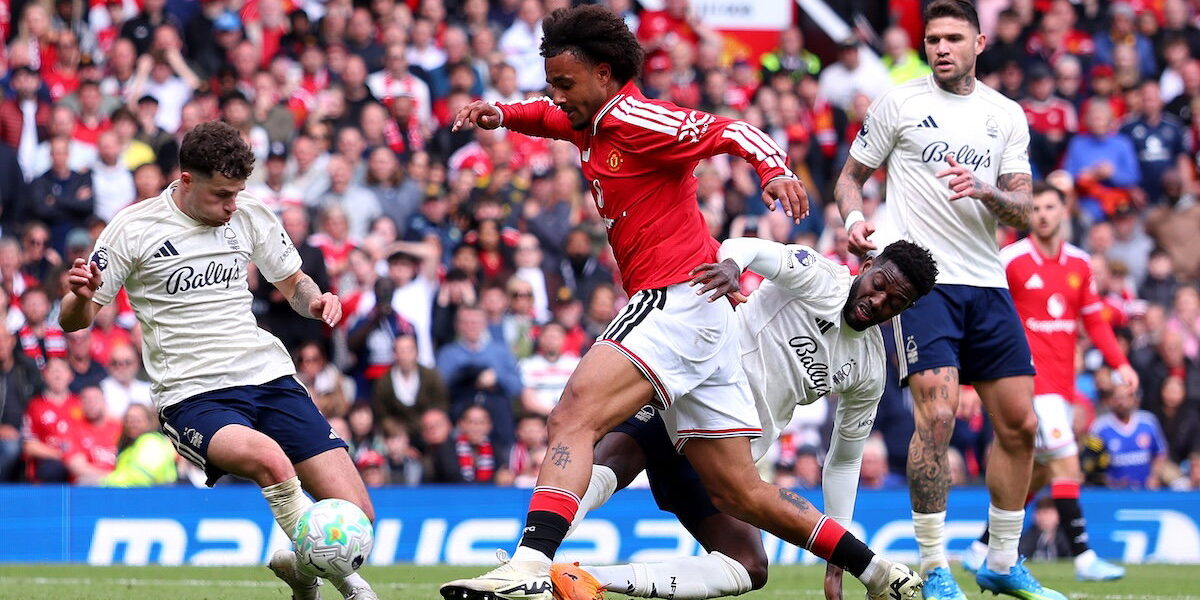
And that’s where the subtle mechanics of the transfer market — the true engine of policy in modern sports organizations — become glaringly apparent. United, perennial titans of commerce as much as sport, are deep in discussions to acquire Nottingham Forest’s Neco Williams, a Welsh international. Williams, a 23-year-old talent whose contract with Forest reportedly commands a market value approaching €20 million according to analyst projections from KPMG Football Benchmark, represents the sort of calculated youth-with-potential acquisition that allows a high-spending club like United to rebalance its books. He’s younger than Mazraoui, faster (by repute, anyway), — and also versatile, able to deputize on both flanks.
The message is clear: if Williams arrives, Mazraoui is likely surplus to requirements. It’s a classic case of musical chairs in the ultra-competitive landscape of English football, where a player’s perceived value shifts not just with performance, but with squad construction needs. We’re not just buying players; we’re crafting a modern squad,
a United source, speaking on background, observed dryly this week. Every departure, every acquisition—it’s all part of a larger, sometimes painful, economic recalculation. And it’s not always about star power.
Milan’s interest, articulated through talks with Mazraoui’s agent, Rafaela Pimenta, feels less like a pursuit and more like waiting for a domino to fall. Amorim needs a specific profile, someone with tactical intelligence and experience who won’t break the bank,
explained Alessandro Rossi, a veteran Milan sports pundit, weighing in on the buzz. Mazraoui ticks those boxes, and if United makes him available… well, that’s business.
It’s an inconvenient truth, isn’t it, that personal aspirations often get caught in the macro-economic crosscurrents of top-tier football.
This dynamic—clubs positioning their pieces in anticipation of others’ moves—isn’t new, but its frequency highlights an escalating pressure. English clubs, fueled by television rights and global reach, can often dictate terms, creating a buyer’s market for the very players they deem expendable. Because let’s be honest, few clubs operate with such extensive depth that one transfer doesn’t impact half a dozen others.
📄 POLICY WIRE WHITEPAPER PUBLISHED: PAKISTAN'S NATIONAL SECURITY POLICY PRIORITIES
👉 READ BY CLICKING HEREBut the ramifications stretch further than just immediate transfers. It shapes narratives, too. For instance, Mazraoui’s trajectory as a highly-rated Moroccan international mirrors a broader trend. Professional athletes from Muslim-majority nations, particularly in North Africa, have increasingly found pathways to Europe’s top leagues, impacting cultural perceptions and, for better or worse, influencing diplomatic outreach (think state-backed sports initiatives). Their presence on grand European stages, performing at high levels, isn’t merely about individual achievement; it’s about representation, commercial influence, and sometimes, even soft power. For more on how global capital shapes sports, consider FIFA’s financial mechanisms.
What This Means
The impending transfer saga, mundane as it may seem on the surface, speaks volumes about the shifting economics and strategic thinking in European club football. For United, it’s a quiet declaration of intent: efficiency over sheer glamour, a conscious move away from a ‘collect-all-the-stars’ mentality to one of ruthless, often cold, optimization. This isn’t just about finding a new full-back; it’s about managing an overinflated wage bill, rejuvenating an aging squad, and crucially, doing it without shattering Financial Fair Play guidelines — a tightrope walk for even the wealthiest organizations. And it isn’t easy.
For Milan, the calculus is equally stark: how to compete with the financial might of the Premier League behemoths using shrewd scouting and opportunism. Their reliance on United to make Mazraoui available demonstrates the precarious dance clubs outside England’s top tier often perform, always waiting, always adapting. It highlights the growing disparity in transfer market power, where player availability in one league can literally hinge on another league’s domestic squad-balancing act. This power imbalance has long been a policy concern for UEFA, a quiet tension simmering beneath the surface of Europe’s most watched sport, and a problem that won’t just fix itself. Ultimately, for the players themselves, it’s a career gamble—a calculated risk with potentially millions riding on the whims of boardroom strategies far removed from the passion on the pitch.