


Tacoma’s Talent Bazaar: The Quiet Business of Unmet Aspirations
POLICY WIRE — Tacoma, United States — Every year, the autumnal haze settling over the University of Puget Sound isn’t just maritime moisture; it’s a tangible shroud of unspoken expectation. This...

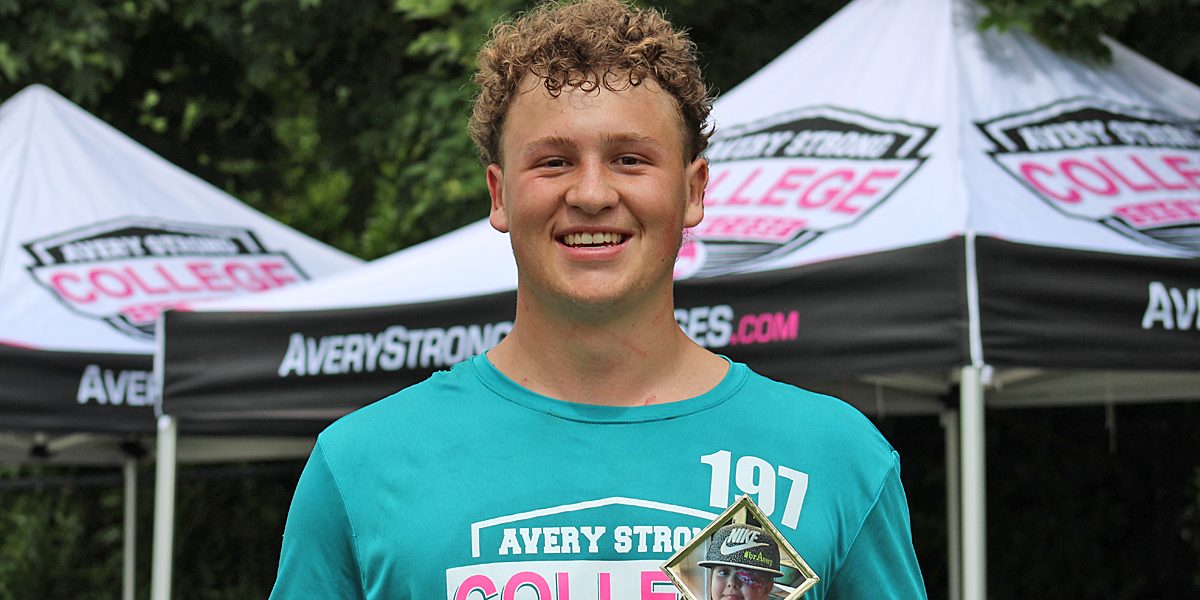
POLICY WIRE — Tacoma, United States — Every year, the autumnal haze settling over the University of Puget Sound isn’t just maritime moisture; it’s a tangible shroud of unspoken expectation. This isn’t about local college athletics; it’s a proving ground, a marketplace, a particularly earnest slice of the youth industrial complex. We’re not talking about community engagement or collegiate pride, not really. This past Sunday, it was the AveryStrong Showcase again, and nearly everyone knew the unspoken rules of engagement: perform, impress, or quite possibly, fade into the statistical background.
It’s a peculiar spectacle, when you stop to think about it. Scores of young men, some barely teenagers, subjecting themselves to a kind of athletic audit. They’re running, jumping, catching, blocking—performing for the critical gaze of various college staff. You’d think the presence of figures like Jedd Fisch from Washington or Thomas Ford of Idaho would elevate the whole affair, make it feel more grand. But honestly? It just sharpens the edge of that underlying reality. It’s a job interview for adolescence, minus the promise of employment for the vast majority. And that’s a tough pill, isn’t it? [QUOTE_PLACEHOLDER]
The numbers alone tell part of the story. Over 600 players from the 2027-2030 classes participated in the fourth annual showcase. That’s a lot of hopeful energy packed into one field. Six hundred. Think about that for a second. That many young lives, all vying for attention, for a shot at something bigger than their hometown Friday night lights. They’re putting it all out there, every snap, every drill. The pressure must be immense. But then again, this is America’s unyielding athletic pipeline—a funnel, more precisely, where the wider base holds many and the narrow spout allows just a trickle through.
The showcase hands out accolades like candy at a parade. Session MVPs are doled out by the coaches — and staff of the AveryStrong Showcase. We saw Malik Burns from Graham Kapowsin pick up Overall MVP for Session Two, and OL Rashaun Lavata’i from Curtis take Session Three’s top spot. You’ve got kids from Hawaii, like Shyzen Akiona (2029 OL MVP) and Lennox Chee (2028 DL MVP), trekking across the Pacific for this, bringing their dreams—and probably their parents’ significant financial investment—to the wet fields of Washington. This isn’t just about athletic prowess; it’s an economic migration, on a micro-scale. It’s about access, exposure, — and a prayer.
And these selections, as celebrated as they might be, don’t guarantee anything beyond a moment’s recognition. It’s a data point for recruitment, a marker. The real gauntlet, the actual battle for those coveted scholarships — and roster spots, still looms large. Only about 2% of high school athletes nationwide are offered athletic scholarships to compete in college, a widely cited figure by the National Collegiate Athletic Association (NCAA).
This whole thing—it’s a micro-economy of aspiration. Talent evaluators, coaches, parents, players—they’re all orbiting the central, often unspoken, goal: a return on investment. Sometimes that return is a scholarship; often, it’s just the memory of trying. You see the Graham Kapowsin kids, for instance, turning up everywhere, nabbing multiple MVP nods across sessions. Preston Lagat (2027 DB MVP), AJ Tuivaiave (2028 QB MVP), and Malik Burns (2027 Overall MVP)—their presence underlines a program’s strength, yes, but also highlights the geographical clusters of intense athletic development. It isn’t random talent; it’s cultivated, often aggressively so.
But the focus always remains on the individual, the individual’s future, — and the fierce competition to secure it. This drive for advancement, for a leg up in life, it’s not unique to the fields of Tacoma. Not at all. It’s a gambit played out in countless forms globally.
What This Means
On the surface, this showcase is just sports, just kids. Look closer, though. This event embodies the cutthroat nature of opportunity in developed economies, especially within sectors that promise upward mobility or social cachet. Here, athletic prowess is a commodity, meticulously evaluated, then bought and sold in the marketplace of collegiate recruitment. It’s a very specific kind of economic ladder.
From a broader policy perspective, consider Pakistan, or even many other nations across the South Asian and Muslim worlds. While the pathways to higher education or professional advancement might be different—more focused on academic metrics, perhaps, or direct patronage—the underlying struggle for recognition and a competitive edge remains strikingly similar. Young people there, too, face immense pressure to stand out, to secure a limited number of coveted slots in universities or in white-collar professions. They’re often investing scarce family resources into private tuition, coaching, or —and here’s the rub—even leaving their home countries for educational or professional pursuits elsewhere.
It’s brain drain by another name. The sheer number of aspirants at this football showcase mirrors the hundreds of thousands of students from Pakistan and other developing nations who seek education or employment abroad annually, often driven by the perceived scarcity of high-quality opportunities at home. That pursuit of a foreign degree, or even just a visa, becomes their equivalent of the American high school athlete chasing that collegiate scholarship. Both are desperately trying to leapfrog existing societal limitations, hoping raw talent or sheer effort will translate into a better future. The context is different, sure, but the human drama—the striving, the yearning, the overwhelming odds—is precisely the same.