


The Gilded Cage: Todd Blanche’s Ethical High Wire and the Price of Political Ambition
POLICY WIRE — Washington, D.C. — Not every legal career concludes with a comfortable seat on the Supreme Court, nor does every high-profile defense end in judicial accolades. Sometimes, it leaves...

POLICY WIRE — Washington, D.C. — Not every legal career concludes with a comfortable seat on the Supreme Court, nor does every high-profile defense end in judicial accolades. Sometimes, it leaves you—well, it leaves you tainted. This isn’t just about winning or losing a case; it’s about the collateral damage, the indelible mark left on one’s own ledger when defending a client whose very name ignites a firestorm, whose perceived transgressions redefine the political landscape.
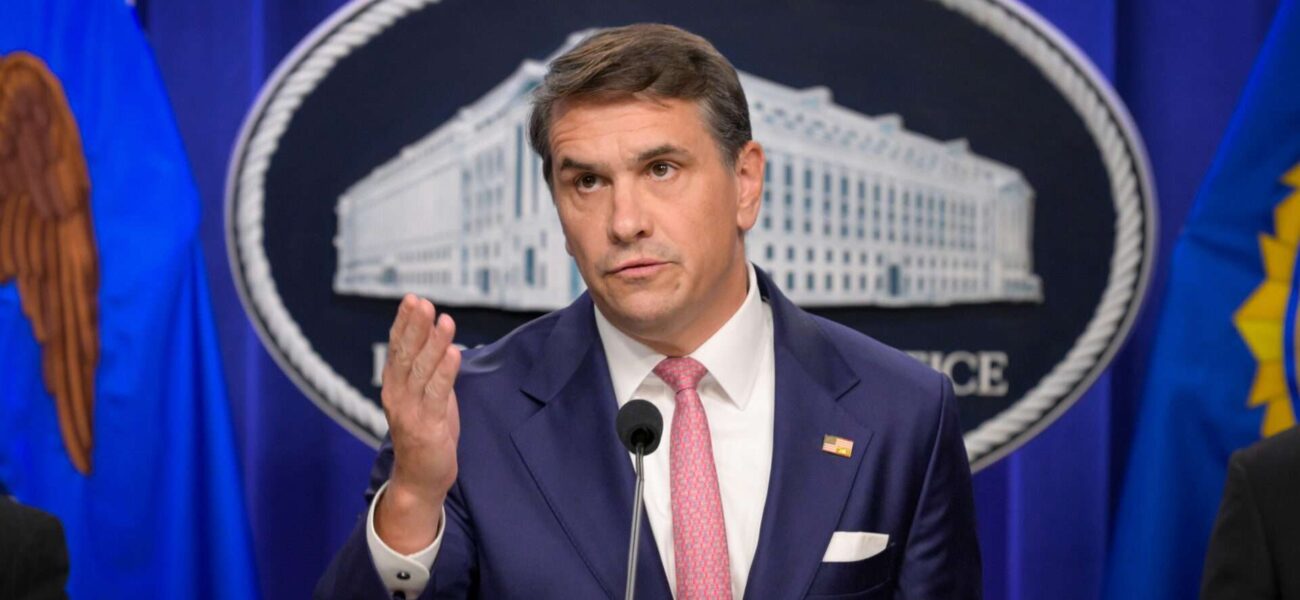
Consider Todd Blanche, the legal eagle whose recent maneuvers have thrust him into a glaring national spotlight. His chosen path, a tenacious defense of a former President facing an array of charges, has undoubtedly elevated his profile. But has it also, simultaneously, put a torpedo below the waterline of any future political aspirations he might harbor? It’s an interesting gambit, isn’t it? A calculated risk where the spoils of courtroom victory are potentially outweighed by the acid of public perception.
But the public, increasingly weary — and cynical, isn’t always good at distinguishing between the advocate and the cause. They don’t always separate the attorney’s professional duty from the client’s alleged culpability. And that, my friends, is the sticky wicket for Blanche. Because he’s not just representing a client; he’s becoming an avatar, a proxy for a narrative that, for many, personifies an assault on democratic norms.
It’s a tough road for a lawyer seeking higher office after such a stint. The shadow of his client’s reputation stretches long, casting doubt on Blanche’s judgment and, more pointedly, his perceived moral compass. A politician, even one with a legal background, must command a certain baseline of public trust, a belief in their commitment to institutional integrity. When you’ve been perceived—fairly or not—as an enabler of perceived systemic rot, that trust evaporates faster than an iced tea in July. But sometimes, notoriety itself can be a political commodity, can’t it? A dark kind of fame that rallies a specific, unwavering base.
And this isn’t a phenomenon exclusive to the Western Hemisphere. Go to Islamabad, to Dhaka, or Jakarta, — and you’ll find similar, if often more acute, scenarios. In Pakistan, for instance, political heavyweights frequently find themselves entangled in corruption scandals. Their lawyers, often sharp — and ambitious, walk a similar tightrope. Their defenses, sometimes theatrical, often perceived as obstructionist, can either be their making or unmaking depending on the public mood and the depth of the corruption. It’s a world where the lines between law, politics, and raw power often blur into an indecipherable mess. Transparency International’s 2023 Corruption Perception Index, for instance, rated Pakistan at 133rd out of 180 countries, reflecting a profound societal challenge where such legal battles take on an entirely different weight, often interpreted as contests between entrenched elites rather than matters of impartial justice. It’s a bitter truth, often unspoken.
“Serving as counsel for any high-profile figure, especially one as polarizing as the former President, irrevocably links your personal brand to theirs,” stated Dr. Evelyn Reed, a political ethics professor at Georgetown University. “For some, that’s an accelerant to their ambitions; for others, it’s a disqualifier for broader public appeal.” It really depends on what job you’re actually aiming for, doesn’t it? Because one path might lead you to cable news punditry, while the other—the more traditional one—sends you packing for a primary. Reed summed it up pretty well: “It’s less about guilt or innocence in the courtroom, and more about the court of public opinion.”
📄 POLICY WIRE WHITEPAPER PUBLISHED: PAKISTAN'S NATIONAL SECURITY POLICY PRIORITIES
👉 READ BY CLICKING HEREBecause ultimately, politics isn’t a court of law; it’s a popularity contest draped in principle, or at least the veneer of it. Any run for public office would see Blanche having to answer, endlessly, for his past actions. Every speech, every town hall, every debate, would come with a nagging addendum: “But what about…” He’d be defining himself not by his policy proposals or his vision, but by his clients, his former battles, the baggage he accumulated. This isn’t a small thing, either. It becomes your entire narrative.
And that’s the rub, isn’t it? You can be an excellent legal mind, a shrewd strategist, someone capable of maneuvering through the most complex legal thickets. But to win hearts and minds in the political arena requires a different currency—a currency of perceived integrity, of an untarnished commitment to the public good. Blanche might be betting on a populist wave that values loyalty above all else, even if that loyalty seems to wink at what others consider corruption. Maybe the ruthless reality of the market, be it legal or political, dictates these choices. Who’s to say?
“Every lawyer understands the sacrosanct nature of client advocacy, but a line exists,” a former federal prosecutor, who requested anonymity to speak frankly, told Policy Wire. “When your defense begins to normalize what society broadly condemns as unacceptable conduct, you pay a professional cost. You just do. It redefines what you stand for, not just who you represent.”
What This Means
Blanche’s calculated move places him firmly in a highly visible, yet ethically ambiguous, corner. For any future political aspirations—say, a congressional seat or even a state-level office—he’s not just running on his merits; he’s running with an elephant in the room. His connection to such a divisive figure creates an immediate ceiling on his appeal outside a very specific, deeply partisan base. The public’s trust in institutions, including the justice system, has eroded significantly in recent years, a trend Blanche’s prominent role only further highlights and perhaps, for some, reinforces. His public persona, now inextricably tied to defending actions many voters view as beyond the pale, severely compromises his ability to present himself as a unifying, statesman-like figure. His best bet for political success would likely involve targeting ultra-conservative districts where loyalty to the former president trumps all other considerations. This trajectory mirrors a global trend where political figures and their proxies prioritize partisan allegiance over perceived universal ethical standards, further splintering the public square. It’s a grim calculus, but an effective one for those who thrive in division, isn’t it?