


Washington’s Bold Island Bid: A Geopolitical Gambit in the Indian Ocean
POLICY WIRE — Washington D.C., United States — Forget the usual diplomatic dances over dusty treaties; Washington’s apparently cooking up a direct offer for a string of speckles in the Indian...

POLICY WIRE — Washington D.C., United States — Forget the usual diplomatic dances over dusty treaties; Washington’s apparently cooking up a direct offer for a string of speckles in the Indian Ocean, islands long embroiled in a mess of colonial history and strategic necessity. It’s a move that, if confirmed, could redraw maps in ways few predicted, turning a contentious sovereignty squabble into a potential cash-and-carry transaction.
It isn’t every day you hear a superpower thinking about outright purchasing another nation’s long-disputed territory, let alone one home to a key military base. But the Telegraph, a British broadsheet, recently laid it all out: the United States is indeed US considers buying Chagos Islands, Telegraph reports. Yes, that’s the gist, plain as day. For decades, the Chagos archipelago — and its biggest, most famous island, Diego Garcia — has been a bone of contention between Mauritius, which claims sovereignty, and the United Kingdom, which has maintained control since the 1960s. [QUOTE_PLACEHOLDER]
Now, Uncle Sam, seeing the writing on the wall maybe (or the high seas, rather), appears ready to swoop in with a hefty checkbook. This isn’t just about beachfront property; it’s about geopolitics, pure — and raw. Diego Garcia hosts an indispensable US military installation—a super-secret (well, not-so-secret these days) base often dubbed an UNSINKABLE AIRCRAFT CARRIER in the heart of the Indian Ocean. From there, American air and naval power project across critical shipping lanes, into the Middle East, and towards increasingly assertive challengers in Asia.
Mauritius has consistently demanded the islands’ return, taking its case to international courts and consistently winning advisory opinions backing its claim. The UN General Assembly, in fact, voted 116-6 in 2019 to demand Britain hand the islands over to Mauritius within six months. Britain, characteristically, thumbed its nose at the resolution, preferring to negotiate a solution directly with Port Louis. But here’s the twist: the US, presumably looking to solidify its long-term presence on Diego Garcia, seems poised to short-circuit that bilateral negotiation with a colossal bid of its own.
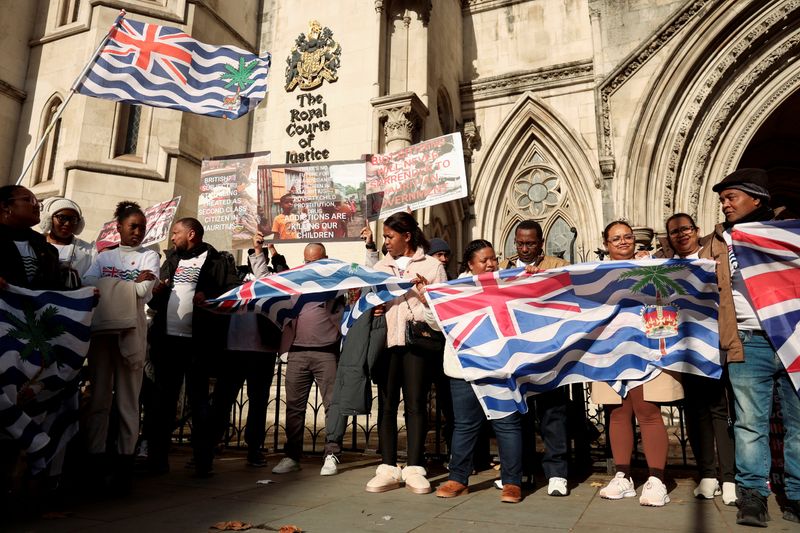
And let’s not forget the Chagossians, the Indigenous people forcibly removed from their homes in the 1960s and 70s to make way for that very American base. They’ve been fighting for decades for their right of return, and this new wrinkle throws their future into even greater uncertainty. Will a US purchase accelerate their repatriation, or will it simply transfer the moral liability and continue their exile? Nobody’s really saying yet.
Because, make no mistake, this potential transaction isn’t just some accounting footnote. It’s a seismic shift, indicating Washington’s deepening strategic investment in a region often seen as a secondary theater compared to the Pacific. But the Indian Ocean? It’s where the next great power struggles are brewing, with China expanding its influence, India growing its naval power, and a whole host of regional players navigating tricky waters. In fact, a report by the US Congressional Research Service notes that Diego Garcia’s strategic value stems from its unique location, allowing for ‘reach across the Indian Ocean to the Persian Gulf and the South China Sea,’ a operational flexibility that cannot be easily replicated elsewhere.
So, the US buys the islands. What happens then? Does it finally pave the way for Chagossian return under new ownership? Does it infuriate London, quietly side-stepping its colonial legacy? Or does it, more broadly, reset expectations for how disputes over remote, strategically-loaded territories get settled?
This whole episode — part real estate deal, part international diplomacy — gives a lot of countries reason to pause. Regional players, particularly those in South Asia like Pakistan, will be watching closely. Pakistan’s strategic thinkers, already balancing complex relationships with China and the US, aren’t immune to the ripple effects of any shift in Indian Ocean power dynamics. A firmer US presence in Diego Garcia might mean one less card for regional maneuvering, solidifying existing military and intelligence arrangements but potentially upsetting the delicate balance Islamabad tries to maintain with various global powers. It’s an inconvenient truth for many in the Muslim world, navigating historical grievances while confronting current realities of strategic alliances.
What This Means
If Washington does indeed finalize a deal to acquire the Chagos archipelago, it isn’t just buying land; it’s purchasing stability—and maybe a dose of international legitimacy—for its most significant military outpost outside Europe. Economically, this could mean significant financial aid or compensation package for Mauritius, potentially silencing its sovereignty claims, at least politically. But it certainly won’t erase the stain of the Chagossians’ forced displacement. For the US, it guarantees an asset it relies on heavily, sidestepping years, maybe decades, of messy international court battles and diplomatic pressure from the UK and Mauritius.
From a broader geopolitical perspective, such a move by the US would signal its intent to permanently entrench its influence in the Indian Ocean, an area becoming increasingly important for global trade, energy routes, and counter-terrorism operations. This isn’t just about naval dominance; it’s about intelligence gathering, logistical support, and projecting power in a region where Chinese influence continues to grow—think Belt and Road Initiative, naval expansions, and growing port deals. It forces countries like Pakistan and India, often caught between competing global interests, to reassess their own long-term strategic alignments. What good are historical ties, after all, if maritime power dynamics are shifting so dramatically? It puts new pressure on regional stability efforts, and frankly, makes a whole lot of nations think harder about who truly holds sway in these contested waters.