


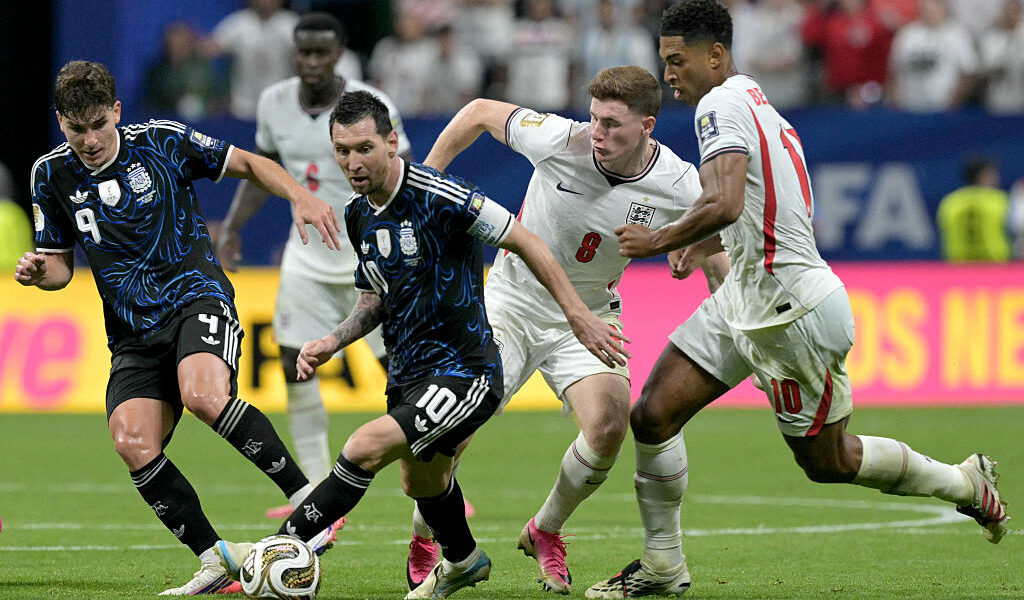
Messi’s Late Magic: Argentina’s Ascent Reflects Global South’s Sporting Power, Shakes European Confidence
POLICY WIRE — Buenos Aires, Argentina — There’s a particular kind of exhaustion that settles upon a nation when hope, painstakingly built over ninety minutes, unravels in the dying embers of a...

POLICY WIRE — Buenos Aires, Argentina — There’s a particular kind of exhaustion that settles upon a nation when hope, painstakingly built over ninety minutes, unravels in the dying embers of a contest. That’s the feeling, a bitter cocktail of shock and simmering resignation, that reportedly gripped England after their late-game collapse against Argentina. But for Buenos Aires—and a significant portion of the Global South—the last-gasp triumph of Lionel Messi and his Albiceleste wasn’t just a comeback; it was a potent, emotionally charged reaffirmation of identity, one played out on the world’s most gilded stage.
It’s easy to dismiss football as merely sport, but anyone watching the streets of Rosario erupt knows better. Because this wasn’t just about athletic prowess; it was a testament to a national psyche, a stubborn refusal to capitulate, mirroring resilience demanded in other arenas. This Argentina squad, notorious for pulling victories from the jaws of stalemate in the game’s twilight moments, has become an accidental, powerful symbol. They’re masters of the psychological turn, champions of the eleventh hour.
And that psychological edge, policy analysts observe, has palpable ripples far beyond the pitch. Dr. Sofia Gutierrez, Argentina’s Minister for International Cultural Relations, didn’t mince words. “When our captain raises that trophy, it’s not just a footballer’s achievement; it’s a statement for a country that refuses to be defined by past hardships,” she remarked, her voice radiating quiet pride. “It elevates our brand, signals our tenacious spirit to potential investors, and strengthens our position on every diplomatic stage. You can’t put a price on national morale like this.” She’s got a point. National team success often correlates with a spike in national identity and perceived international standing, even if fleeting.
But the mirror image across the Atlantic tells a different story. For England, the sting of another high-profile exit cuts deeper than just sporting disappointment. It’s a recurring theme—the almost-there, the heroic effort dashed at the brink. Sources within Whitehall speak of a collective sigh, not just from fans, but from those charged with managing national narratives. Sir Alistair Finch, a senior economic advisor within the UK’s Department for International Trade, framed it pragmatically, albeit with a hint of fatigue. “Look, these aren’t just games. These moments—high-stakes international contests—they shape perception. It affects everything from tourism to the perceived ‘can-do’ attitude investors might consider. We’d hoped for a positive boost after a rather turbulent period. Now, we recalibrate. Again.” His candid assessment suggests more than just fleeting disappointment.
Globally, these grand sporting spectacles are more than diversions. They’re soft power battlegrounds, where nations like Argentina project strength — and vibrancy. It’s a strategy well understood in places like Pakistan, where cricket, a unifying passion, often shoulders similar expectations for national pride and global visibility. You see it in the Gulf too, with monumental investments like Saudi Arabia’s burgeoning sports economy—from boxing super-fights to football club ownership—demonstrating a clear strategic intent to harness global sporting appeal for national branding and geopolitical leverage. It’s not just about winning; it’s about being seen, being relevant, shaping narratives.
📄 POLICY WIRE WHITEPAPER PUBLISHED: PAKISTAN'S NATIONAL SECURITY POLICY PRIORITIES
👉 READ BY CLICKING HEREAnd the numbers? They sometimes tell a tale that belies simple fandom. Research from Deloitte, for instance, has quantified the economic uplift from successful major sporting events, indicating that hosting or even winning can contribute an additional 0.1% to a nation’s GDP through tourism, merchandise, and a general consumer confidence boost, not to mention invaluable global media exposure. The soft power generated by these moments, say for a player like Messi who transcends traditional borders, can be incredibly persuasive, almost a currency in itself.
What This Means
Argentina’s hard-won qualification for the final, particularly at England’s expense, translates into more than just celebratory parades in Buenos Aires. Politically, it provides a unifying narrative for a nation grappling with persistent economic challenges (inflation has been a beast there for years, let’s be honest). A collective triumph, even an ephemeral one, can serve as a powerful—if temporary—distraction and an emotional shield for the government. It’s an assertion of national character on a stage where geopolitical heavyweights traditionally dominate the narratives. Think of it as a soft-power coup. For England, it’s a deflating reminder of a post-Brexit reality where global successes sometimes feel harder to come by, impacting everything from national mood to investor sentiment – not exactly what the current administration would be wishing for as it attempts to project ‘Global Britain.’ These sporting contests are never just about goals; they’re proxy battles for influence and pride in an increasingly fractured world. But then, they always were, weren’t they?