


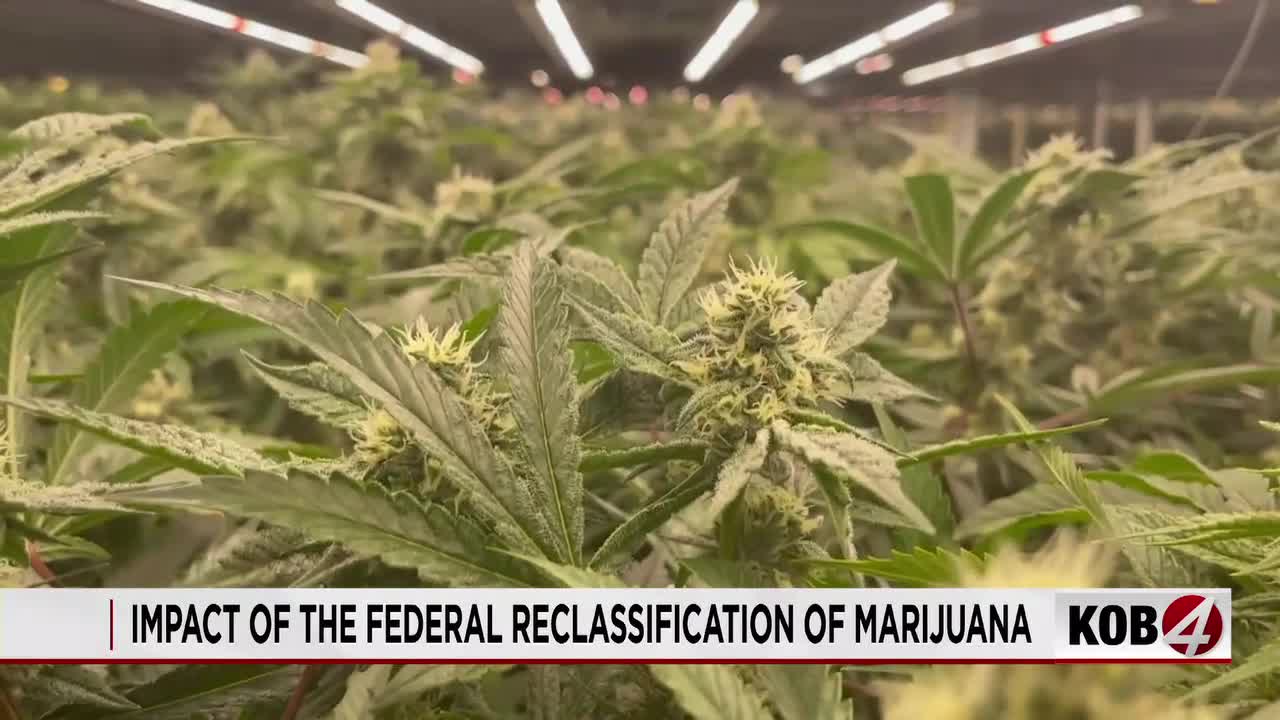
Federal Cannabis Shift Ignites Tax Relief Hopes, But Hurdles Remain for Green Economy
POLICY WIRE — Albuquerque, New Mexico — A quiet bureaucratic shuffle at the federal level has suddenly stuffed millions of dollars back into the pockets of cannabis entrepreneurs, or so they’re...

POLICY WIRE — Albuquerque, New Mexico — A quiet bureaucratic shuffle at the federal level has suddenly stuffed millions of dollars back into the pockets of cannabis entrepreneurs, or so they’re hoping. This isn’t about spanking new legislation or some groundbreaking court ruling, but a nuanced reclassification that’s got the industry positively buzzing with cautious optimism.
For decades, medical cannabis sat right alongside heroin — and LSD as a Schedule I drug. A federal designation implying high abuse potential — and absolutely no accepted medical use. Make no mistake, that’s a pretty stark categorization for something doctors routinely prescribe, isn’t it?
But the U.S. Department of Justice (DOJ) recently shunted it to Schedule III. This might sound like a minor tweak in Washington’s arcane regulatory labyrinth – a mere bureaucratic whisper, really – but for companies in states like New Mexico, it’s a potential financial seismic shift.
And that matters immensely. New Mexico’s burgeoning cannabis sector, much like its counterparts across the nation, has been disproportionately clobbered by federal tax laws, specifically Section 280E of the Internal Revenue Code.
This obscure provision, a relic from the 1980s originally targeting illicit drug traffickers, prohibits businesses from deducting ordinary business expenses if they ‘traffic’ Schedule I or II substances. For state-legal cannabis operations, that’s consistently meant sky-high effective tax rates, sometimes grotesquely exceeding 70%.
“We’re talking about a monumental shift in our bottom line,” observed Jon Updegraff, Chief Financial Officer for Verdes Cannabis, a prominent New Mexico operator. “If this reclassification translates to 280E relief, it’s upwards of a million dollars for us, easily. That frees up capital for expansion, for jobs, for better pay.”
A Half-Step Towards Legitimacy
For years, advocates have contended that federal policy lagged far behind scientific consensus — and public opinion. Moving medical cannabis to Schedule III definitively acknowledges its recognized therapeutic value. A slow clap for progress, perhaps.
Still, recreational cannabis remains Schedule I, a dichotomy that continues to vex regulators and industry players alike. How can one plant be both a dangerous narcotic — and a legitimate medicine, depending on its intended use? It’s a head-scratcher.
“It’s symbolic, yes, but profoundly so,” illuminated Ben Lewinger, a seasoned cannabis policy expert. “For the first time, the federal government officially recognizes cannabis as a substance with inherent medical utility. That’s a significant shift from the prohibitionist mindset that dominated for half a century.”
This reclassification, however, isn’t some magic bullet. Businesses still operate in a legal gray area, navigating a patchwork of state — and federal regulations. A real Gordian knot, actually.
They can’t, for instance, ship products across state lines, a fundamental aspect of most legitimate industries. And critical questions surrounding banking, insurance, — and federal employment laws persist.
Global Echoes and Lingering Doubts
While the U.S. inches toward reform, other parts of the world are watching, — and in some cases, moving faster. Consider Pakistan, a nation where traditional cannabis use (often as hashish) has deep historical roots, yet modern laws largely align with international prohibitions established during the colonial era.
Even there, discussions are emerging around industrial hemp and potential medical applications, mirroring the global trend of reconsidering cannabis’s role in society. The slow, deliberate pace of reform in the West often stands in stark contrast to other regions grappling with their own drug policy legacies; sometimes it feels like we’re watching paint dry while others build skyscrapers.
Back in the U.S., the journey isn’t over. The American Trucking Associations, for example, quickly issued a statement noting they’re “reviewing DEA’s announcement and assessing what near- and long-term impacts it could have on USDOT’s drug and alcohol testing program.” It’s a pragmatic concern. Will a truck driver now face different scrutiny for medical marijuana use? Good question.
“The IRS still needs to issue formal guidance on how exactly this impacts 280E,” Lewinger cautioned. “And the DEA will have to clarify compliance requirements for state operators. Until then, it’s a waiting game, albeit a hopeful one.”
The math is stark: the global cannabis industry is projected to reach an estimated $176 billion by 2030, up from roughly $43.7 billion in 2022, according to Grand View Research. Allowing American businesses to operate on a level playing field could unlock immense economic potential. Think gold rush, but for green.
Related: New Mexico Braces for Extreme Fire Danger as Winds Return to Arid Landscapes
What This Means
This reclassification is a significant political and economic tremor, not an earthquake, but it definitely shifts the landscape. Economically, potential 280E relief frees up capital, stimulating investment, job creation, and potentially lowering consumer prices for medical cannabis. A win-win, right?
For states like New Mexico, already navigating the complexities of a legal market, it provides much-needed stability and growth potential. Politically, it signals a federal acknowledgment that cannabis isn’t the illicit pariah it once was.
This move could pave the way for further reforms, perhaps even full descheduling, though that’s a much heavier lift requiring Congressional action. And yet, the piecemeal approach maintains a confusing federal-state conflict, leaving crucial issues like interstate commerce and banking reform unresolved. Frustrating.
As U.S. Senator Martin Heinrich (D-NM) recently told local reporters, “This is a welcome, common-sense step forward, but let’s be clear: we need comprehensive federal reform that ends prohibition entirely. Our businesses and our patients deserve full clarity and equity under the law, not just incremental adjustments.” He’s not wrong. Not at all.
Ultimately, the DOJ’s move reshapes the dialogue — and provides a significant boost for medical cannabis businesses. But don’t mistake it for full federal legalization. Just isn’t.
That battle, replete with its own political complexities and lobbying efforts — a real slugfest, if you ask me — remains very much ahead. Future steps will hinge on intricate regulatory interpretations and, crucially, sustained political will in Washington.