
White House Ballroom Battle: When is a Grand Project Too Grand for the Public?
POLICY WIRE — Washington, D.C. — Imagine, if you will, the federal government deciding to bulldoze the Statue of Liberty, perhaps to build, oh, say, an observation deck or a really, really big...

POLICY WIRE — Washington, D.C. — Imagine, if you will, the federal government deciding to bulldoze the Statue of Liberty, perhaps to build, oh, say, an observation deck or a really, really big flagpole. And then imagine a lawyer, straight-faced, arguing that once the wrecking balls start swinging, no court on God’s green earth—and certainly not the descendants of those immigrants who first gazed upon her—could halt the destruction. That’s the kind of wild hypothetical a U.S. Appeals Court judge faced last week, starkly laying bare the unsettling claims of executive power currently in play.
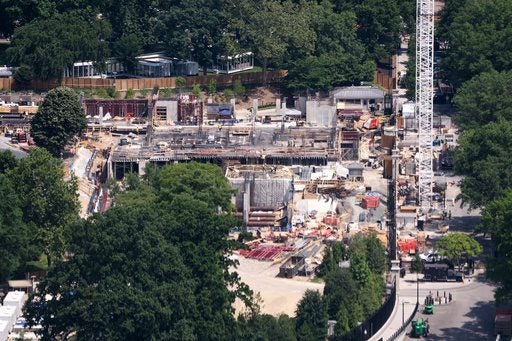
Because that’s what Yaakov Roth, an attorney representing Uncle Sam, actually implied during a truly bewildering exchange with U.S. Appeals Court Judge Patricia Millett. He asserted that a White House ballroom project, already underway and sporting a staggering $400 million price tag (according to federal documents, not the White House’s latest ‘suggestion’), can’t be stopped by mere judges. Only Congress, he argued, holds that kind of veto power. It’s an assertion that makes you wonder just how much leeway the executive branch believes it wields, particularly when it comes to monumental structures on federal property.
The core of this bizarre showdown is a court order issued by U.S. District Judge Richard Leon back in April, which put the brakes on above-ground work for a mammoth 90,000-square-foot ballroom. Leon, a George W. Bush appointee, wasn’t against the underground parts—the bunker, the so-called “national security facilities”—he just had an issue with the colossal party space sprouting up without proper congressional blessings. The administration, clearly not keen on pesky legislative approval, wants to push ahead, legal niceties be damned.
Millett, an Obama appointee, pressed Roth hard on the idea of a ‘fait accompli’—when, precisely, did this ballroom become untouchable? “Was it when you started doing the underground work, which is now totally completely integral and connected and inseparable from a massive ballroom on top?” she quizzed. She didn’t hold back. But Roth was unblinking. “I think it would have been improper to enjoin it even on Day One,” he countered, effectively telling the court, ‘You folks never had a say.’ It’s a remarkably defiant stance, particularly for a government lawyer.
This whole charade kicked off because the National Trust for Historic Preservation wasn’t thrilled about the White House tearing down the East Wing in December to make way for a ballroom the former President suggested would host 999 people. They sued. But, of course, the government’s lawyers have since cooked up some rather expansive national security concerns, mentioning everything from drones and ballistic missiles to biohazards. One could almost chuckle, if it weren’t so serious, at the sheer inventiveness of justifying a dance hall as a fortress against future pandemics.
And that’s the rub, isn’t it? How does the public, or the courts for that matter, challenge these grand assertions when they’re cloaked in the opaque language of national security? Attorney Yaakov Roth, leaning on the principle of established fact, maintained, “Look, once you pour the concrete, it’s a done deal. We can’t rewind the clock just because someone feels like they missed a public hearing. That’s how government works—it doesn’t pause for lawsuits.” It’s an argument that chills many who believe in government accountability.
📄 POLICY WIRE WHITEPAPER PUBLISHED: PAKISTAN'S NATIONAL SECURITY POLICY PRIORITIES
👉 READ BY CLICKING HEREConversely, Tad Heuer, representing the National Trust, argued fiercely that congressional oversight isn’t some quaint historical relic to be ignored at will. “This isn’t just about a ballroom; it’s about whether an administration can simply bypass established protocols and legislative oversight, pretending national security is a blank check for anything it fancies. Congress gets the final say on federal property, always.” He wasn’t having any of the administration’s convenient amnesia regarding procedure. He wants construction halted until Congress gets a word in, as it rightly should.
The two-hour hearing before the three-judge panel wrapped up without a verdict, leaving us all to chew on the unsettling implications. This isn’t just an American problem, mind you. You see similar battles play out in places like Pakistan, where public heritage sites or significant lands are sometimes designated for ‘security’ or ‘development’ projects, often with opaque reasoning and minimal public consultation. Just last year, there was controversy over proposed changes to Islamabad’s Margalla Hills National Park for luxury tourism—projects where ‘national interest’ is cited, but public good or oversight seems to take a backseat. The idea of bypassing legal challenge on federal land, once construction has commenced, echoes an all-too-familiar narrative across a number of developing nations where executive ambition can quickly outpace democratic checks.
What This Means
This isn’t just about an oversized party room; it’s a direct hit on the separation of powers. The administration’s argument suggests a dangerous precedent: just build it, no matter how questionable, and then tell the courts it’s too late to intervene. It sets up a scenario where executive overreach can essentially bypass judicial review by simply moving fast enough. Think about the economic implications—a quadruple-digit million-dollar project, possibly unapproved, draining taxpayer funds. It’s a blank check with no accountability. This skirmish goes beyond a fancy hall; it questions the very foundation of oversight in a representative government, hinting that some departments might operate with a kind of sovereign immunity against sensible legal challenges once a shovel hits the dirt. That’s a shaky line to walk, especially when public trust in institutions feels like it’s barely holding on.