

Bolton’s Bitter Pill: Perpetual Stalemate Defines US-Iran Standoff
POLICY WIRE — Washington D.C., USA — In the labyrinthine world of U.S. foreign policy, some declarations land like the weary thud of a well-worn ledger being closed for the umpteenth...

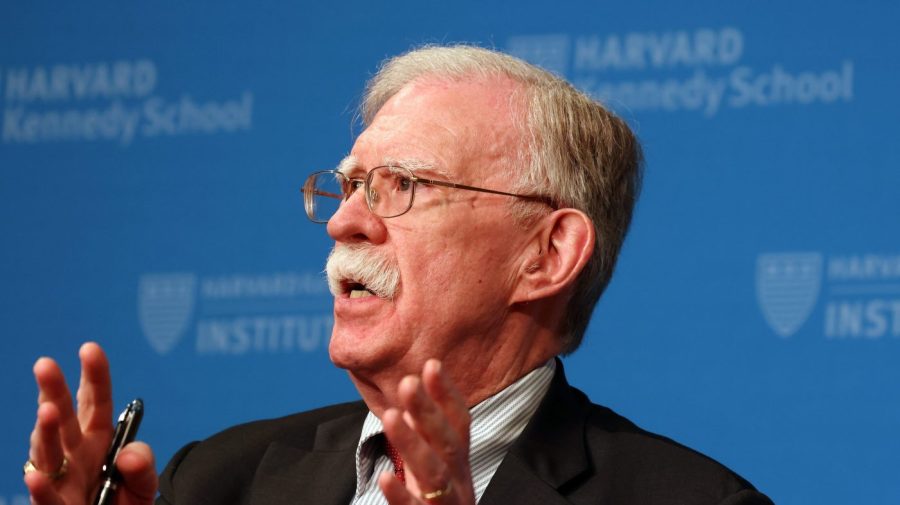
POLICY WIRE — Washington D.C., USA — In the labyrinthine world of U.S. foreign policy, some declarations land like the weary thud of a well-worn ledger being closed for the umpteenth time, less a new revelation and more a persistent, unyielding echo. This week, the inimitable John Bolton, a figure whose very name conjures a hawk’s shadow over international relations, offered his familiar, stark assessment of American efforts concerning Tehran. He’s seen this movie before, we all have.
Bolton, a former National Security Advisor, didn’t just suggest; he pretty much declared that he sees no [QUOTE_PLACEHOLDER] for the United States. It’s a viewpoint that isn’t particularly shocking coming from him, really. But it throws cold water — or perhaps, more accurately, an icy blast — on any lingering hopes that the complex, generations-deep animosity between Washington and Tehran might yet bend toward conventional diplomacy. Sometimes, you gotta wonder if anyone truly expects a different tune.
It’s a classic Bolton line, a reminder that for certain corners of the foreign policy establishment, the only path forward is through unwavering pressure, not negotiation. Because, for them, compromise isn’t a strategy, it’s just delay. You’d think after decades of this, things might shift, but old habits die hard, especially in geopolitics. He believes, [QUOTE_PLACEHOLDER], — and has never really minced words about it.
This perspective, while perhaps unsurprising, still rattles the diplomatic cage. It begs the question: if seasoned practitioners like Bolton genuinely believe diplomacy is a dead end, what then remains? Just continued saber-rattling — and economic chokeholds? The global stage certainly has its share of persistent squabbles, but this particular one seems to possess a unique immunity to resolution. And it isn’t for lack of trying — on — and off, at least. But efforts seem perpetually derailed, either by shifts in power in either capital or by some incendiary event that sends everyone scurrying back to their trenches.
Consider the region’s intricate web. Pakistan, for instance, a Muslim-majority nation sharing a lengthy, often restive border with Iran, consistently finds itself navigating a tightrope. Its own security concerns, economic imperatives — including the long-discussed but frequently stalled Iran-Pakistan gas pipeline — and its relationship with other Western powers, create a perpetually precarious balance. An openly hostile U.S.-Iran dynamic certainly doesn’t simplify matters for Islamabad. It just means more sleepless nights for policy wonks in Pakistan’s Foreign Office, calculating risks — and rewards.
Indeed, a recent study from the Council on Foreign Relations, analyzing historical data on US-imposed sanctions, indicated that less than 10% of comprehensive, unilateral sanction regimes against major state actors have achieved all their stated foreign policy goals without significant unintended consequences or collateral damage, particularly to regional stability. It’s a statistic that suggests perhaps the stick isn’t quite as potent as some believe, or at least, it often smashes things it wasn’t meant to.
Bolton’s declaration feels less like a strategic proposal and more like a weary acceptance of an intractable reality. He likely sees years of cyclical engagement yielding little beyond an emboldened Iran — and an exasperated Washington. His experience, deeply rooted in the Reagan administration’s hawkish leanings through to the George W. Bush — and Trump eras, tells a tale of continuous confrontation. It’s a narrative many others in power simply aren’t interested in revisiting, but can’t quite escape either.
What gives? We’re talking about a conflict here that defines an entire generation’s diplomatic bandwidth. It shapes alliances, dictates defense spending, and keeps intelligence agencies on high alert across the Middle East and beyond. That kind of enduring friction doesn’t just sit there. It permeates everything. For countries like Afghanistan or the smaller Gulf states, caught between a rock and a hard place, an unchanging narrative of US-Iran hostility is simply part of their daily calculations. Their survival depends on it.
What This Means
Bolton’s unflinching analysis, despite its familiar cadence, signals a potential hardening of attitudes among U.S. foreign policy shapers, especially if a more conservative administration takes the reins. It suggests that even under a different presidential banner, the default setting for Iran relations might revert to maximal pressure rather than renewed attempts at nuclear deal negotiations. The diplomatic off-ramps shrink significantly if influential voices actively discredit them from the outset. This isn’t just talk; it’s a playbook.
Economically, persistent U.S.-Iran tension translates into sustained sanctions, which in turn restrict Iran’s oil exports and limit its ability to engage in global trade. This doesn’t just hurt Iran; it creates volatility in global energy markets and presents awkward choices for nations, like Pakistan, looking to source affordable energy while balancing geopolitical allegiances. We’ve already seen Europe scramble for alternatives. The world needs oil, — and Iran has plenty of it, yet the taps stay mostly shut. It’s a puzzle with no easy solution.
Regionally, the continued state of quasi-conflict feeds proxy skirmishes and keeps an already volatile Middle East simmering. Countries from Yemen to Lebanon — and, by extension, bordering Pakistan and parts of the broader Muslim world — feel the heat from this ongoing great-power rivalry. The constant U.S.-Iran friction often empowers hardliners on both sides, making de-escalation a pipe dream. You can’t build a lasting peace when everyone expects a fight. Bolton’s remarks simply underscore this deeply entrenched stalemate, perhaps even contributing to its perpetuation. For those seeking a diplomatic path to stability, his words aren’t an analysis, they’re a prophecy — and not a particularly optimistic one at that.