

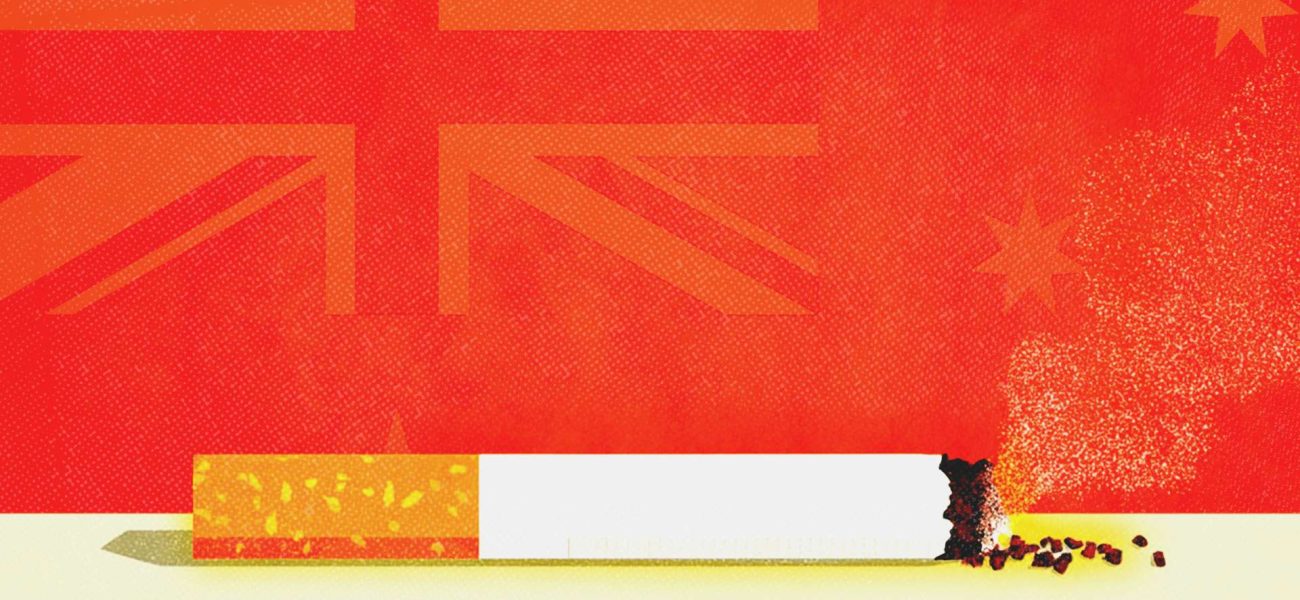
Australia’s Sin Tax Folly: A Smoker’s Black Market Paradise
POLICY WIRE — CANBERRA, Australia — It was supposed to be a triumph of public health, a world-leading example of a government literally taxing an unhealthy habit out of existence. But here...

POLICY WIRE — CANBERRA, Australia — It was supposed to be a triumph of public health, a world-leading example of a government literally taxing an unhealthy habit out of existence. But here we’re, watching Australia’s well-intentioned — and eye-wateringly expensive — war on tobacco spiral into a smuggler’s delight, a veritable black market nirvana.
Walk through certain suburban streets, or, better yet, peek into some of the shadier corners of the online marketplace, and you’ll quickly grasp the grim reality. For every official pack of cigarettes with its exorbitant price tag and gruesome health warnings, there’s a cheap, unregulated, and frankly unknown alternative flooding the country. This isn’t just a slight kink in the plan; it’s an absolute, colossal backfire.
Canberra’s policy architects envisioned fewer smokers, healthier citizens, and perhaps even a halo effect for its progressive public health credentials. Instead, they’ve cultivated an underworld economic boom that would make Al Capone blush. Law enforcement officials don’t mince words. “We didn’t just create a problem; we turbocharged organized crime in a way we frankly hadn’t anticipated,” acknowledged Home Affairs Minister Clare O’Neil, in a remarkably candid if slightly rueful remark, reflecting on the escalating crisis. And you can bet your last dollar the nation’s coffers aren’t too thrilled about missing out on billions in tax revenue, either.
But how bad is it, really? Numbers often paint a starker picture than even the grittiest street-level anecdotes. Industry estimates, cited widely, indicate that a staggering 80% of all tobacco consumed in Australia now comes from illicit sources. Eighty percent. That’s not a fringe activity; it’s the dominant market force. Because when a legal product becomes unaffordable for a significant segment of the population, alternatives, legal or otherwise, always appear. It’s capitalism 101, but with a nefarious twist.
The scale of this failure has broader implications, echoing far beyond Australia’s sun-drenched shores. Illicit tobacco isn’t just smuggled in on dinghies anymore; it’s a sophisticated global enterprise. It traces routes from production hubs, often in Southeast Asia, snaking through a complex web that can include ports in South Asia, like Karachi or Colombo, before reaching Australia. Criminal syndicates, not necessarily confined to local Australian players, exploit porous borders and corruptible elements worldwide. It’s a logistical marvel, just not one governments like to brag about.
“We’re intercepting hundreds of tons of illegal product, year after year,” stated Australian Border Force Commissioner Michael Outram, his voice heavy with the frustration of a perpetual battle. “But for every container we seize, another slips through. It’s like trying to bail out a leaky boat with a teacup. The economic incentives for these cartels are simply too great to ignore, making their operations relentless and deeply entrenched.” They’re not just smuggling smokes, either. These same networks, emboldened by their tobacco windfall, quickly diversify into drugs, weapons, even human trafficking. It’s an ugly ecosystem.
📄 POLICY WIRE WHITEPAPER PUBLISHED: PAKISTAN'S NATIONAL SECURITY POLICY PRIORITIES
👉 READ BY CLICKING HEREThe notion that simply raising prices into the stratosphere would make a vice disappear was perhaps a little naive. Human behavior, it turns out, is a bit more complicated than an economic graph might suggest. It’s almost as if governments, in their earnest zeal, sometimes forget the human element—the stubbornness, the addiction, the sheer creativity of people looking to circumvent perceived injustice or simply feed a habit. It makes you wonder how other, similar policies across the globe might unintentionally backfire, shifting problems rather than solving them.
What This Means
This Australian saga isn’t just about cigarettes; it’s a stark warning about the limitations — and unintended consequences — of overly zealous social engineering through taxation. Politically, it’s a headache. The government faces scrutiny for a policy that has failed its primary health objectives while simultaneously empowering criminal syndicates and draining billions from legitimate tax revenue. Opposition parties now have a ready-made example of state overreach leading to economic — and social detriment.
Economically, the implications are devastating. Imagine billions that should be funding public services now lining the pockets of criminals. Legitimate tobacco retailers, adhering to strict regulations and taxation, are being undercut into oblivion, jeopardizing jobs and further narrowing the tax base. This shift means more than just lost revenue; it signifies a loss of state control over a significant sector of the consumer market, breeding cynicism in the population and a growing sense that laws are only for the law-abiding. Because, let’s be honest, the black market doesn’t check IDs or age restrictions, further undermining public health efforts. It’s a mess. And fixing it? That’s going to require a lot more than just another tax hike.