


Gathering of Nations Ends After 43 Years, But Indigenous Spirit Endures
POLICY WIRE — Albuquerque, New Mexico — A bittersweet, almost haunting refrain clung tenaciously to the desert air last weekend, as the drumbeats of the Gathering of Nations echoed for a final time...

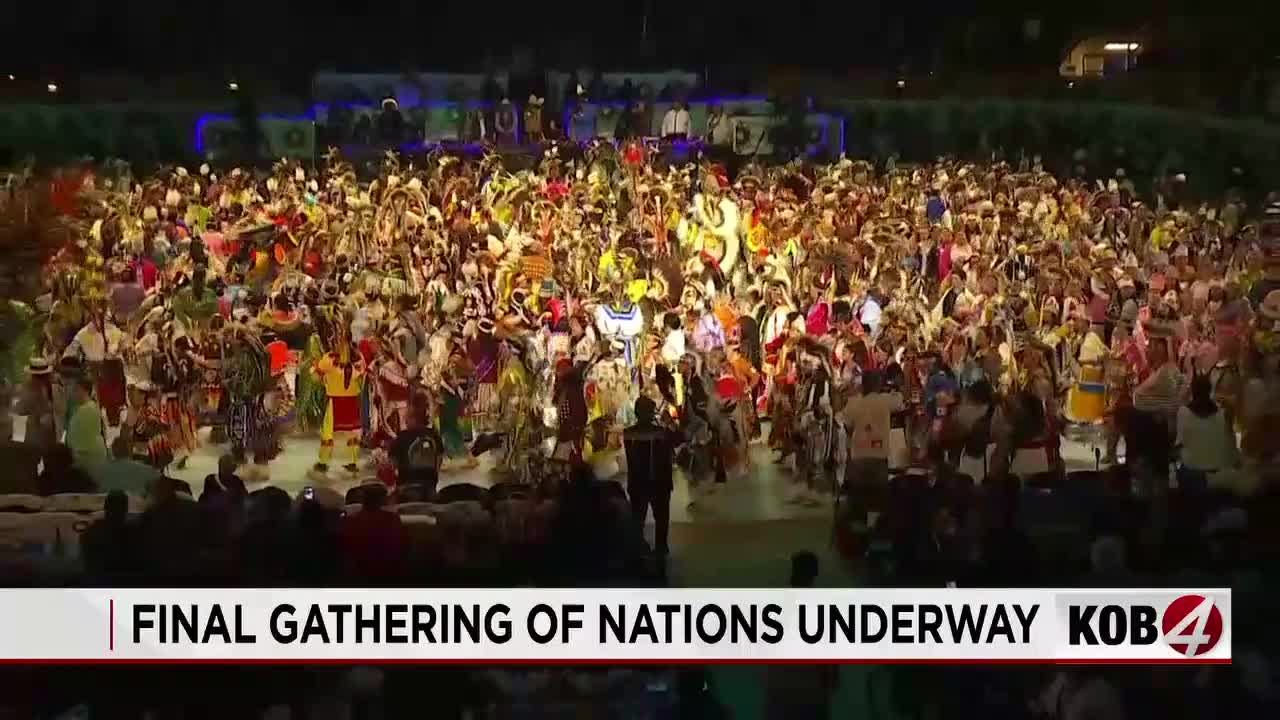
POLICY WIRE — Albuquerque, New Mexico — A bittersweet, almost haunting refrain clung tenaciously to the desert air last weekend, as the drumbeats of the Gathering of Nations echoed for a final time across the New Mexico State Fairgrounds. It’s a tough pill to swallow. Not since 1983, a lifetime ago for many, had this venerable intertribal powwow missed its annual cadence.
For forty-three years, it had been a pulsating, monumental tapestry of indigenous culture, drawing participants and spectators from every corner of the globe. But its own prosperity, like a rapidly inflating balloon, ultimately led to its pop. That’s the cruel irony, isn’t it?
Back in 2023, organizers delivered the somber news: the 43rd iteration would be the last. Founder Derek Mathews, whose sheer vision conjured this spectacle into being, unfurled a simple, yet profoundly poignant, truth.
“We built something extraordinary, something far grander than we ever imagined,” Mathews reportedly stated, reflecting on the event’s stunning evolution. “But the sheer scale, the logistics of hosting hundreds of thousands of people, thousands of dancers, and all the moving parts? It became unsustainable. It’s like watching your child grow too big for the house you built for them.”
Few could dispute the colossus of the event. At its peak, the Gathering of Nations could see over 700 Native American tribes and nations represented, a statistic underscoring its unparalleled scope and cultural significance, as noted by various ethnographic studies on indigenous gatherings. Impressive, to say the least.
But how does one say goodbye to a tradition that’s become a bedrock for so many? What’s next?
And yet, despite the palpable sadness — you could practically taste it — a defiant spirit pulsed through the crowds. Attendees, some traveling hundreds of miles, weren’t just mourning; they were celebrating, dancing, — and connecting. It was quite a scene.
Rae Toledo, a longtime participant, perfectly captured the sentiment.
“It’s a bit sad, I mean, we’ve made so many connections with so many people through the years. And, you know, it’s bittersweet,” she admitted, her voice tinged with emotion.
Her words resonate beyond the immediate context of the powwow, touching upon the broader theme of cultural preservation — a relentless, universal challenge that often feels like pushing water uphill. From the sun-baked plains of North America to the craggy mountainous regions of Pakistan, the struggle to preserve distinct cultural identities against the homogenizing forces of the 21st century remains, well, a persistent global headache.
Often, indigenous communities in South Asia, like the Kalash in Pakistan’s Chitral Valley, face similar pressures regarding land, language, and the continuation of ancestral rites. It’s not an isolated struggle, you know?
Still, the resilience of cultural heritage, whether through music festivals, dance, or oral traditions, stubbornly endures. It always does.
Another attendee, Candice Mingo, echoed this feeling, adding a layer of pragmatic, almost weary, acceptance.
“It’s kind of disappointing, but at the same time, you know, it’s had its great years. It’s had so many great years. And, you know, all good things must come to an end. I hate that it’s, but it’s what it’s,” Mingo remarked.
Indeed, the math, unfortunately, is stark. Hosting an event of this scale requires mammoth choreographing, significant funding — think literal piles of cash — and an army of dedicated volunteers, all of which become increasingly challenging as an event grows beyond its initial, humble framework. A classic case of too much of a good thing.
What This Means
The conclusion of the Gathering of Nations isn’t merely the end of an event; it’s a watershed moment. For Albuquerque, it means the loss of a major fiscal engine. Estimates suggest large-scale events like this inject millions into local economies through tourism, hospitality, and retail, a boost the city will certainly miss as it continues to grapple with its unique set of challenges. A big hit, no doubt.
And that matters. Economically, culturally, it creates a void. A gaping one.
Culturally, however, it presents both a challenge — and an opportunity. Will smaller, regional powwows gain prominence? Will new forms of intertribal gatherings emerge, perhaps more decentralized and less resource-intensive, like the community gardens springing up in urban areas?
The spirit of community, of shared heritage, won’t simply vanish. It will, as many attendees articulated with resolute certainty, find new expressions. It always does, because it has to.
Related: Albuquerque’s Dry Season Battle: City Ramps Up Wildfire Defenses Amidst Climate Shifts
Looking Forward
The narrative of indigenous peoples often highlights adaptation — and resilience. Make no mistake; this ending, while significant, is merely a chapter, not the book’s final page. It never could be.
As Dr. Sarah Elkheart, a professor of Indigenous Studies at the University of Arizona, keenly observes, “The form may change, but the function of these gatherings — to ratify belonging, to impart lore, and to fortify communal ties, sometimes against considerable odds — will undoubtedly endure. We’re seeing a trend towards more localized, community-driven events that might lack the spectacle of a ‘super-powwow’ but offer deeper, more intimate connections. That’s a significant shift, — and it speaks to the living, breathing nature of indigenous culture.”
The drum never truly goes silent; its rhythm just finds new hands to keep the beat. That’s the long and short of it.