

Beyond the Headlines: A French Child’s Tragic End Exposes Fissures in the Urban Fabric
POLICY WIRE — Beauvais, France — The quiet suburb of Beauvais, nestled an hour north of Paris, never intended to find itself at the cold, hard center of a national narrative on childhood...

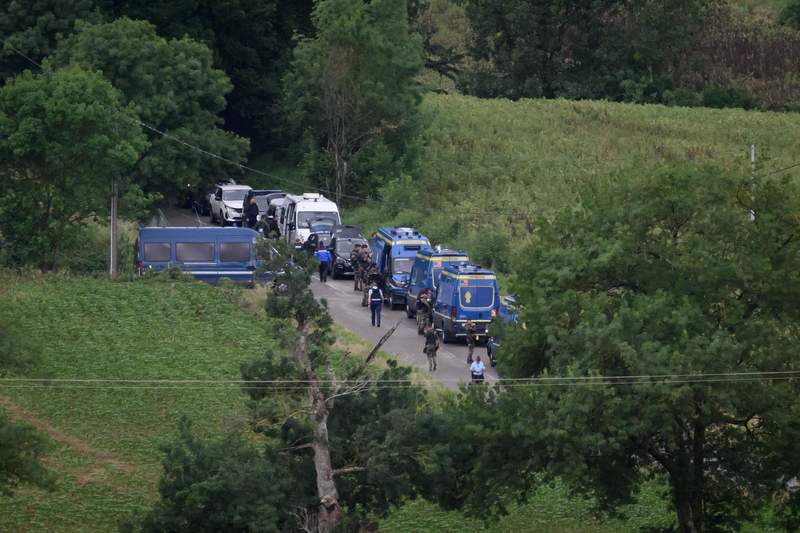
POLICY WIRE — Beauvais, France — The quiet suburb of Beauvais, nestled an hour north of Paris, never intended to find itself at the cold, hard center of a national narrative on childhood vulnerability. But it’s. The grim discovery, ending a desperate three-day search for 11-year-old Lyhanna, didn’t just break a community’s heart; it exposed, yet again, the fragile membrane separating everyday life from unspeakable horror in modern France. Her disappearance had triggered an immediate, agonizing collective effort; her confirmed death now feels like a collective punch to the gut. The air, thick with relief turned to dread, hangs heavy.
It’s an old, terrible story, this one of a child vanished. We tell ourselves it happens elsewhere, in news cycles far away. But here it’s, on the doorstep, a chilling reminder that no place, no matter how outwardly tranquil, is truly insulated from malevolence. Lyhanna had been missing since Wednesday morning, leaving her family — a fixture in their local area, her mother reportedly an assistant in a medical office — in a frenzy of fear that quickly became a national broadcast plea. She was last seen heading to school, a mundane journey undertaken by millions daily, that for her, concluded with an unimaginable finality. Police confirmed Friday evening that a body found near her home was indeed Lyhanna. And that confirmation extinguished the last flicker of a nation’s fervent hope.
Local law enforcement, including officers from the regional gendarmerie, moved quickly, yet perhaps not quickly enough for the grieving family and an enraged public. The investigation is now a murder inquiry, shifting from a search for a lost child to a hunt for a perpetrator. But how does a child, seemingly under the ordinary protection of community and routine, just vanish, only to be found deceased days later? It’s a question that cuts to the bone of public trust, leaving folks wondering exactly what systems are failing. We’ve seen this play out before, countless times, with variations on the theme, but the central chord of vulnerability always resonates.
“Our community’s heart is absolutely broken,” Beauvais Mayor Franck Pia said in a prepared statement, his voice reportedly cracking during the announcement. “We simply can’t fathom this kind of loss, especially to one so young — and innocent. We owe it to Lyhanna to find every truth, to ensure no family endures such a nightmare again. Our thoughts are with her devastated family at this indescribably difficult time.” Strong words. They’re meant to soothe, to reassure. Do they?
This incident isn’t just about Beauvais, or even just France; it taps into broader societal anxieties felt across developed nations — the uneasy juxtaposition of progressive social structures and deeply ingrained security fears. France, with its vibrant, diverse populations, faces constant challenges in integrating communities and ensuring safety across all demographics. Lyhanna’s name, subtly echoing roots beyond continental Europe, inevitably pulls the tragedy into this larger conversation. There’s a particular kind of scrutiny, an implicit pressure that attaches itself to crimes within communities that are often (rightly or wrongly) seen as distinct from the national average.
But make no mistake, tragedies like this also have a way of briefly unifying a fractious populace. Minister of Interior Gérald Darmanin, never one to mince words when projecting state resolve, weighed in, though perhaps with a touch more nuance than his usual pronouncements. “This incident isn’t merely a local tragedy; it’s a profound wound on the national psyche,” a spokesperson for the Interior Ministry quoted him as saying, emphasizing, “We’re committing every available resource to unraveling this abhorrent act. Justice, unsparing and swift, will follow, for Lyhanna and for the sanctity of every child in this Republic.” That’s a direct promise, isn’t it? A vow of retribution.
📄 POLICY WIRE WHITEPAPER PUBLISHED: PAKISTAN'S NATIONAL SECURITY POLICY PRIORITIES
👉 READ BY CLICKING HEREStatistics on child abduction and homicide, thankfully, remain relatively low in France compared to some other parts of the world, with Interpol reporting fewer than 100 cases of international parental child abduction referrals in France in recent years, though statistics for non-familial abduction are harder to disentangle from general homicide data. But even one such case sends shockwaves. And here, those ripples will inevitably travel. Consider how such high-profile cases are absorbed and understood in countries like Pakistan, for instance, where similar heinous crimes often spark national outrage, calls for justice, and intense discussions about societal decay, sometimes leading to accusations of systemic failures—discussions not entirely dissimilar from those we see now simmering just beneath the surface in France. It highlights a shared human grief, but also divergent approaches to what exactly ‘justice’ entails.
What This Means
Lyhanna’s death, while deeply personal for her family, carries substantial political weight. For Emmanuel Macron’s government, already contending with a prickly public discourse on crime, immigration, and national identity, this incident adds another layer of scrutiny. It fuels the conservative narratives around a perceived breakdown of law — and order and the need for stricter penalties. You’ll hear calls for more policing, greater surveillance, and tougher sentencing — predictable, perhaps, but potent in a pre-election cycle or amid any social unrest. Politically, leaders must be seen not only as sympathetic but as decisive. A slow or bungled investigation could be politically damaging. Conversely, a swift resolution could offer a fleeting, though grisly, moment of perceived competence. And, because the specifics of Lyhanna’s background are largely absent from official reporting, her name will, unfortunately, be adopted by various political factions to reinforce their pre-existing agendas, whether concerning minority communities, public safety, or societal ‘values’. The tragedy itself becomes a battleground for competing ideological interests.
Economically, direct impacts are minimal beyond the local community’s momentary grief — and heightened security costs. But confidence in public safety — the kind of everyday assumption that underpins civic life and small-business operations — can subtly erode, making residents feel less secure, more insular. This intangible loss of perceived safety is real, particularly in urban-adjacent areas struggling with their identity. The reverberations, too, stretch globally, influencing perceptions of France as a safe haven, or a stable Western democracy capable of protecting its own. It’s a sobering, unwelcome spotlight, one no nation ever wants focused on the tragic death of a child. This isn’t just news; it’s a social tremor, small perhaps in its physical scale, but immense in its symbolic one.