


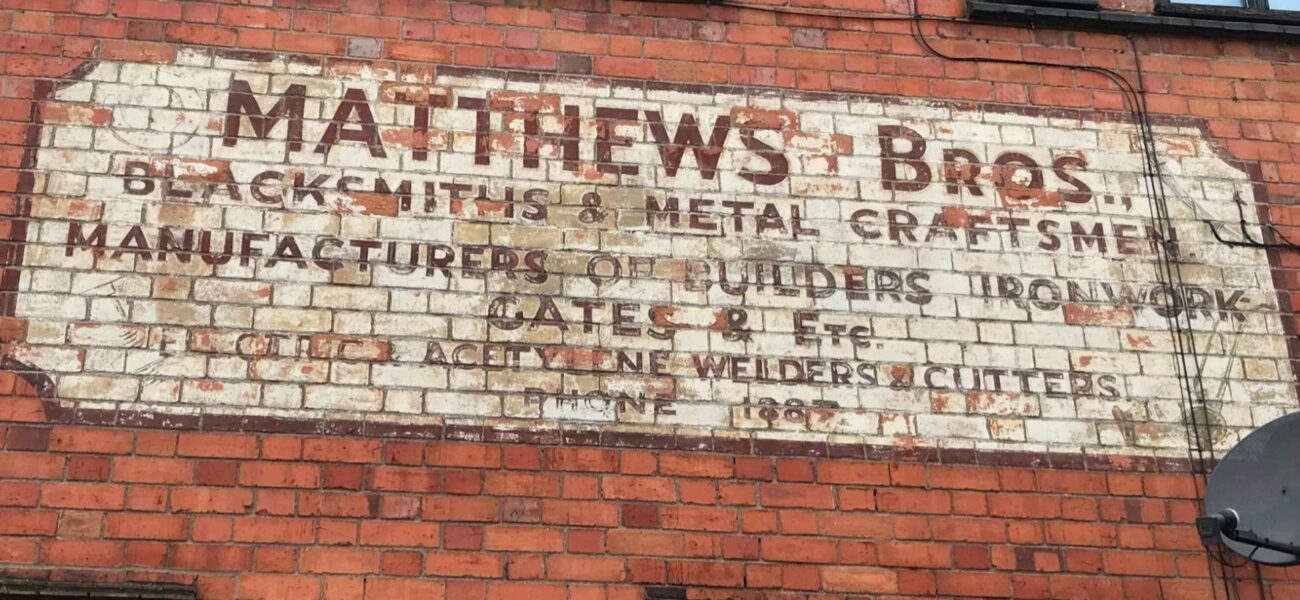
Fading Echoes: Ghost Signs Unmask the Relentless March of Urban Erasure
POLICY WIRE — London, UK — The casual eye might just see another faded advertisement, a stubborn stain on brickwork. But beneath the peeling paint — and grimy patina, a hidden urban archaeology...

POLICY WIRE — London, UK — The casual eye might just see another faded advertisement, a stubborn stain on brickwork. But beneath the peeling paint — and grimy patina, a hidden urban archaeology quietly unfolds across our cities. It’s an almost spectral phenomenon, a visual whisper from eras long past—faint imprints of forgotten enterprises, a phantom roster of bakers, butchers, and haberdashers clinging to walls like forgotten dreams. These aren’t just pretty historical curiosities; they’re economic headstones, political barometers, and stark reminders of an increasingly disposable commercial landscape.
It’s not often that the count of these aged advertising phantoms makes headlines, yet the recent revelation that More than 60 ‘ghost signs’ recorded in town has certainly pricked up ears among those who understand the delicate ballet between heritage and rapacious progress. What a staggering tally that’s for a single urban pocket, suggesting not just a vibrant past, but a swift and brutal decline of local trade, an unceremonious burial beneath layers of modernity. Each sign tells a micro-narrative of triumph and ultimate obsolescence, a testament to storefronts that once anchored neighborhoods before surrendering to the relentless churn of globalized commerce and digital storefronts. [QUOTE_PLACEHOLDER]
The global march towards urban redevelopment often doesn’t spare these silent sentinels. For instance, in burgeoning cities across the Muslim world—places like Lahore or Karachi in Pakistan, where ancient bazaars rub shoulders with gleaming high-rises—the race for the new can be particularly unforgiving. While the spirit of traditional artisanry persists, the physical relics often face a precarious existence. Where older city centers are under immense pressure to modernize, these unique historical canvases are frequently erased, painted over, or simply demolished. It’s not just a sign disappearing; it’s a chunk of collective memory, a tangible link to previous generations of shopkeepers, patrons, and—critically—local economies, becoming utterly effaced.
And let’s be frank: the forces at play are less about aesthetic preservation — and more about raw capital. When a new supermarket chain wants a pristine facade, that beautifully faded lettering advertising Bovril or a bespoke tailor is just an unsightly mess. These ‘ghost signs,’ as they’ve come to be known, are the urban equivalent of a historical document, offering unvarnished insights into bygone eras of retail and social norms. They’re like ancient digital cookies, left behind by the algorithms of antiquated marketing, now offering unexpected data points for historians, economists, and even architects trying to piece together a coherent urban narrative.
Because every peeling poster, every shadowy stenciled ad, speaks volumes about municipal planning—or lack thereof—about community identity, and the cold hard truths of market forces. Who was selling what? To whom? When did they vanish? These aren’t trivial questions; they sketch a historical economic topography that helps us understand today’s urban sprawl. Think about the economic implications: the small, independent businesses these signs once represented were the very sinews of local economies, often employing local people and fostering neighborhood identities. Their disappearance, marked by these spectral ads, mirrors a broader trend towards concentrated corporate power and away from grassroots commerce.
It’s not just a Western phenomenon either; consider the rapid gentrification occurring in cities like Istanbul. Areas that were once vibrant craft districts, lined with family-run shops, are quickly morphing into boutique hotels and tourist traps. The old ‘Hattat’ (calligrapher) or ‘Demirci’ (blacksmith) signs, if they exist at all, are usually fleeting—artifacts not of reverence but neglect. And studies confirm this alarming attrition: Reports indicate that a staggering 38% of pre-1900 commercial structures in urban centers globally have been either demolished or significantly altered in the last half-century, according to data compiled by the Global Urban Heritage Network, representing untold numbers of lost historical retail touchpoints.
But that’s where the intrigue lies. These signs are often the only remaining trace, a final whisper before complete silence. They tell us about local trades, products, — and sometimes, even the political messaging of their day. They embody a fleeting form of capital, now evaporated, leaving only these spectral remnants. For those of us tracking the broader currents of social and economic change, the count of these ‘ghost signs’ provides a stark metric for the pace of a particular kind of economic evolution—or extinction. They’re physical evidence of capitalism’s inexorable appetite for reinvention, its ceaseless cycle of creation and consumption, where yesterday’s commerce is today’s archaeological find.
What This Means
The unexpected prominence of a ‘ghost sign’ tally isn’t just about preserving dusty advertisements; it’s a stark indicator of deeper socioeconomic tectonic shifts. Politically, the erasure of these signs often aligns with urban policies that prioritize development over preservation, often leading to gentrification and the displacement of established, community-serving businesses. Economically, they represent the vanishing landscape of independent, local commerce, increasingly unable to compete with larger, often global, entities. This concentration of economic power leads to less diversified local economies, reduced community resilience, and a homogenization of urban identity.
The Pakistan/South Asia connection highlights how this dynamic plays out intensely in developing or rapidly modernizing contexts, where traditional markets face unprecedented pressure. The speed of change often means less capacity or will for historical preservation. These signs, therefore, become silent historical footnotes to narratives of national economic strategy—either encouraging grassroots enterprise or paving the way for international brands. Ultimately, recognizing and cataloging these ‘ghost signs’ isn’t just a nostalgic pursuit; it’s an understated but vital act of urban accounting, allowing us to grasp the full extent of our cities’ rapidly evolving identities and the political-economic decisions that sculpt them, one erased ad at a time. It also hints at an emerging opportunity for unique heritage tourism and small business advocacy—a ghost of an idea, perhaps, but a tangible one that could give these old narratives new life. For more on urban evolution, consider The Ghost Offer: Spurs’ High Stakes Gambit and Geopolitical Courtside Dramas.