
Ronaldo’s Quiet Fade: Football’s Titan Exits World Stage Not With Roar, But a Sigh
ARLINGTON, Texas — The final curtain fell, not with the customary thunder of adoring multitudes, but a faint whisper in a cavernous stadium. It was the Monday when the extraordinary became merely...

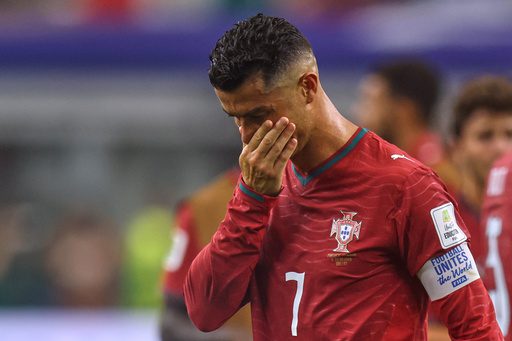
ARLINGTON, Texas — The final curtain fell, not with the customary thunder of adoring multitudes, but a faint whisper in a cavernous stadium. It was the Monday when the extraordinary became merely human: Cristiano Ronaldo, football’s most enduring modern spectacle, trudged off a World Cup pitch for the last time. He gave a slight, almost imperceptible, nod to the faithful who had roared his name for two decades—a fleeting moment marking the end of an era less with defiance and more with the simple, stark arithmetic of defeat. Portugal had just dropped a 1-0 match to old rival Spain in the Round of 16, drawing a line under the 41-year-old’s six-tournament odyssey.
It wasn’t a sudden, cataclysmic crash. No, it was a slow, agonizing drag, like watching an inevitable tide recede. His personal quest for football’s ultimate prize—a trophy Portugal never grasped despite his brilliance—remained stubbornly unfulfilled. But hey, it’s not for lack of trying, is it? He left feeling, as he put it, [QUOTE_PLACEHOLDER] The kind of quote that perfectly captures the mundane reality that even superheroes eventually face.
Many in Karachi, Lahore, and across the Subcontinent, where Ronaldo’s jersey sales often rivaled local heroes, watched with a quiet sense of finality. For countless young footballers, especially those in Pakistan’s growing—though often overlooked—sporting landscape, his relentless pursuit of greatness served as a raw, tangible benchmark. They’ve seen his triumphs, heard his name echo globally, and perhaps now, witnessed that even supreme effort doesn’t always guarantee storybook endings. It’s a bitter pill, this stark lesson from the world stage: some dreams just don’t materialize, no matter how hard you bend the arc of possibility.
And what did he offer by way of swansong? Not much for the highlight reels that day, to be honest. He was denied a clean strike by Spain’s record-setting goalkeeper, Unai Simón, who made an impressive leaping stop, snatching the ball midair. That particular play highlighted just one of Ronaldo’s three shots. Just two of those actually threatened the net. For a man who built an entire career on defying odds, on making the seemingly impossible routine, it felt—well, un-Ronaldo. It wasn’t the fiery, defiant last stand one might have written for him in a screenplay.
But he did say he leaves “with a clear conscience,” adding, “This is soccer, this is life for a soccer player. Sometimes you win and sometimes you lose.” It’s a pragmatic acceptance you hear from anyone who’s put in the work. Think of a seasoned politician exiting a brutal campaign—the same stoicism, the same recited commitment. He confirmed this was it for his World Cup bids, leaving the rest to unfold [QUOTE_PLACEHOLDER] but with time for family. Smart move, frankly; big life decisions aren’t for the immediate aftermath of a public loss.
Portugal’s coach, Roberto Martínez, sounded almost elegiac, framing Ronaldo as an “example, a role model to follow.” Martínez said, [QUOTE_PLACEHOLDER] A high compliment, one entirely earned through a career of sheer, unadulterated statistical dominance and sheer willpower. Ronaldo holds the distinction of being the only player to score goals in six World Cups in a row and remains the career leader in international goals with a staggering 146, according to AP data. He helped drag Portugal to its first major international title in the 2016 European Championship and then two Nations League wins.
Because sometimes even titans lose their records. Just earlier this summer, his long-standing World Cup hat-trick record—at 33, he was the oldest—got edged out by Lionel Messi. At 38, Messi notched three goals for Argentina against Algeria, showcasing that the game’s enduring narratives are never truly finished, always open for a late edit. Their careers have been a relentless push-and-pull, a binary star system around which global football has orbited.
For South Asia, a region historically consumed by cricket, Ronaldo’s saga represents a crucial bridge. His celebrity helped international football make inroads, selling merchandise and captivating millions beyond traditional fanbases. When the subcontinent talks about European football, it’s often through the lens of figures like him. The decline, then, isn’t just a personal story; it’s a global tremor felt by commercial brands, nascent football academies, and the entire ecosystem of the sport in emerging markets.
What This Means
Ronaldo’s exit, while personally poignant, signals a broader generational shift in football, one with distinct political and economic implications. His presence on the global stage transcended mere sport, functioning as soft power for Portugal and a massive commercial engine for brand partnerships across continents—including the lucrative markets of the Muslim world. His fading spotlights will open avenues for newer faces to assume roles as cultural ambassadors, which might, in turn, shift advertising dollars and fan loyalties. For FIFA — and major sporting brands, identifying and cultivating the next Ronaldo becomes an urgent economic imperative.
And from a geopolitical standpoint, the quiet exit of such a monumental figure can even have subtle effects. Sports stars, especially those with global appeal like Ronaldo, often serve as unofficial diplomats, forging connections between disparate cultures. Their public statements, even casual ones, can sometimes resonate more powerfully than official policy pronouncements in certain demographics. Without this larger-than-life figure dominating the conversation, the sport’s global narrative feels less about individual legends and more about collective team dynamics, perhaps ushering in a more diversified—if less charismatic—era of international competition.