


Urban Disorder Redux: When Public Squares Become Policy Headaches
POLICY WIRE — Washington, D.C. — Another Friday night, another round of urgent dispatches filtering across police scanners and social media feeds, detailing scenes of escalating disorder in what...

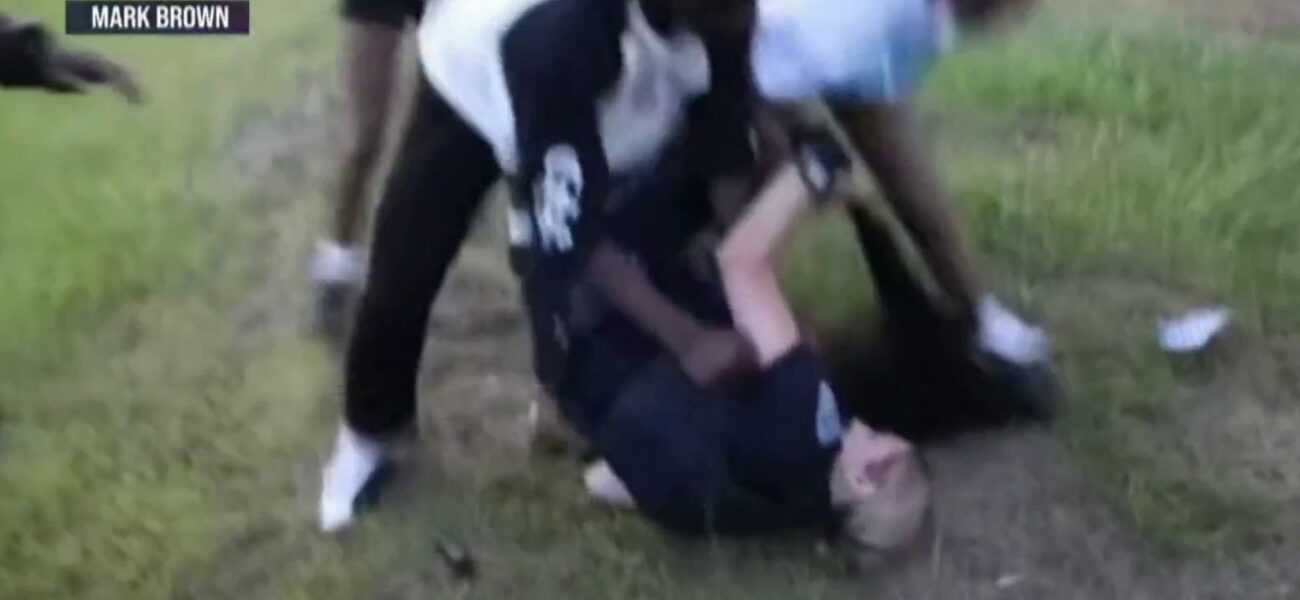
POLICY WIRE — Washington, D.C. — Another Friday night, another round of urgent dispatches filtering across police scanners and social media feeds, detailing scenes of escalating disorder in what should be bustling city centers. It’s not simply adolescent high spirits; this latest wave of so-called ‘teen takeovers’ has pushed many municipalities to their absolute brink. We’re talking about throngs, sometimes thousands strong, descending upon commercial districts and public spaces—and too often, things turn nasty. Just last week, video circulated showing a particularly jarring instance where [QUOTE_PLACEHOLDER]. It feels less like a spontaneous street party and more like a calculated assault on urban decorum, leaving policymakers utterly baffled by its sheer scale.
It’s become a pattern, hasn’t it? City leaders find themselves in an almost comical game of whack-a-mole. You curb it in one area, — and it pops up in another. There’s this inherent tension between wanting public spaces to be, well, public, and preventing them from devolving into free-for-alls. But this isn’t just about minor disturbances; the sheer volume of these incidents—and the swiftness with which they escalate—speaks volumes about a deeper, more systemic fraying. Police reports cite everything from property damage to assaults, turning what began as a social media dare into bona fide urban chaos. But how did we get here?
The instigation often traces back to the digital realm. Anonymous posts or fleeting TikTok challenges snowball into real-world convergences. And because these gatherings are typically unsanctioned, without leadership or purpose beyond the initial viral call, they’re extraordinarily unpredictable. They’re fluid—they ebb, they flow, and then they suddenly explode. What starts as a group congregating quickly becomes a situation where [QUOTE_PLACEHOLDER]. This phenomenon isn’t new, mind you. But the ubiquity of smartphones and the algorithmic reach of social platforms have amplified its frequency and intensity to unprecedented levels. Law enforcement struggles with a double-edged sword: interventions can often trigger further antagonism, yet inaction fuels a sense of impunity. It’s a tightrope walk, — and many agencies are stumbling.
There’s a narrative building that this isn’t merely delinquency; it’s a symptom. A raw, unvarnished expression of simmering frustrations, perhaps—or simply an acute lack of constructive alternatives for a segment of the youth population. It’s hard to ignore that some of the hardest-hit communities are those grappling with persistent economic disparities and—let’s be honest—decades of underinvestment in public infrastructure and youth programs. These takeovers, in a twisted way, become an impromptu civic space for those who feel shut out of traditional ones. Think about the stark contrast between public reaction here and, say, a traditional jalsa, or mass rally, common in places like Pakistan or Bangladesh. Those are often highly organized, politically charged, and whilst occasionally volatile, have a clear, articulated purpose. These are something else entirely. They’re more nihilistic, less directional.
Even though official tallies are often difficult to confirm due to the fluid nature of these events, an analysis by the Major Cities Chiefs Association indicated a 15% increase in youth-involved violent crime incidents in their member jurisdictions during the first half of 2023 compared to the previous year. That’s a statistic that certainly catches one’s attention, hinting at a broader trend, not just isolated acts. It suggests we’re beyond merely rowdy behavior.
The policy toolkit for addressing this mess feels thin. Some cities opt for curfews; others experiment with social media monitoring. But none seem to hit the fundamental issues head-on. They’re band-aids on a gaping wound. These ‘takeovers’ feel almost like a post-modern riot—spontaneous, leaderless, fueled by an intangible online collective, dissolving as quickly as they form, but leaving a very tangible mess behind.
Because these episodes demonstrate a troubling erosion of civic norms, they compel a far deeper introspection into urban resilience—or the lack thereof. Cities aren’t just collections of buildings — and streets; they’re delicate social ecosystems. And right now, parts of that ecosystem seem out of whack. It’s a messy symptom of some truly uncomfortable truths about disconnection and — let’s just say it — disaffection.
What This Means
This isn’t just about kids acting out; it’s a stark reflection of underlying urban malaise, an acute lack of meaningful engagement for swathes of young people. Economically, repeated ‘takeovers’ inflict significant commercial damage—disrupting businesses, scaring away foot traffic, and creating insurance headaches. Local tax revenues take a hit. Politically, mayors and police chiefs find themselves in a precarious spot, criticized for both excessive force and perceived laxity. It becomes a thorny issue in election cycles, often framed through narratives of law and order that rarely offer nuanced solutions. For the global perspective, this mirrors a creeping distrust in institutional responses that we see resonate in diverse locales, from the protests against judicial overreach in Islamabad to youth-led movements questioning established power structures throughout the developing world. The playbook isn’t working—it hasn’t been working for some time—and a fresh approach to urban planning, youth investment, and indeed, metropolitan revitalization seems desperately needed. It isn’t just about police presence, it’s about providing a more compelling alternative to TikTok-fueled mischief—a tall order for strapped city budgets and increasingly polarized political landscapes.