

Nigeria’s Biafra Unrest: A State Fragility Test
Nigeria's Biafra movement persists, fueled by Nnamdi Kanu's detention. Discover how this unrest exposes state fragility, historical grievances, and a deep challenge to unity.

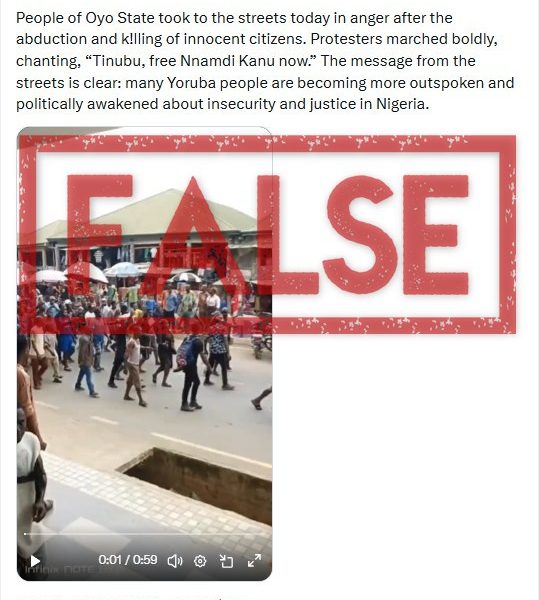
POLICY WIRE — Abuja, Nigeria — It wasn’t the kind of spectacle to make headlines beyond West Africa’s most populous nation, but then, most things aren’t until they absolutely have to be. A recent gathering of fervent supporters, galvanized by the cause of detained secessionist leader Nnamdi Kanu, didn’t actually unfurl in Oyo State, as initial, perhaps overzealous, reports had it. No, that particular show of solidarity—a vibrant, if politically charged, display—took place in Abia State, deep in the country’s southeast. The misreporting, you might say, is almost as telling as the event itself.
It’s an easily made error for an outsider, sure, given Nigeria’s vast — and complex geography. But for folks paying close attention to the delicate, often volatile, balance of power here, the distinction matters. Oyo State sits comfortably in the southwest, predominantly Yoruba territory, while Abia is firmly within the Igbo heartland. It’s Kanu’s ancestral turf, the epicenter of the agitation for an independent Biafran state—a ghost of history that simply refuses to stay buried. You don’t just accidentally move a secessionist rally a few hundred miles cross-country unless you’re trying very hard to confuse the narrative. And sometimes, confusion is the narrative.
Nnamdi Kanu, the firebrand leader of the Indigenous People of Biafra (IPOB), remains a profoundly divisive figure. He’s held on charges of terrorism and treason, accusations that his supporters—and indeed many international observers—view as politically motivated. His incarceration hasn’t dimmed the ardor of his base; in fact, for many, it’s just fuel to the fire. They’ve found their martyr, a man whose continued detention crystallizes their grievances against the Nigerian state. And the protests, small or large, peaceful or otherwise, are simply echoes of a much older, deeper quarrel.
Security services were, of course, omnipresent—a given for any event of this nature. They’ve learned their lessons from past flashpoints. The Nigerian government’s approach to such dissent has historically swung between heavy-handed suppression and reluctant dialogue, rarely finding a stable middle ground. This isn’t a unique story. In countries struggling with internal divisions—think of Pakistan’s Balochi nationalist movements or the ethno-religious conflicts that have sporadically erupted across South Asia—the state’s reflexive tightening of control often fans the flames it aims to extinguish.
What’s intriguing here isn’t just the sheer stubbornness of the Biafran movement, but its capacity to maintain momentum despite Kanu’s absence from public life. Organizers used various methods, from covert digital networks to old-school word-of-mouth, to ensure turnout. [QUOTE_PLACEHOLDER], according to one local source. The attendance numbers, while not officially confirmed by independent observers, certainly suggested a committed, if not massive, cohort. And this quiet, persistent defiance poses a headache for Abuja. They’d probably prefer a grand, predictable public display, something they can easily dismiss or contain, rather than a more organic, localized effervescence that keeps the pot simmering.
Because ultimately, these aren’t just rallies; they’re temperature checks. They signal that the idea of Biafra, resurrected after the devastating civil war of the late 1960s, is far from inert. It’s a concept that continues to resonate with a segment of the Igbo population who feel marginalized and economically disadvantaged within the larger Nigerian federation. This sentiment, often amplified by online disinformation campaigns (a global malaise, no doubt), suggests a chasm between Abuja’s vision of national unity and the lived experiences of millions in the country’s southeast.
One international NGO, which monitors human rights in regions experiencing separatist tensions, reported that roughly 40% of countries globally with populations over 10 million have active secessionist movements receiving measurable public support. This particular rally, inaccurately placed or not, serves as a poignant reminder that even minor organizational blips can carry significant political weight. It demonstrates the enduring potency of ethno-nationalist narratives in an era when the nation-state model faces persistent, often violent, challenges globally.
📄 POLICY WIRE WHITEPAPER PUBLISHED: PAKISTAN'S NATIONAL SECURITY POLICY PRIORITIES
👉 READ BY CLICKING HEREYou can see parallels even in less overtly secessionist contexts. From Catalonia to Kashmir, when identity and aspiration clash with existing national boundaries, the result is almost always complex, messy, and protracted. Nigeria, then, is hardly alone in its predicament, just one of many nations wrestling with historical grievances and future uncertainties. And these internal struggles, often playing out on the streets, invariably complicate its foreign policy objectives and domestic stability.
What This Means
This episode, minor in its corrected details but weighty in its implications, illustrates the enduring fragility of state cohesion in many post-colonial nations. For the Nigerian government, the misattributed rally location was a moment of grace—a chance for a quieter, localized narrative to prevail. Yet, the existence of such a rally, regardless of location, spotlights Abuja’s fundamental failure to genuinely address the systemic issues fueling Igbo marginalization and separatist sentiments. It’s not just about stopping protests; it’s about making the idea of protest redundant by offering viable, inclusive governance.
Economically, persistent unrest in key regions can deter foreign investment, stunt infrastructure development, and siphon off resources that could otherwise be used for public services. For a resource-rich nation like Nigeria, constantly battling corruption and socio-economic disparities, this diversion of focus is a severe drag. Consider the broader African context: secessionist threats or active conflicts have routinely undermined state authority and security across the continent. this isn’t just an African problem; the struggle for sovereign recognition or greater autonomy by minority groups has deep roots across the Muslim world and beyond, often leading to protracted, costly struggles for both the central state and the aspiring populations.
Politically, the handling of Kanu’s case, and indeed the broader IPOB movement, tests Nigeria’s commitment to democratic principles and human rights. International pressure mounts as long as Kanu remains detained, providing global platforms for his cause. The fact is, you can’t arrest an idea, — and you certainly can’t simply wish away historical trauma. The solution, if one exists, lies in nuanced dialogue, equitable resource distribution, and genuine reconciliation—not just more boots on the ground or bureaucratic blunders that misplace protest hotbeds. Abuja’s response to these recurring tremors will continue to define its legitimacy on the national and international stage for years to come.