
Europe Holds Its Breath: Zelensky’s Dire Warning Casts Shadow on Kyiv’s Streets
POLICY WIRE — Kyiv, Ukraine — Another night falls, and with it, the familiar chill of anticipation descends upon Kyiv. Not the pre-winter bite, but the cold dread of what might be lurking in the...

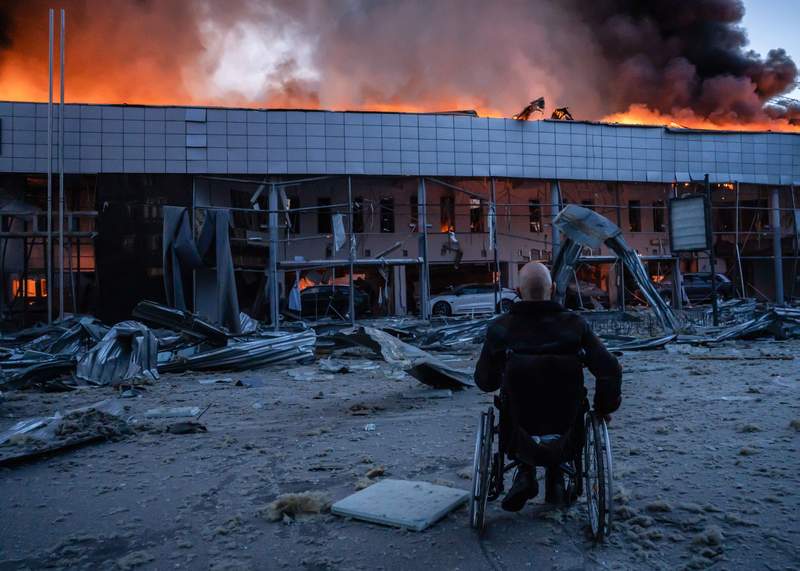
POLICY WIRE — Kyiv, Ukraine — Another night falls, and with it, the familiar chill of anticipation descends upon Kyiv. Not the pre-winter bite, but the cold dread of what might be lurking in the dark, above the Dnipro River. President Volodymyr Zelenskyy didn’t just warn of an impending Russian attack; he described a likely, perhaps inevitable, next chapter in a war whose script feels increasingly monotonous—if not for the very real lives it devours.
It’s an echo, really, of countless similar nights that have gripped the Ukrainian capital since February of ’22. But the cadence of Zelenskyy’s recent address carried a fresh urgency, a sense that the Kremlin’s strategic gears, though grinding, haven’t stalled. They’re just resetting for another surge. What’s that saying about doing the same thing — and expecting different results? Putin’s strategists, it seems, aren’t much for new material.
The Ukrainian president, looking worn but resolute, articulated his concern with his usual stark directness. “They think they can break our spirit, shatter our cities, but they forget—we’re built different,” Zelenskyy declared, his voice carrying the weight of a nation’s defiance. “Tonight, like every night, Ukraine stands ready, defiant. We ask only for the tools to defend what’s ours.” It wasn’t a plea; it was a demand, spoken with the quiet authority of someone who’s seen too much.
And so the waiting game continues, a macabre ballet of intelligence reports — and air raid sirens. But this isn’t just Ukraine’s problem; it’s Europe’s recurring nightmare, spilling over borders in a myriad of ways—not least through fluctuating energy prices and a deeply unnerved sense of security. France’s Foreign Minister, Catherine Colonna, didn’t mince words recently when pressed on the ongoing Western support. “The incessant drone of conflict emanating from Eastern Europe isn’t just background noise; it’s a stark reminder that peace is a fragile thing. Our support isn’t charity; it’s self-preservation.” Hard to argue with that assessment, isn’t it?
The global consequences, while sometimes dismissed as mere economic blips in distant lands, are real — and brutal. Consider Pakistan, for instance, a nation grappling with its own internal complexities and an ever-present struggle for economic stability. When Russian gas supplies fluctuate or when global wheat prices jump because Ukrainian ports are besieged, nations like Pakistan feel the squeeze acutely. They don’t have the luxury of indifference. Pakistan’s carefully balanced diplomatic tightrope act—trying to maintain relationships with both Western powers and a resource-rich Russia—becomes an even trickier endeavor. Global energy shocks hit the subcontinent’s import-heavy economies particularly hard, complicating already fragile fiscal outlooks and pushing millions further into precarity.
Because the war in Ukraine isn’t just about territory; it’s about disrupting global flows—of goods, people, and capital. The UN High Commissioner for Refugees reports that more than 8 million people have fled Ukraine as refugees since the full-scale invasion, with millions more internally displaced. That’s a human catastrophe that puts immense strain on humanitarian aid budgets and receiving nations, diverting attention and resources from other pressing crises across the Middle East and North Africa.
What This Means
Zelenskyy’s consistent warnings—which often precede significant Russian escalation—aren’t just designed to rally his own people; they’re a global call to arms, of sorts. Politically, they force NATO and EU member states to keep the conflict at the top of their agendas, lest Western publics grow weary. This continuous need for reassurance and material aid is draining, yes, but ignoring the threat, or hoping it’ll just fade, seems even more expensive. Economically, prolonged instability in Eastern Europe ensures continued volatility in commodity markets. For nations across South Asia, from India to Pakistan, that means unpredictable costs for essential imports, compounding domestic inflationary pressures and challenging already strained budgets. It also means that a stable global supply chain—something the West perhaps took for granted—is now an elusive dream. Geopolitically, Russia’s persistent aggression, even when failing to achieve quick victory, forces nations worldwide to rethink alliances, defense postures, and energy policies. It’s a reordering, messy — and brutal, where traditional neutrality looks increasingly precarious. And, frankly, for smaller powers, it reinforces the lesson that sovereignty is only as strong as its protectors—or its own fierce will to survive.