

The End of an Era: Gibraltar Sheds Its Last Physical Shackle with Schengen Entry
POLICY WIRE — Madrid, Spain — For decades, it was a line in the sand, a physical manifestation of ancient grudges and modern political posturing. A border post, thick with the history of siege and...

POLICY WIRE — Madrid, Spain — For decades, it was a line in the sand, a physical manifestation of ancient grudges and modern political posturing. A border post, thick with the history of siege and colonial defiance, guarded by Spanish Guardia Civil on one side and British officers on the other, creating daily delays and friction for thousands. But now, as Gibraltar formally sheds its external border for inclusion in the Schengen zone—an agreement that seemed impossible only a few short years ago—that tangible barrier, the fence, becomes just another piece of European bureaucratic history. It’s a surreal moment, really.
This isn’t just about quicker commutes for Spanish laborers who cross into the Rock, or even sun-seeking British pensioners keen for duty-free bargains. It’s about a tiny piece of disputed land, clinging precariously to the southern tip of the Iberian Peninsula, finally, belatedly, getting a semblance of normalcy after the Brexit earthquake. Because, let’s be frank, Brexit was a problem, a colossal one, for Gibraltar. It yanked the territory out of the very customs union and single market its prosperity had come to rely on, leaving it in an awkward limbo.
The deal itself is a feat of diplomatic contortion. Gibraltar will operate as part of Schengen without actually ceding any of its hotly contested sovereignty to Spain, an arrangement Spain has long coveted. Instead, officers from the European Border and Coast Guard Agency, Frontex, will manage external border checks at the port and airport for the first four years, with Spanish personnel working in the background—a solution that lets everyone save face, if just barely. It’s a clever trick, making Europe’s border everyone’s border, deflecting direct national ownership in a sensitive spot.
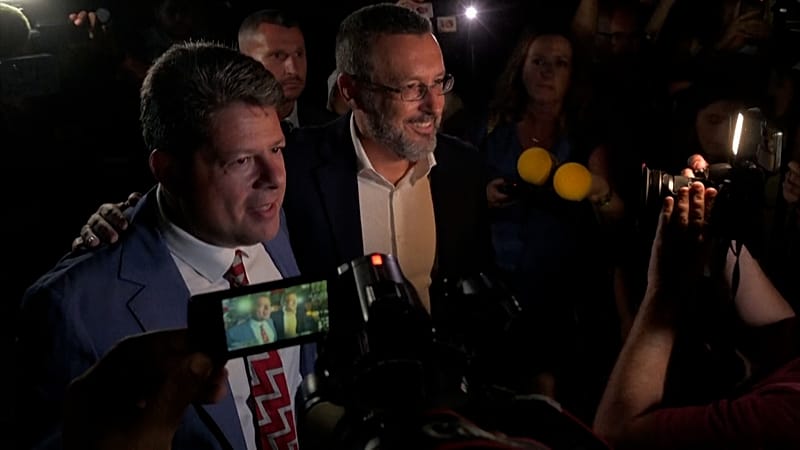
Spanish Foreign Minister, José Manuel Albares, didn’t hold back, did he? He called it “a breakthrough, a pragmatic resolution to a historical anomaly.” But he also reiterated Spain’s “steadfast claim over Gibraltar’s sovereignty.” Classic. Meanwhile, Gibraltar’s Chief Minister, Fabian Picardo, played it cool. “We’ve secured an outcome that respects our British status, while ensuring fluid movement and economic certainty for our people and businesses,” Picardo said, probably with a knowing wink. It’s a temporary truce, not an armistice. They’ve just decided to build bridges instead of bigger walls, at least for now. And that’s progress.
The economic stakes are massive. Before Brexit, an average of 15,000 commuters, mostly Spanish, crossed the border daily for work, according to official Gibraltarian government statistics. Many of those jobs are in gaming, finance, and tourism—sectors demanding easy access. A hard border would’ve choked the Rock, — and economically wounded the surrounding Campo de Gibraltar region in Spain. Instead, this deal ensures the vital artery of human traffic continues flowing. But it’s not just about labor; think about the fresh produce, the spare parts, the steady hum of cross-border commerce.
This complicated ballet of shared borders and maintained sovereignty has echoes in other regions striving for similar economic and human connections, even amid historical friction. Consider the complex dynamics of regional trade blocs in the Muslim world or South Asia, where the free movement of goods and people can unleash economic potential but is often stymied by deep-seated political disputes. Whether it’s the efforts to smooth transit between Pakistan and Afghanistan, or the aspirations for greater economic integration among Gulf Cooperation Council states, the Gibraltar model offers a specific, if unusual, playbook: sometimes, you work around the politics, even when you can’t work through them, to get the economics moving.
What This Means
Politically, this agreement kicks the can down the road on the thorniest question: who truly owns the Rock? For Spain, it’s a strategic concession disguised as pragmatism, offering integration without directly confronting the sovereignty claim. It’s about managing perceptions domestically — and internationally. For Gibraltar, it’s a necessary salve post-Brexit, a way to re-tether itself to the continent’s economic engine without sacrificing its British identity. The immediate relief from endless border queues means improved living standards for many—that’s tangible. And for Europe, it showcases the bloc’s quiet power to broker deals in complex, post-Brexit environments, even if it involves lending its own border agency as a kind of neutral referee. But don’t misunderstand: the underlying territorial claim hasn’t vanished. It’s just been put on ice, under the watchful eye of Frontex uniforms, until the next political wind shifts. That’s always how it goes with these things, isn’t it? It’s a pragmatic victory, but one built on careful, calculated ambiguity, leaving the hard questions for another generation, another crisis.
And so, the historic border, once a symbol of division, transforms into a softer, almost ethereal line, policed by a multinational agency. Because ultimately, sometimes a pragmatic, almost desperate, solution is the best kind you can get in a post-Brexit landscape rife with old tensions. This might even pave the way for other peripheral areas grappling with border complexities to explore non-traditional solutions for fluidity, be they maritime checkpoints or landlocked frontiers.