

Spain’s Inferno Traps Commuters: A Stark Echo for Climate-Stressed Nations
POLICY WIRE — Madrid, Spain — There’s a particular brand of horror reserved for when the escape routes become the traps themselves. It isn’t the roaring blaze that catches you off guard in a...

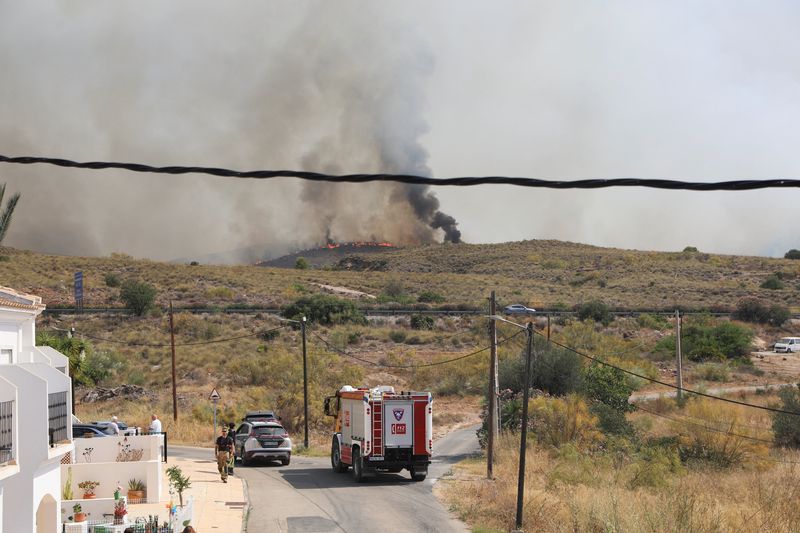
POLICY WIRE — Madrid, Spain — There’s a particular brand of horror reserved for when the escape routes become the traps themselves. It isn’t the roaring blaze that catches you off guard in a field, but the sickening realization that the very asphalt meant to carry you to safety has morphed into a crucible, an unyielding path of fire. This is the stark reality that descended upon parts of Spain, where fast-moving wildfires weren’t just razing forests, they were, for lack of a better term, cremating the unlucky souls attempting to flee in their vehicles.
People were, to put it mildly, caught flat-footed. Imagine, if you will, the chaos: families packed into cars, likely told to evacuate, inching along what they assumed was their salvation, only for flames—sudden and furious—to engulf their surroundings. Roads, once symbols of progress — and connection, became dead ends. Their cars, intended as safe cocoons, turned into death traps, steel ovens baking those inside. It’s a grotesque irony—the modern means of egress becoming the ultimate cage.
But how does something like this happen? It’s not just a fire; it’s an accelerant brew of neglect — and climate change. Spain, like much of the Mediterranean, has been baking under extreme temperatures. The land’s dry. The winds, when they whip up, carry not just embers but entire sheets of flame across vast distances. And infrastructure, designed for a more predictable climate, proves horrifyingly inadequate against these super-fires. Local authorities were, apparently, ill-prepared for the sheer velocity of the destruction.
You can’t just point fingers at the wind. There’s a larger story here, one about the fragile dance between human habitation — and a rapidly shifting environment. Policymakers, it seems, have been slow-footed, caught in endless debates while the landscape literally catches fire. This isn’t a one-off. It’s part of a disturbing pattern echoing across continents, from California’s annual conflagrations to Australia’s Black Summer. And it’s getting worse, not better.
One official described the scene as [QUOTE_PLACEHOLDER], a phrase that doesn’t quite capture the sheer terror of it all. You can try to paint a picture, but it’s probably inadequate. We’re talking about drivers attempting desperate U-turns, abandoning vehicles, running blindly into the smoke. Some, God help them, didn’t make it out. It’s a snapshot of vulnerability, a chilling preview of how quickly nature can turn our perceived control to ash. And those numbers, they don’t lie. According to the European Forest Fire Information System (EFFIS), the area burned by wildfires across Europe in 2022 was roughly 800,000 hectares—the second worst on record.
Now, while Spain battles its blazes, similar anxieties simmer in places far less equipped. Think about the dry, scorching landscapes of Balochistan in Pakistan, or the remote regions of India’s Rajasthan. These aren’t pristine forests; they’re often agricultural lands, scrub brush, sometimes dangerously close to population centers. Imagine the infrastructure of a rural Pakistani town facing a similar onslaught—narrow roads, older vehicles, and emergency services that are perpetually under-resourced. The vulnerability here isn’t just theoretical; it’s existential.
📄 POLICY WIRE WHITEPAPER PUBLISHED: PAKISTAN'S NATIONAL SECURITY POLICY PRIORITIES
👉 READ BY CLICKING HEREBecause ultimately, climate change doesn’t care about borders. It doesn’t discriminate based on GDP per capita. The strategies we employ, or fail to employ, in Western Europe have repercussions and lessons for the most remote villages in the Muslim world, where a summer heatwave or a sudden drought can trigger a domino effect of ecological and social collapse. We’re all, in this fight against an increasingly belligerent climate, in the same tinderbox. For an even broader look at geopolitical vulnerabilities and the systems trying to navigate them, one might consider how nations maneuver in complex environmental chess games, perhaps a glimpse into Asia’s Perilous Dance for Self-Interest amid external pressures. It’s all connected, isn’t it?
And what’s really shocking is not just the disaster itself, but the predictable, almost ritualistic, surprise of it. Every year, somewhere, a record-breaking fire season. Every year, governments play catch-up. It’s a broken record—an expensive one, costing lives and livelihoods, tearing apart communities. But it continues. Maybe it’s time we finally acknowledge this pattern is not an aberration; it’s the new normal.
What This Means
The tragedy of incinerated cars on a Spanish highway is more than just a news item; it’s a policy indictment. Economically, these mega-fires are crushing, destroying property, livelihoods, — and straining emergency budgets. Insurers face enormous payouts, often leading to increased premiums or withdrawal from high-risk areas—which, let’s face it, are becoming everywhere. Politically, the implications are stark. Governments that fail to protect their citizens from climate impacts, whether through proactive mitigation (like reducing emissions) or adaptive measures (like better evacuation plans and fire management), risk significant voter backlash. Public trust erodes faster than a parched forest floor in a heatwave. They’re simply not prepared for the speed of these new catastrophes. This event screams for an overhaul of urban planning in fire-prone zones, a fundamental rethink of early warning systems, and, crucially, a massive injection of funds into wildfire suppression and climate adaptation strategies. There isn’t an option to punt this problem down the road—because as we’ve seen, the road itself is becoming unsafe. The global economic costs of climate inaction will only continue to balloon, affecting everything from food prices to global stability, much like the policy implications that surface when major spectacles go awry and expose deeper societal cracks. We’ve got to invest now, or pay far more later—in both treasure and blood.