Coors Field Conundrum: The Search for a Mascot Worthy of Denver’s Eccentric Soul
POLICY WIRE — Denver, CO — The human condition, it sometimes feels, is a relentless search for meaning, even — or especially — in the most unlikely corners. So, it should come as no...

POLICY WIRE — Denver, CO — The human condition, it sometimes feels, is a relentless search for meaning, even — or especially — in the most unlikely corners. So, it should come as no surprise that the Colorado Rockies, fresh off a recent skirmish with the Milwaukee Brewers, find themselves in a profoundly existential quandary: what anthropomorphic, locally resonant, and, let’s be honest, slightly absurd characters should sprint nightly around Coors Field’s warning track?
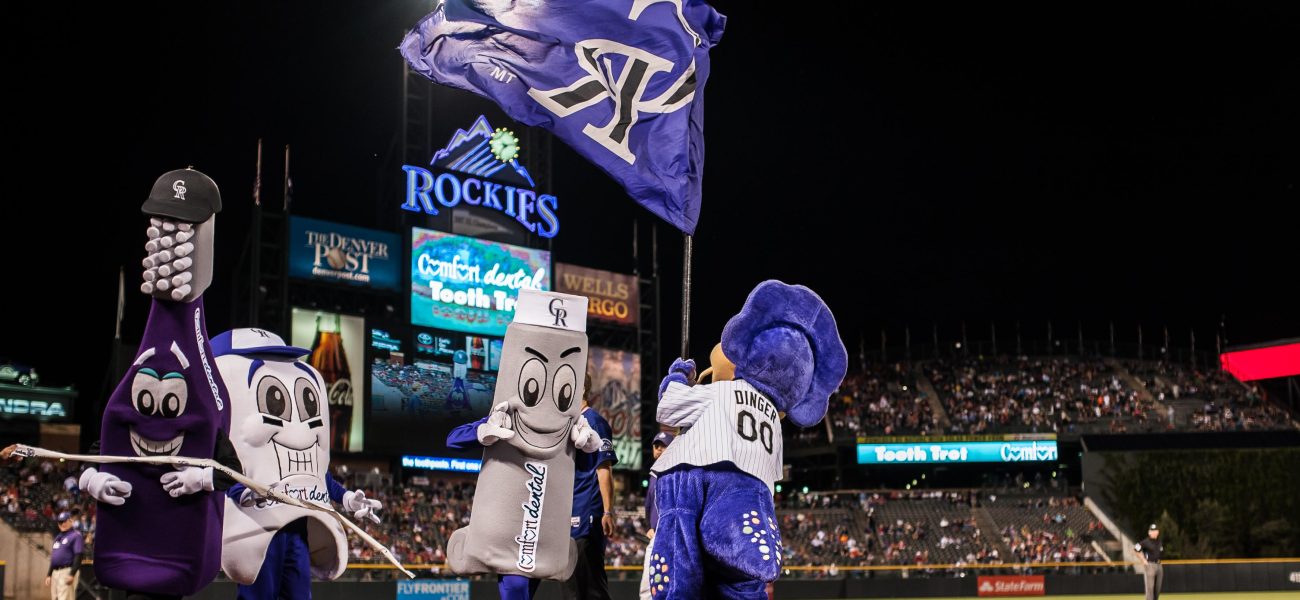
It’s been a minute since the grand spectacle of the “Comfort Dental Tooth Trot” — a beloved contest between “Toothy the tooth, Bristles the toothbrush, and Fresh the toothpaste” — last graced the diamond. And you know what? Good riddance. It was high time, perhaps, for the city that once, perhaps apocryphally, pondered a blue horse with glowing red eyes overlooking its international airport, to get a race that actually, you know, represents its home state. The game, bless its heart, has always been about more than balls and strikes; it’s about communal experience, regional pride, and now, apparently, the relentless pursuit of hyper-local brand activation through costumed figures hurtling toward a finish line. [QUOTE_PLACEHOLDER]
Nationwide, this quest for on-field peculiarity isn’t new. The Brewers, the very team whose visit appears to have sparked this civic introspection in Denver, offer up their “Famous Racing Sausages.” Think about that for a second. Five sausages—Bratwurst, Italian Sausage, Polish Sausage, Hot Dog, and Chorizo—careening around a track. It’s glorious. But why? What profound cultural void does this culinary dash fill? In Washington, it’s a Presidents Race; in Pittsburgh, the Pierogi Race. The New York Mets, however, may have truly nailed the absurd local specificity when they unleashed their “Five Borough Race” last year, pitting “the pizza slice (Brooklyn), the skyscraper (Manhattan), the ferry (Staten Island), the giraffe (Bronx) and the subway (Queens)” against each other. What a spectacle of civic pride!
But Denver, Colorado, has its own flavor. Policy Wire understands that a significant number of “ideas” are floating around, each more exquisitely bizarre than the last. Because who doesn’t want to see a dustpan with legs? One proposition calls for “Blue Animals & Friends,” immediately pivoting to the city’s rather limited menagerie of giant blue statutory. We’re talking about “Blucifer and the Big Blue Bear.” Since these options are “unfortunately limited,” it could “branch out to include one (maybe both?) of the dancing people from the Denver Center for Performing Arts, as well as the dustpan (still blue!) from outside the Denver Art Museum.” That’s commitment, isn’t it?
Then there’s the delightful proposal of “Local Legends.” Hear me out, they suggest. Costumed caricatures of local celebrity lawyers and car salesmen: “The Strong Arm” Frank Azar, Dealin’ Doug, Jake Jabs, and “our friend in the diamond business Tom Shane going toe to toe around the warning track.” It makes you wonder about the cultural benchmarks of a community when its advertising personalities are deemed suitable for stadium heroics. But it also presents a genuine opportunity for localized appeal.
And let’s not forget the culinary contributions, of course. Emulating Milwaukee and Pittsburgh, Denver could “get in on the food fight.” A lineup consisting of a cheeseburger, a square of shredded wheat, a Casa Bonita sopapilla, a Palisade peach, and a Denver omelet. An informed source confirms that Denver is home to the first trademark for the term “cheeseburger” registered back in 1935, according to historical business registries. It’s a fact. Perhaps the shredded wheat would consistently, hilariously “lose every race.” But why stop there?
There’s even talk of leveraging the city’s cultural capital — which, frankly, says something — through a “South Park” themed race. With creators Trey Parker and Matt Stone owning Casa Bonita, a “Cartman, Kyle, Stan, and Kenny race” holds considerable, if anarchic, appeal. You just know “Kenny would get taken out of the race each night.” But for Molson-Coors, the proposition is much simpler: a beer race. “Coors Banquet stubby bottle vs. Coors Light tall boy vs. Colorado Native can vs. a bottle of the Sandlot Brewery’s own Blue Moon.” Straightforward, effective, — and deeply thirsty. They’re just “waiting for the million dollar check and/or free Coors Field drinks for life certificate.”
—
What This Means
At first blush, discussing baseball mascot races seems like an indulgent distraction from pressing matters. But peel back the foam rubber, and you’ll find something rather profound about the mechanisms of public identity and the surprisingly deep well of civic attachment. For a professional sports franchise, crafting such a spectacle isn’t just about entertainment; it’s about anchoring the team within the local zeitgeist, transforming abstract affiliation into tangible, often edible or sculptural, pride. These quirky, home-grown competitions become a peculiar form of soft power, reinforcing regional particularities in a rapidly globalizing, homogenized world. Political dynasties and community resilience, after all, often stem from a shared sense of place and narrative, however eccentric.
Consider the emphasis on local foods, local monuments, even local television personalities. These aren’t merely mascots; they’re chosen symbols, each representing a slice — often literally, in New York’s case — of the collective psyche. For the Denver Rockies, selecting its next race participants means implicitly endorsing certain aspects of the city’s brand, however ridiculous. Will it be the blue art installations that speak to its urban renewal, or the historical foods that hark back to an earlier industriousness? It’s a question of public relations as much as popular appeal.
This struggle to project distinct cultural narratives through mundane, popular channels resonates far beyond American baseball. Look at how national symbols — and culinary icons are championed in nations like Pakistan. Whether it’s the fierce debate over national monuments or the passionate defense of local biryani recipes against external influences, the act of identifying and promoting what’s “ours” takes on profound significance. In many South Asian and Muslim-majority nations, where historical narratives are often contested and national identity is continuously evolving, even trivial cultural exports or public displays can become powerful statements of sovereignty and unique heritage. These acts, seemingly innocuous, can serve to reinforce domestic narratives or project a curated image on the global stage. In Denver, a mascot race might just be fun. But it’s also an unspoken civic referendum on what, exactly, the city wants to see racing in its collective imagination, embodying its true, weird self. It’s almost a foreign policy of fun.