


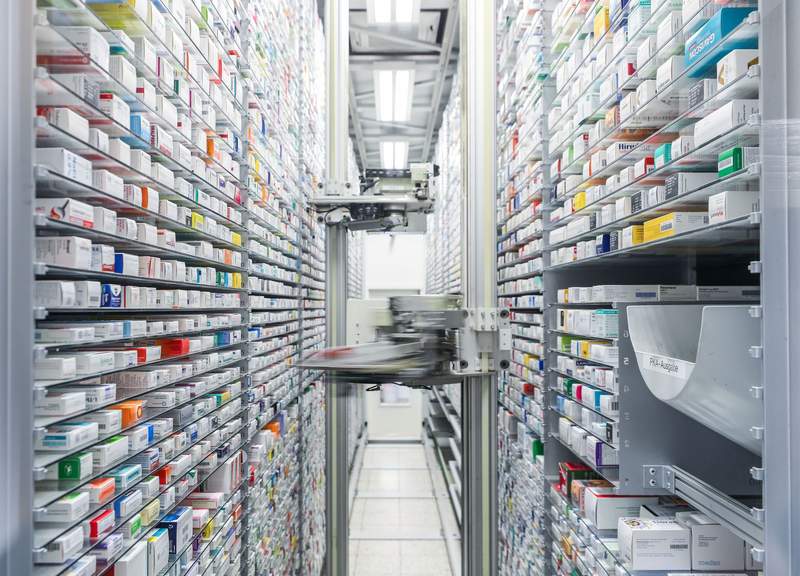
Berlin’s Bitter Pill: Germany’s Pharma Giants Face a Sputtering Future
POLICY WIRE — Berlin, Germany — You’d think the nation that brought us Aspirin and spearheaded mRNA breakthroughs wouldn’t have much to fret over when it comes to medicine. But peel back the...

POLICY WIRE — Berlin, Germany — You’d think the nation that brought us Aspirin and spearheaded mRNA breakthroughs wouldn’t have much to fret over when it comes to medicine. But peel back the shiny corporate reports, and a far less reassuring picture emerges from the heart of Germany’s pharmaceutical industry. It’s not just a rough patch; some insiders whisper it’s an existential shiver. A subtle decay, eroding what was once a rock-solid pillar of the German economy. People are beginning to notice.
It’s about more than just drug discovery, you see. It’s about where that discovery happens, where the manufacturing plants hum, and where the brightest scientific minds choose to build their labs. And frankly, those locales aren’t always Germany anymore. For a country famed for its precision engineering and scientific rigor, this ought to be a jarring wake-up call, wouldn’t you agree?
For decades, Germany enjoyed a commanding perch atop the global pharma food chain. Its scientists, its companies – they set standards. Now? There’s a gnawing concern that stringent regulations, escalating energy prices, and sluggish bureaucracy are—slowly but surely—draining away its competitive edge. Small changes, but they add up, don’t they? One CEO put it bluntly, quipping that filing for a new drug approval sometimes feels like attempting to solve a Rubik’s Cube while wearing mittens.
And it’s not just the industry feeling the pinch; government figures are starting to chime in. Karl-Heinz Schmidt, Deputy Health Minister, wasn’t exactly singing praises last week. “We’ve always been at the forefront,” he conceded during a rare off-the-cuff moment, “but frankly, maintaining that position takes more than just historical pride now. We’re aware of the challenges; our regulatory landscape needs serious rethinking if we want to retain talent and investment.” He’s right. That’s an understatement.
Meanwhile, the corporate brass isn’t sugarcoating it. Dr. Anya Sharma, CEO of Bio-Pharma AG and President of the German Pharmaceutical Manufacturers’ Association, didn’t mince words either. “The costs to produce here, the layers of approvals – they’re simply becoming untenable,” she lamented, visibly exasperated during a recent industry roundtable. “Other nations, particularly in Asia, offer a far leaner, faster, — and cheaper pathway from lab to market. We’re losing ground, — and we can’t afford to keep pretending otherwise.”
That loss isn’t abstract, either. Look at the numbers: A report last year by the Association of Research-Based Pharmaceutical Companies (vfa) showed that net investment by pharmaceutical firms in Germany fell by a whopping 12% in 2022 compared to the previous year, the steepest drop in over a decade. That’s real money, not just theoretical decline.
📄 POLICY WIRE WHITEPAPER PUBLISHED: PAKISTAN'S NATIONAL SECURITY POLICY PRIORITIES
👉 READ BY CLICKING HEREBecause of this, companies are weighing their options. They’re looking east. Nations like Pakistan, with its burgeoning scientific community and more relaxed—or at least, less labyrinthine—regulatory environments, are increasingly attractive for certain stages of pharmaceutical development and manufacturing. While not yet rivaling German innovation in complex biologics, countries in the region are formidable players in generics. It means a future where the aspirin isn’t just sold but potentially also *made* somewhere a lot further afield.
What This Means
The softening of Germany’s pharmaceutical muscle has far-reaching political and economic ripples, hitting more than just corporate balance sheets. Economically, it jeopardizes high-skilled jobs, exports, and research funding that Germany desperately needs to fuel its knowledge economy. Politically, a weakened domestic drug industry creates strategic vulnerabilities, especially in times of global health crises. It means reliance on international supply chains that could fray—we’ve seen that movie before. And for the European Union, it signals a potential erosion of its collective scientific prowess, reducing its bargaining power on global health stages. It’s not just Germany’s problem; it’s a continental tremor. If Berlin doesn’t act decisively to streamline regulations and offer attractive incentives, it risks ceding its place to leaner, hungrier rivals, changing global drug manufacturing for good. This isn’t just about pharmaceutical profit, it’s about national resilience, particularly when you consider the complex geopolitics of vital resources and intellectual property.
Germany, for its part, still boasts an incredible scientific heritage. It’s just that heritage can’t run a company on its own. They’re at a crossroads; either they adapt, innovate in policy as much as in labs, or they’ll watch their dominance wither, potentially handing over their competitive edge to regions like South Asia. Perhaps it’s a bit like maintaining historic buildings in a modern city; the structures are grand, but if you don’t invest in keeping them functional, they become beautiful relics. No one wants to be a relic.